1. Introduction
Purpose
This extended article gives an overview of Change Management as a crucial and complementary partner to successful Programme and Project Management. It defines the concept of effective change management, highlights its importance for organisations, provides an insight into types of change, the resistance challenges an organisation may face, the guiding principles to help ensure effective change management is undertaken and a generic framework to help navigate a practitioner through the change management process. Even at this early stage, it is important to understand that navigating change is significantly more complex than the management of a process and this article also aims to provoke the reader to contemplate some of the wider elements of change to increase the likelihood of successful and sustainable benefits realisation and sustainable operational improvement as a result of programme delivery.
Structure
This article is composed of the following sections:
| Sec. | Heading: | Purpose: |
| 01 | Introduction | Provides some background to the article, a definition of change management, summarises the benefits of the article and the purpose/structure of the article. |
| 02 | Principles | Details some guiding principles to increase the likelihood of change management activities being effective in ensuring sustainable benefits realisation. |
| 03 | Context | An overview of the objectives of effective change management, some insights into managing different types of change in different types of organisations through the application of the process and methods described in this article. |
| 04 | Change Management Framework | A generic framework (open to tailoring dependent upon the change that is being undertaken and/or the organisation) detailing the key change management tasks and activities. |
Table 1: Guidance Structure
Benefits of Change Management
This guidance on Change Management provides a framework for increasing the likelihood of sustainable benefit realisation and operational success derived from the capability delivered by a transformational change programme.
Effective change management provides the following benefits:
| Benefit: | Description: |
| Increased likelihood of successful programme delivery | A significant reduction in the risk associated with introducing any level of change into an organisation through the effective and proactive planning, careful coordination and management of the vast array of human factors associated with change. |
| Increased likelihood of earlier/greater benefit realisation | ‘Starting with the end in mind’ by ensuring that the embedding of new processes, structures, policies and technology is the focal point of the programme from the outset and throughout programme delivery. |
| Improved leadership / sponsorship commitment | Developing an understanding of the existing organisational leadership capability means that interventions can be applied to enhance their effectiveness in leading the change and the likelihood of remaining committed to it throughout. |
| Increased awareness of impact of change and organisational readiness | Detailed consultation with impacted individuals and groups means that issues and concerns are uncovered early in the process and change can be planned to take this into account. Change will only be successful if the organisation is ready to cope with the inevitable disruption it brings. |
| Sustainable operational enhancements and continual improvement | Accelerates the adoption of new working practices by involving the impacted employees from the beginning. Lays the foundations for the continual improvement by creating a sense of ownership by the employees. |
| Improved workforce productivity, commitment and morale | By placing people at the forefront of the change, impacted employees feel included in the change from the outset; they feel able to communicate their concerns knowing that they will be listened to. This results in a reduction in the stress and turmoil change inevitably brings. |
Table 2: Benefits of Effective Change Management
It is worth noting that the effective management of change is one of the most, if not the most, complex and delicate challenges that organisations face and the ‘human factor’ is frequently singled out as a key reason for programme failure. The velocity of change in the present day and the turbulence that it generates at individual, team and organisational levels means that it is of paramount strategic importance for organisations to enhance their ability to manage change properly. Research from the Gartner Group emphasises this point: “…60 percent of change project failures will result from organisations failing to ensure that effective programme management and change competencies exist within the organisation and that effective performance controls are in place to monitor progress …” – Gartner Group
Terminology
This article provides guidance that relates to both Project and Programme delivery. For the sake of succinctness, where the article uses the term ‘Programme’ it should be treated as synonymous with ‘Project and Programme’. If there is a distinction to be made, the term will be expanded explicitly.
The following table defines other key terms that will be used throughout this article:
| Term: | Description: |
| Change Management | Change management is the application of a structured framework of tools and techniques aimed at changing behaviours and ways of working to enable the successful transition of organisations to a future state. |
| Change Interventions | A change intervention is an activity planned and undertaken by a member of the change management team or wider programme team aimed at helping the organisation to realise performance improvements, reduce resistance to change, or helping people to develop the capabilities to succeed in the future state. |
| Stakeholder | A stakeholder is defined as ‘an individual, group or organisation with an interest in or influence over the Programme’. |
| Stakeholder management | Stakeholder management is the process by which these stakeholders (and their communication needs) are identified, analysed, prioritised and engaged with to bring about the successful delivery of the programme’s outcomes. Stakeholder management defines who the stakeholders are, what their interests and influences are likely to be, how the programme will engage with them, what information will be communicated and how feedback will be processed by and incorporated into the programme. Principles underlying engagement with stakeholders revolve around timely two-way communication, ongoing feedback, continuity and consistency of message and above all an attempt to create and maintain high levels of trust between the parties concerned. |
| Communication | Any contact made with a stakeholder, including email, face to face, newsletters, meetings, events, publications, workshops, web page browsing etc. |
Table 3: Definition of Key Terms
2. Principles
The purpose of this section is to define key principles associated with effective change management.
| Principle: | Description: |
| Leadership | Committed and aligned leadership throughout the organisation is a vital factor in achieving successful change. Change leaders must make a visible investment by embodying the change and by role modelling the behaviours expected of the employees whilst demonstrating clarity and boldness in decision-making to ensure benefit realisation. |
| Focus on the benefits | Change programmes are undertaken in order to realise benefit. Putting in place mechanisms to identify quick wins and manage benefits realisation will help to establish and maintain momentum throughout the life of the change programme. |
| Compelling Vision | To motivate people to move with you on the change journey, it is crucial that they can see a clear picture of the future and understand the way things will work. The vision must engage the heart as well as the head and it must be clear, concise and memorable. This helps stakeholders to understand the need for the change (i.e. ‘the burning platform’) and what it will mean for them. |
| Sustainability | The changes must be embedded into the culture of the organisation to make sure the new way of working will remain once the programme has ended. All activities should have sustainability at their centre. Reward good behaviours and elevate role models into influential and visible positions. |
| Engagement and feedback | It is important to engage with all identified stakeholders on frequent basis and to ensure that the communications are consistent and aligned. Communication needs to be two way so asking questions and listening to answers, feedback, opinions, and other advice is as, if not more, important as ‘telling’. Promoting involvement and participation at all times is crucial. |
| Impactful branding | Programmes should have an impactful brand to augment the compelling vision. This brand is the identity of the change programme and it helps to create a shared experience, align communications and evoke a common response from stakeholders impacted by the change. |
| Commitment in adversity | Change is highly disruptive for any organisation. Those leading the change will encounter many challenges and significant resistance along the way. This should be recognised, understood and accepted but it is crucial that focus is not lost along the way. |
Table 4: Principles
3. Context
What is change management and why is it important?
Change management refers to the application of a structured framework of tools and techniques aimed at changing behaviours and ways of working to enable the successful transition of organisations to a future state. It is undertaken with a view to increasing the likelihood of earlier, greater benefit realisation and sustainable operational success resulting from programme delivery.
Change management amounts to a recognition of the human dimension in any change and encompasses a range of factors focused on helping organisations realise improved performance by instilling new values, attitudes and behaviours, developing capabilities and overcoming resistance to change to support new ways of working in the future state. It manifests itself in many forms from enhancing understanding of the need for change, to clearly articulating the programme’s vision in order to motivate stakeholders, to ensuring the organisation has the required capability and capacity to implement and sustain the change in the future state.
Change is highly disruptive for organisations, both in terms of impact at an individual level as well as for teams and departments. One of the central objectives of change management, therefore, is to minimize the “performance dip” associated with change (and if possible, avoid it all together), as depicted in the figure below:
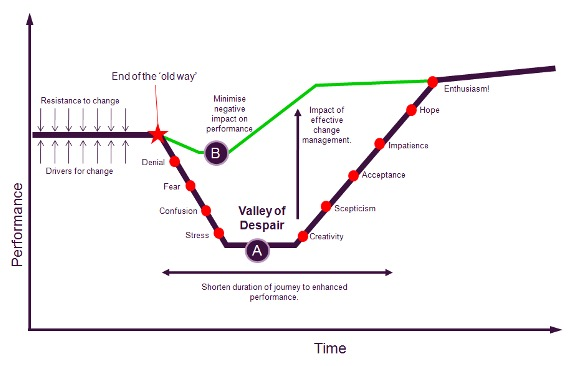
Figure 1: ‘Valley of Despair’ – minimising the “performance dip”
The “Valley of Despair” diagram is based on the original Change Curve developed in the 60’s by Elisabeth Kubler-Ross to explain the grieving process. The model has been adapted and reused many times as a method of helping to illustrate individual reaction to significant change or upheaval. Path A depicts the typical stages an individual will go through when a change occurs, starting with negative emotions including denial, fear, confusion and stress until they reach a low point often referred to as the Valley of Despair where chaos reigns and performance is at an all-time low. Hopefully, the individual will eventually come out of the valley and experience more positive emotions as they move towards acceptance of the change and ultimately enthusiastic support for the transformation. Path B depicts the alternative route if effective change management is applied. Whilst it must be accepted that individuals are still likely to experience significant disruption and emotion, the negative impact (i.e. the depth of the Valley of Despair) is minimised. Change is absolutely necessary in order for organisations to continually improve, innovate and move with the times. Minimising the impact of the change and the depth (or at least the duration) of the ‘Valley of Despair’ is vital if an organisation is to be successful.
There is a significant and growing school of thought that subscribes to the notion that complex change cannot be managed, that it simply happens, and you have to ‘go with the flow’. Whilst this may be true to some extent, there are undoubtedly things that can be done to reduce the negative impact of change to make sure individuals respond positively to the new ways of working. Effective change management will increase the chances of securing individuals’ commitment to the change – thereby ensuring sustainability in the future. Increasing stakeholder groups understanding of the need for change, the direction of travel and the view of success is crucial in achieving this; the figure below depicts the concept of ‘taking people with you’ from a psychological perspective:

Figure 2: The ‘Commitment Curve’ – moving individuals and groups towards commitment
The change commitment curve graphically depicts the emotional response stages most stakeholders go through during a change implementation to successfully embrace the change/new capability. The commitment curve is a useful model for change practitioners to help them determine change interventions for specific stakeholders by assessing where they are on the curve. It is important to understand that different stakeholder groups move along the curve at different speeds depending on various factors including the level of impact they experience. Change leaders/sponsors should move along the curve faster than the targets of the change and the change agent network will be between the two.
Types of Change
There are a number of ‘best practice’ organisational change models that aim to define what is meant by transformational change. One of the most commonly used and widely respected is the Burke-Litwin ‘Causal Model of Organizational Performance and Change’ developed in the mid 1990’s. It draws the distinction between factors that influence transformational and transactional change as depicted below:

Figure 3: The Burke-Litwin ‘Causal model of organizational performance and change’
The model assumes that the factors at the top of the model have a greater impact than those lower down. Changes in the transformational factors (Mission and Strategy, Leadership and Culture) will affect the entire organisation and are likely to be caused by direct interaction with forces in the external environment such as changes in the regulatory environment, new business models etc. Changes in the transactional factors (e.g. reorganisation, mergers, introduction of a new service / product) usually affect the day to day operations of the organisation; often involving a shift in skills and attitudes. The terms used are described below (ref: W. Warner Burke (2002) ‘Organization Change):
Transformational Factors:
- Mission and Strategy – the purpose of the organisation and how it achieves that purpose
- Leadership – how the organisation is led at all levels (different from ‘management practices’)
- Culture – the ‘way we do things around here’
Transactional Factors
- Structure – how the organisation is structured and designed
- Management Practices – the actions and behaviours of managers in everyday work
- Systems – policies and procedures that allow people to carry out their work
- Work Unit Climate – the perception of individuals within a work unit about: how they are managed, how their performance is recognised , how much support they receive
- Task requirements and individual skills – how well the skills of an individual are matched to the requirements of the job; affects motivation
- Motivation – harnessing the drive of individuals to the organisation’s goals; the ability of leaders to provide the environment to encourage such alignment
- Individual needs and values – the extent to which an individual’s needs are met by the job
In more straightforward, pragmatic terms, transformational change can usually be identified through one of the following ways:
- An organisation is seeking a step change in performance where the outcome is not necessarily clear and clarity will evolve over time.
- The change has multiple interdependencies, multiple stakeholders, involves cross organisational departments or business units.
- Cause and effect are muddled and there are differences of opinion over what needs to be done.
- The change requires a shift in values and behaviours
- The change is likely to cause severe disruption, discomfort and uncertainty to large parts of the organisation.
The real value of a model that helps to identify the type of change an organisation is experiencing is in helping to make decisions on the approach to change management (which is explored in the Change Strategy) and to identify the levers available to influence the change. The table below (ref: Anderson and Ackerman (2001) ‘Beyond Change Management’) provides some ideas on possible approaches to managing change depending on the type of change being experienced:
| Type of change: | How to recognise: | Typical change management approaches: |
| Developmental | – Low pain – Improvement can be clearly defined – Requires no or small change of mindset | – Collaborative and facilitative with the impacted organisation through effective communications – Aim to improve skills, knowledge and performance through training and skills development |
| Transitional | – Low to moderate pain – Seeking to fix a problem – Improvements criteria can be set – Requires no or small change of mindset | – Directive whilst remaining collaborative and consultative – Focus on key changes in a number of areas for example redesign of strategy, structures, systems, processes, technology or work practices – Open communication of plans, timelines and impact on organisation and benefits to those receiving the change – Broader high-level communications to the wider organisation |
| Transformational | – High pain – Seeks survival breakthrough – Outcome is usually not known with any sort of clarity at the outset – evolves through trial and error and course correction – Requires a shift of mindset | – Visionary and authoritative Conscious facilitation and collaboration in the design of the new organisation – High collaboration and involvement with the whole organisation – Likely to include elements of transitional and developmental change – Overhaul of work groups, culture, behaviours and mindset |
Table 5: Approaches to change management
Usually there is no clear delineation between types of change as per the table above, organisations usually experience a mixture of the types of change and therefore the management and leadership must use a variety of responses to ensure success.
Resistance to change
Resistance to change comes in many forms, different approaches to tackling resistance have to be considered depending on your perception of the challenge that is being faced. The table below provides some guidance on how to deal with the different types of resistance you may encounter:
| Type of resistance: | Description: | Possible management approaches: |
| Logical | Often resulting from a lack of information, a misunderstanding or genuine disagreement with the proposed change. | Education and communication. Repeat the information already provided, potentially in another format/guise. Re-emphasise the point that the change will be happening but be clear on the rationale. Provide additional coaching / training. |
| Personal | Self-interest, concerned solely with the implications of the change for themselves and how it may affect their own interests, as opposed to those of the business. Mistrust and/or a feeling of isolation and abandonment. | Increase participation and involvement, when people are involved in the change effort, they are more likely to buy-in to it. Promote active listening and acknowledgement of their concerns. Re-emphasise the benefits for them and contemplate performance incentives. |
| Tolerance | Certain people have low tolerance thresholds for change and need security and stability in their work. | Facilitation and support aim to be particularly supportive of these individuals. Potentially offer counselling or coaching to help them respond positively. |
| Political | Cultural and historical differences of opinion between different factions in the organisation. | Target change champions early in the process, select leaders of the resisters to participate in the change effort – give them a symbolic role in the change effort without providing the opportunity to threaten decisions. Make particular efforts to understand the culture and the politics in order to pacify. |
Table 6: Types of resistance to change and approaches to manage resistance
As a last resort and when speed is of the essence, explicit and implicit coercion may be used to force employees into accepting change by making the negative consequences clear (removal of promotion opportunities, loss of job etc.). This may well be a pre-determined element of the change strategy. It is important to recognise that in some scenarios negative consequences cannot be avoided e.g. redundancy, the change management challenge here is to minimise the disruptive impact on those that remain in the organisation.
Ultimate success in managing resistance to change is underpinned by comprehensive stakeholder analysis to predict likely areas of resistance and plan responses accordingly.
Roles in change management
The table below details the key roles in change management. It is important to note that having a business change manager employed in the programme is just a small part of the process. The entire team has a major role to play in managing the change:
| Role: | Name/s: | Communication responsibilities: |
| Programme SRO | <Name> | The Programme SRO is ultimately accountable for the realisation of benefits from the programme by embedding the changes defined through the programme. |
| Programme Manager | <Name> | The Programme Manager is responsible for ensuring the focus of and the effectiveness of the change management activity and ensuring that the right change management resource is identified to underpin the programme’s success. |
| Business Change Manager | <Name> | The Business Change Manager is responsible for leading on transition management; ensuring that business as usual operations are maintained during the transition and that business changes required to ensure realisation of the expected benefits are successfully embedded into the business. Preparing the affected business areas for the transition to new ways of working. |
| Programme Change Management Lead | <Name> | The Change Lead is responsible for: Driving the development of the change strategy, Conducting the change impact assessment and readiness assessments Taking Programme information and creating and managing the delivery of all change interventions per the Change Plan; and Acting as the liaison between the Programme and the Change team (including business support functions involved e.g. HR). |
| Designated Programme Team member(s) | <Name> | The named person is responsible for: Developing the Programme input to the Change Plan; and Working with the Change Lead to implement the Change Plan. |
| <others as required > | <Name> | <Responsibility> |
Table 7: Change management roles and responsibilities
Summary
The preceding sections cover some of, but by no means all, the complexities and challenges that are inherent in change programmes. Practitioners should be cognisant of the fact that there is no ‘one-size fits all’, generic change management model that provides a comprehensive ‘off-the-shelf’ solution to navigating change. However, a detailed change management framework and toolset used in an integrated fashion and combined with an awareness of the key principles highlighted earlier will increase the likelihood of a successful transition to the target state. “Organization change is a kind of chaos (Gleick, 1987). The number of variables changing at the same time, the magnitude of environmental change, and the frequent resistance of human systems create a whole confluence of processes that are extremely difficult to predict and almost impossible to control. Nevertheless, there are consistent patterns that exist – linkages among classes of events that have been demonstrated repeatedly in the research literature and can be seen in actual organizations.” (Burke & Litwin)
With that important context point made (and the requisite plea to balance your reading around this topic’s challenge), the remainder of this article covers the essential management processes that need to be put in place.
4. Change Management Framework
The Change Management Framework has been developed to support practical delivery in change programmes. It focuses on supporting programmes by providing guidance on how to conduct the necessary activities to ensure successful adoption of change. It should be regarded as a subset of the overarching programme management infrastructure.
It is worth mentioning that it is not a simple case of following the activities outlined in this framework; it must be used within the organisational context. The organisational culture, leadership style, type of change being undertaken and the capability of the organisation to successfully navigate the change must be taken into account at all times.
The framework is founded on the seven key principles that are fundamental to all the activities, detailed earlier in table 4 – Section 2 of this article.
There are five streams in the framework with associated activities partitioned into three main ‘types’: ‘Plan for the change’, ‘Implement the change’ and ‘Embed/Reinforce the change’. At specific points in the framework there are critical success factors (ten in all) that should all be achieved in order to drive sustainable change.
The framework provides the following benefits:
- Provides a consistent approach to implementing change management in transformational programmes
- Providing practitioners with checkpoints along the change journey to assess the organisation’s progress and to highlight areas of opportunity or risk
Managing the change
The managing the change stream includes the tasks and outputs needed to provide the overarching management of the change effort. This includes the development of a change strategy (expanded upon below) which articulates the objectives of the change programme and the approach the organisation wants to take to implementation. The creation of a change plan including a high-level roadmap and detailed change intervention plans use to track progress and manage interdependencies. The main focus of this activity stream is to ensure coordination and alignment across the other streams and to maintain focus on the end goal.
Change Management Strategy
Based on the premise that a “one-size” fits all approach is not effective for change management, the change strategy is a key management article used to define the approach needed to manage change in the context of the unique, specific situation of the programme (e.g. major transformational change as a result of a merger or acquisition where visionary leadership is required vs. developmental change as a result of a new process being brought into the organisation.)
Typically, the change management strategy should cover the following aspects:
- Context section including an overview of the programme, the characteristics/objectives of the change including scope, this is of particular importance because of the many different types of change that organisations typically face. It is only through exploring the different facets of the change that means you are able to answer key questions around who and how many people are being impacted, what is being changed and why, the timeframes for the change etc.
- An initial map of stakeholder groups that will be impacted by the change, to be built on in the detailed impact analysis or reference to the stakeholder management articles, if relevant.
- Enablers and barriers of implementing the change within the organisation, this will be used to determine the specific change approach and highlight associated risks.
- The detailed change approach including the objectives, how the change will be managed, key risks associated with the change approach and measure of success.
- The change management team structure, documenting the main change management roles and responsibilities in a programme team. This is usually either a member or members of the programme team being assigned change management responsibility or by drafting in a specific team to undertake change management. Either way, the rationale for this should be detailed in the strategy.
- A summary of the change management plan, if available.
The development of a comprehensive change management strategy is a critical step early on in implementing sustainable change. It can be used as a key communication article early on (amongst the leadership team) to build support and inform decision-making. It will also be a key input for the creation of the Change Management Plan.
Change Management Plan
The next step is to create the change management plan. The plan provides in-depth information on the solution that has been devised in order to ensure successful adoption and benefits realisation. Using the change strategy, the impact assessment and the readiness assessment as inputs it provides details of the change interventions that have been identified alongside the objectives for each intervention, a schedule for delivery and their respective owners.
Examples of change interventions are detailed in the table below:
| Group: | Objective: | Intervention: |
| <Leading the change> | <Improving our approach to leading change in a consistent and engagement way> | 1. Leadership assessment 2. Executive development programme 3. Team building workshops 4. Coaching/mentoring programme |
| <Capability, capacity and organisation> | <Improving the capability of the organisation to be effective in the new ways of working> | 5. Refresh and re-launch the capability framework 6. Talent notes for all grades 7. Process training |
| <Communication and engagement> | <Using effective communications and engagement to build buy-in and commitment to the changes being implemented> | 8. People days 9. Annual conference 10. Director regional visits |
Table 8: Example change interventions
The change management plan should also include a schedule for delivery or detailed implementation plans in order to track progress and manage interdependencies. This may be an extract of on overarching programme schedule or a standalone schedule. An example plan is provided below:
| ID | Intervention | Timing | Benefits | Investment | Owner | |||||
| <insert ID> | <insert name and description of intervention> | <insert proposed timing> | <insert key benefits> | <insert investment required> | <insert individual or group owner for delivery> | |||||
| 1 | Launch the capability framework | Jan 20 | Employees understand expectations Managers effective and consistent performance assessment | Mandays to develop the framework and training time to implement | Line Managers and Directors lead in implementing programme. Facilitated by HR. | |||||
Table 9: Example detailed change management plan
It is important to note that the change management plan should also cover the following elements unless they are covered in other programme documentation:
- Communications Plan
- Leadership Development Roadmap
- Training and Development Plan
It may be that the detailed implementation plan combines these elements into a consolidated view; this is a reasonable approach provided all the aspects of planning are covered in the documentation.
Leading the change
The leading the change stream includes the tasks and outputs needed to prepare support and coach the organisation’s leadership to effectively lead the change. This includes:
- Assessing the organisation’s leadership culture to determine any behavioural changes that are required. This includes the identification of any enablers or constraints for achieving the change programme’s goals. Clearly you will need to engage the leaders in the cultural assessment to ensure its accuracy and to win their hearts and minds for the change ahead. This is a vital step in making sure that sustainable business benefits can be realised, culture can directly impact whether or not a change is successfully implemented.
- Coaching and developing the leadership to enhance their performance in leading the change, this is carried out whilst continuing to build their commitment to the change and making sure that all members of the leadership are aligned in their viewpoints. It is crucial to make sure that leaders are ‘role-modelling’ the expected ‘changed’ behaviours and that they are highly visible to the rest of the workforce.
Capability, capacity and organisation
The capability, capacity and organisation stream include the tasks and outputs needed to understand whether the organisation has the capacity to undertake the change, the capability to undertake the change and to develop and support the organisation’s capabilities to sustain new ways of working in the future state. This is a vital step because the assessment should take into account change initiatives that have taken place in the past to understand what makes change successful in the organisation but also what parallel change initiatives are underway to understand any change barriers that may exist in terms of resource capacity or willingness to undergo further change. The capability assessment will help to diagnose the gap between the current skill set of the workforce and that which is required to complete a successful change. It will help to generate change interventions and training required.
This stream also covers the activities required to design the organisation structure and prepare for the implementation of any organisational changes. This includes understanding the organisation’s labour and employee relations environment, HR policies and processes and how they will influence or impact the success of the change. Aligning performance objectives and incentives is an important step in change implementation because of the potential impact on motivation of the workforce and the management of individual and team performance. Changes must be translated into measurable behaviours and actions, people need to be held accountable for changing. Finally, an important step in embedding the change is to support the transition of the workforce to the future organisation as employees prepare to take on new roles, jobs and teams. Planning must be meticulous in this regard to minimise disruption in the operational environment.
Change Leadership Competencies
Key change leadership competencies include:
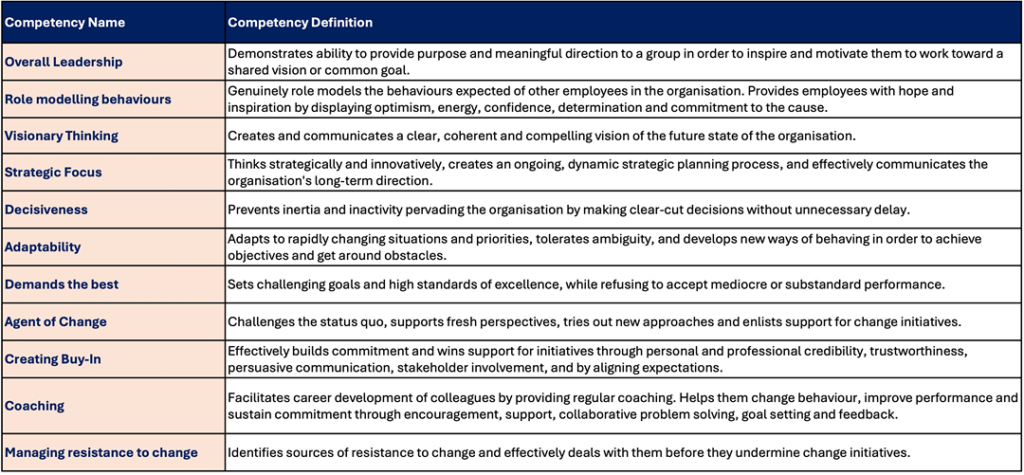
Table 10: Change Leadership Competencies
Change Readiness Assessment
Assessing the state of readiness for change for all key stakeholders is an essential pre-requisite for the implementation of sustainable change.
Combining the readiness assessment with the impact assessment will enable you to develop the most robust change management plans including communications plans, training plans, leadership development plans etc.
The first step in undertaking a change readiness assessment is to identify the stakeholder groups and individuals who are involved in, impacted by or influencers on the success or failure of the change programme. It is important to note that this analysis should be aligned to your programme’s stakeholder analysis and communications plan. For each stakeholder group your assessment should include details on the level of support for the change and the areas of resistance being experienced, this is shown in the figure below:
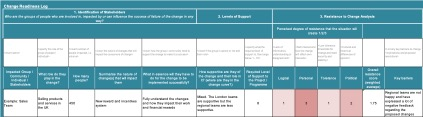
Figure 5: Stakeholder analysis within the change readiness assessment template
The next step is to undertake a readiness assessment on each of the stakeholder groups previously listed. Potential approaches for undertaking the assessment include:
- Interviews with key stakeholders supported by tailored interview tool
- Surveys of the target population
The assessment should include a review of how ready for change each group is in relation to a number of key factors, this will provide an overall readiness score which needs to be taken into account when deciding on the timing of the change. Finally, any additional interventions required to increase the level of readiness for each stakeholder group should be captured in the ‘Moving Forward’ section and taken into account within the overall programme plans. The final two sections of the ‘Change Readiness Assessment Template’ are shown below:
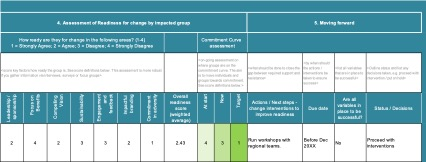
Figure 6: Readiness Assessment within the change readiness assessment template
Communication and Engagement
The communication and engagement stream include the tasks and outputs required to effectively communicate the change effort including:
- Development of a compelling vision for the change to ensure that there is a shared view of success and to promote a common understanding of the future. This should be aligned to the organisation’s mission and strategic objectives.
- Creation of a change brand to support the vision and the rest of the communication effort. The change brand is vital in winning the hearts and minds of the workforce. It is the overall identity of the change implementation and helps to create a shared experience and to evoke emotion from those involved or impacted by the change.
- Identification and analysis of the stakeholders and the impact on them. A critical step in understanding what change interventions are necessary.
- Defining, engaging and mobilising the change network. A strong change network is the vehicle for communicating the change and the most effective way to reach all stakeholder groups. It is created by identifying those individuals who really understand the changes being proposed and are motivated by them. It can also be used as a way of turning a resistor into a supporter.
It is crucial to be aware that communication and engagement is a key activity undertaken at the programme management level. This stream of activity serves to reiterate its importance and add new elements such as the change brand.
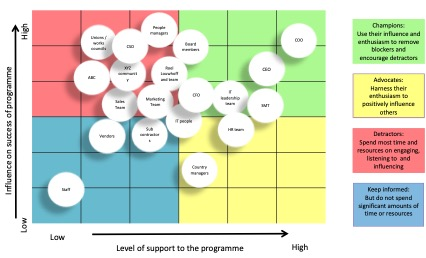
Stakeholder Analysis
An example stakeholder analysis is shown below:
Change Impact Assessment
The next key management product is the change impact assessment which uses the outline stakeholder grouping and impact assessment detailed in the change strategy article as a starting point. The purpose of a change impact assessment is to define how the changes will impact different stakeholders or stakeholder groups as they move towards the new ways of working in the future state.
The first step in undertaking a change impact assessment is to describe the changes that are occurring in the organisation making sure all aspects are covered including processes, systems, culture, skills, knowledge etc. Each change item can be captured in the ‘Change Specification’ section of the ‘Change Impact Assessment template’; this is shown in the figure below:
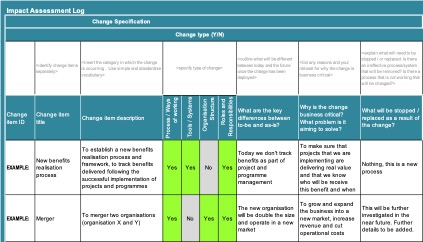
Figure 7: Change specification columns in the ‘Change Impact Assessment’
The next step is to assess how and to what extent each of the changes impacts on each of the stakeholder groups that are going to be affected by the change effort.
Typically, these assessments are carried out using input from key stakeholders including subject matter experts, leadership teams, functional heads etc. Stakeholders should be asked to article the changes in relation to each stakeholder group both during transition to the target state and post-transition. They should also article how the changes are likely to impact on each group and what their reaction is likely to be.
Potential approaches for undertaking the assessment include:
- Interviews with key stakeholders supported by tailored interview tool
- Surveys of the target population
The output of the assessments should be captured in the ‘Impact Analysis’ section of the ‘Change Impact Assessment Template’ and a H,M,L, Extensive overall impact status should be assigned to each change item as per the figure below:
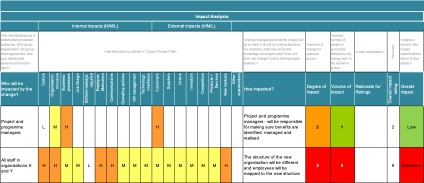
Figure 8: Impact Analysis in Change Impact Assessment template
This assessment should be used as an input into the Change Management plan by identifying which types of interventions are most applicable to each stakeholder group.
It is important that this tool is updated throughout the programme as new or more detailed information about each stakeholder group is revealed.
Monitoring the change
The monitoring the change stream involves all the necessary activities to measure and track change progress.
- Development of a benefits realisation model.
- The definition and validation of measures to track change success. This means determining an approach towards the acceptance of change within the business. This will be inextricable linked to the supporting of benefits realisation post-transition.
- Working to realise quick wins to establish momentum early in delivery – this is vital to get people ‘onside’ and to increase level of support for the change. It is important that good news is communicated regularly, and success is given high profile.
- Monitoring and review of the success (or otherwise) of change interventions to make sure the change stays on track to achieve its goals and to identify new change interventions along the journey.