Executive Summary
Historic Transformation Requires Bold Action
- The global energy sector is undergoing a seismic shift driven by decarbonisation mandates, technological disruption, geopolitical tensions, and rising energy demand. Success requires agility, innovation, and a clear sense of purpose.
Workforce & Talent Gaps Threaten Progress
- A critical shortage of skilled talent – especially in renewables and digital domains – hampers innovation and scalability. Companies must invest in upskilling, academic partnerships, and purpose-driven branding to attract the next generation.
Digital and Technological Lag Inhibits Competitiveness
- While AI, advanced analytics, and automation hold transformative potential, legacy infrastructure, cultural resistance, and cyber vulnerabilities hinder adoption. Clear digital roadmaps and modern IT architecture are essential.
Decarbonisation and Grid Modernisation Pose Capital and Coordination Challenges
- Transitioning to low-carbon systems demands huge investment, integrated planning, and grid innovation. Success depends on scalable clean technologies, fossil fuel transition strategies, and robust decarbonisation roadmaps.
Geopolitical Risk, Regulatory Uncertainty, and Supply Chain Fragility Disrupt Strategic Planning
- Energy firms face volatile raw material markets, policy unpredictability, and complex cross-border regulations. Diversified sourcing, proactive policy engagement, and resilient supply chains are key to mitigating these threats.
Dual Growth Strategy is Crucial for Long-Term Resilience
- The most successful firms are combining organic growth (via digitalisation, talent, and operational excellence) with inorganic growth (through M&A, partnerships, and innovation acquisition), underpinned by integrated ESG priorities and disciplined execution.
Strategic Challenges In The Energy Sector
Navigating an Historic Transformation
The global energy industry is undergoing a profound transformation, driven by the urgent imperative to decarbonise, rapid advances in technology, and shifting geopolitical and market dynamics. As the sector redefines its future, energy leaders must confront a series of complex and interconnected strategic challenges that will determine their long-term competitiveness and resilience.
1. Workforce and Skills Shortages
The energy sector faces a widening skills gap at both ends of the talent pipeline. A wave of retirements among experienced professionals is coinciding with insufficient entry-level talent, particularly in high-demand technical disciplines. Rapid technological evolution and a lack of robust STEM education further intensify the problem – especially in areas like solar, wind, battery storage, nuclear and smart grid technologies.
Impacts:
- Project delays and higher labour costs
- Reduced productivity and innovation capacity
- Difficulty scaling renewable operations
Strategic Response:
- Accelerate partnerships with universities and technical institutes
- Invest in internal reskilling and apprenticeships for future-ready roles
- Promote the sector’s contribution to climate and sustainability goals to attract next-gen talent
- Consider providers of tech skills, including national, nearshore and offshore, to match demand & cost goals, recognising not all recruitment is needed long-term
2. Technological Transformation and Digitalisation
Digital technologies – AI, machine learning, robotics, advanced analytics, and cybersecurity – are reshaping the energy landscape. However, legacy infrastructure and cultural inertia are slowing adoption. Many firms also lack the digital capabilities and leadership needed to fully leverage these tools. See later for detailed implications of AI for the industry.
Strategic Response:
- Establish clear digital roadmaps tied to business outcomes
- Modernise IT infrastructure and break down data silos, including the security of your operational technology as well as to counter cyber threats
- Develop internal digital academies to scale capabilities enterprise-wide
- Consider techniques to maximise the use of critical underlying data and documentation to improve workflows, not just system replacements
- AI data privacy and confidentiality considerations, across both commodity AI, such as chat bots and public LLMs, and strategic AI, covering proprietary applications that address specific use cases and can provide advantage over competitors in key areas.
3. Energy Transition and Decarbonisation
Transitioning to low-carbon energy systems is the defining challenge of the decade. The sector must simultaneously reduce emissions, scale renewable capacity, and the intense challenge of modernising grid infrastructure – while ensuring energy security and affordability. The financing and capital allocation challenge can be immense, including updating infrastructure, bringing new zero emission energy systems to market, digitisation, even onshoring.
Strategic Response:
- Prioritise investments in scalable, dispatchable clean technologies (e.g., battery storage, and potentially green hydrogen)
- Consider grid vs. localised systems and microgrids, such as data centres producing their own power, as well as smart decisions about colder locations, and finding ways to make efficient use of the heat generated in adjacent communities
- Strengthen transition plans for fossil fuel assets and dependent communities
- Develop integrated decarbonisation roadmaps aligned with national and international climate targets, whilst recognising the vulnerabilities in the context of geopolitics, such as UK-EU electricity cables, gas transmission and CO2 import/export
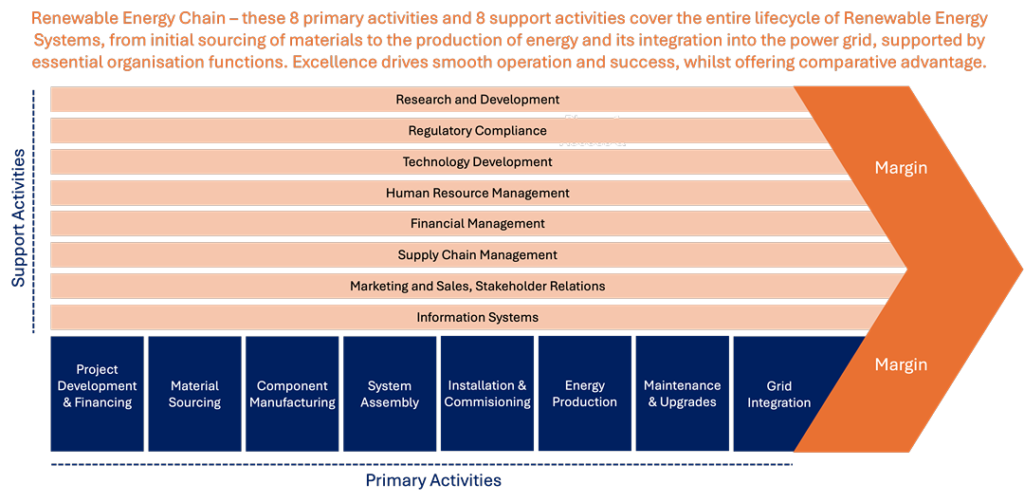
Figure 1 Renewable Energy Value Chain
“Effective management of the Renewable Energy Value Chain can significantly enhance energy security, reduce carbon footprint, and provide long-term economic benefits to communities and countries. Strategic collaborations along the Chain, from raw material suppliers to regulatory bodies, are essential to accelerate the adoption of renewable technologies and optimise market penetration.” Flevy Lean
4. Geopolitical Instability and Supply Chain Vulnerabilities
Energy markets are increasingly exposed to geopolitical tensions, trade restrictions, and raw material shortages. Critical supply chains rare earth elements, necessary for batteries and solar panels, are vulnerable to disruption, creating operational and financial uncertainty.
Strategic Response:
- Diversify sourcing strategies and regional supply chains, noting that for example, it can take time and significant investment to develop port facilities, build cable factories or wind/blade turbine manufacturing plants to support large scale offshore wind developments
- Increase domestic production capabilities for strategic components
- Build supply chain transparency through digital traceability tools, including overcoming resistance in some quarters to providing full access to real-time data
5. Regulatory and Policy Uncertainty
Evolving regulatory frameworks, carbon pricing schemes, and incentive structures are reshaping the energy landscape. While these policies often aim to accelerate the energy transition, their unpredictability creates challenges for long-term investment planning and capital allocation. Often changing and subject to legal challenges, regulation can often add to project risks, delays and costs. The conflict between policies and regulations for different parts of the energy system is being mitigated to some extent by whole-system thinking, such as recent changes to the queuing system for grid connections, from linear to ready first.
Strategic Response:
- Engage proactively with regulators and policy makers
- Embed scenario planning and policy forecasting into strategy development
- Align business models with future regulatory trajectories, not just current mandates
- Business cases can and should be based on sound fundamentals, with government support providing upside, not the driving force
6. Talent Attraction and Retention
The energy sector is losing ground in the competition for top-tier talent, especially among younger workers who are drawn to tech, finance, or mission-driven startups. Traditional energy companies must adapt their employee value propositions and workplace cultures to remain relevant. Critical national infrastructure demands, coupled with the huge investments and long-term needs of the industry can combine to make a compelling case to attract prospective employees.
Strategic Response:
- Emphasise purpose-driven work, innovation opportunities, and sustainability commitments
- Offer flexible work models and accelerated career development pathways
- Foster inclusive cultures that reflect a more diverse, global talent pool
7. Operational Resilience and Safety
The adoption of new technologies, expansion into new geographies, and aging infrastructure introduce new layers of operational risk. Maintaining high safety standards and system resilience is essential as the energy ecosystem becomes more decentralised and digitised.
Strategic Response:
- Invest in predictive maintenance, remote monitoring, and digital twin technologies
- Enhance cybersecurity protocols and disaster preparedness plans across both the IT and operational technology (OT) estate
- Continuously train staff on evolving safety standards and emerging risks
8. Sustainability and Environmental Responsibility
Stakeholders – including investors, customers, and regulators – are demanding greater accountability for environmental impact. Beyond emissions reduction, energy companies are expected to address water use, waste management, and biodiversity in their operations. Further, they need to consider supply chains, not just power company emissions, such as the impact of burning fossils fuels, e.g., UK Supreme Court Finch Ruling, which held that an Environmental Impact Assessment (EIA) must assess the downstream effects on climate from combustion of the oil produced.
Strategic Response:
- Integrate ESG performance into core business strategy
- Commit to transparent sustainability reporting and third-party verification
- Adopt circular economy principles in infrastructure, materials, and waste cycles
- Consider appropriate response to greenwashing accusations where businesses involved in carbon intensive will face heightened scrutiny over sustainability claims
“Working in and on the innovation and finance side of the energy transition for nearly 20 years, Greenbackers has seen great advances towards decarbonisation. However, there is significant work to do, and we recognise, broadly agree with and welcome the observations in this report – there are significant challenges and all participants, from Industrials and Enterprises to SMEs and microbusinesses to funding agencies of all types are affected. There are compelling arguments for much more robust action as firms grapple with the issues highlighted therein. As ever education, strategic focus and excellence in implementation will be key to the successful delivery of green programmes.” Robert Hokin, Managing Partner and Investor, Greenbackers Investment Capital Limited
Summary: Strategic Challenges in the Energy Industry
| Challenge | Description |
|---|---|
| Workforce & Skills Shortages | Aging workforce, talent pipeline gaps, and insufficient STEM education |
| Technological Transformation | Integration of AI, robotics, analytics, hindered by legacy systems |
| Energy Transition | Large-scale decarbonisation, renewable adoption, and system modernisation |
| Geopolitical & Supply Chain Risks | Market volatility, material shortages, and trade tensions |
| Regulatory & Policy Uncertainty | Shifting incentives, unclear timelines*, and investment risks |
| Attracting & Retaining Talent | Competition from other sectors, shifting generational preferences |
| Operational Resilience & Safety | New risks from tech integration and global infrastructure challenges |
| Sustainability & Environmental Impact | ESG expectations, environmental compliance, and stakeholder pressure |
* For example, in the UK, it can take up to 10 years to get a windfarm from initial concept and application through to the start of construction; and the grid connection queue for new facilities is in some cases more than 8 years.
Adapting to Lead in a Decarbonised Future
The strategic challenges facing the energy industry are multifaceted and interconnected – requiring coordinated action across business units, supply chains, and regulatory environments. To lead in this next era, energy companies must think beyond compliance or incremental change. The winners will be those that embrace bold transformation: investing in people, accelerating digital and clean tech adoption, building supply chain agility, and embedding sustainability into every strategic decision.
In short: agility, innovation, and purpose will define the energy leaders of tomorrow.
“Galileo, as a pan-European renewable energy developer and investor, is strongly committed to contributing to a sustainable energy transition. At the same time, we recognize the complexity of an increasingly dynamic environment – shaped by geopolitical tensions, shifting trade dynamics, and rapid technological advancements. In this context, maintaining flexibility and embracing diversification is essential, adapting business models and strategic guidelines to the evolving market conditions. Equally important is our commitment to people. Empowerment, entrepreneurship, and collaboration lie at the heart of our corporate values – complemented by transparency towards all our stakeholders and the agility required to thrive in a constantly changing landscape.” Filippo Chiesa, Chief Investment Officer, Galileo
Balancing Growth in Energy: Strategic Imperatives for a Disruptive Era
The global energy industry is at a historic inflection point. Converging forces – decarbonisation mandates, accelerating digital transformation, rising global demand, and geopolitical volatility – are reshaping the landscape at an unprecedented pace. In this dynamic context, companies must pursue a dual growth strategy: optimising internal capabilities (organic growth) while expanding through acquisitions and alliances (inorganic growth). Each pathway presents distinct challenges – and unique opportunities – success can be achieved by those that integrate both into a cohesive, adaptable growth strategy.
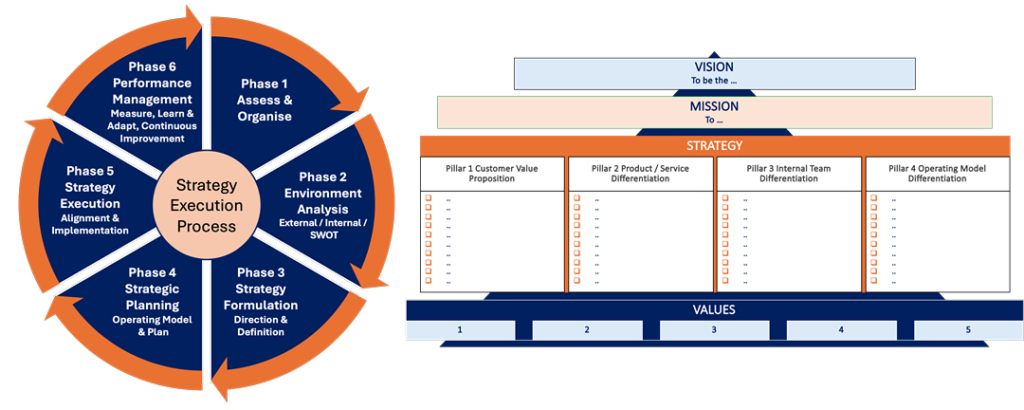
Figure 2 Strategy Execution Process
As a specialist consultant, we have observed that success in this environment depends not only on innovation or investment but on the ability to integrate and align both growth levers with agility and precision.
The Growth Imperative in Energy
- Organic growth involves enhancing existing operations through innovation, efficiency, digitalisation, and talent development.
- Inorganic growth is driven by mergers, acquisitions, and strategic partnerships that rapidly expand capabilities, technologies, or market access.
Together, these strategies form the backbone of resilience and competitiveness for the energy companies of tomorrow. The most adaptable and agile businesses tend to win.
Barriers to Organic Growth
1. Workforce and Skills Shortages
- Aging Workforce: A large segment of experienced professionals is approaching retirement, creating a vacuum in institutional knowledge.
- Skills Mismatch: Emerging energy technologies – especially in renewables and digital platforms – demand new competencies that current employees often lack.
2. Technological Transformation
- Legacy Systems: Outdated infrastructure hinders the adoption of advanced tools such as AI, IoT, and automation.
- Digitalisation Lag: Many organisations struggle to match the speed of technological change, leading to lost competitiveness and inefficiencies as well as missing that small advancements can make a significant difference, as well as the more complex projects.
3. Regulatory and Policy Uncertainty
- Evolving Standards: Shifting mandates on carbon emissions, renewable integration, and grid modernisation create planning complexities.
- Investment Ambiguity: Regulatory unpredictability undermines confidence in long-term capital allocation decisions. For example, problems with offshore wind and the allocation rounds – setting strike price is difficult when there is so much volatility in project costs.
4. Rising Demand and Operational Resilience
- Surging Consumption: Electrification, data centres, and industrial expansion are driving energy demand to new heights.
- Reliability Pressures: Ensuring stable energy supply while transitioning to low-carbon systems requires resilience against climate, cyber, and market shocks.
“The decisions we make now are critical, as they will shape the future of energy, environment and economic prosperity in the UK”, Lenny Collins, Group Managing Director, Dron & Dickson
Unlocking Organic Growth: Strategies that Work
1. Invest in Talent and Workforce Development
- Upskilling and Reskilling: Launch training initiatives focused on digital tools, renewable systems, and future-ready roles. Consider overlap of traditional engineering and IT roles as a means of cross-training.
- Knowledge Capture: Work on capturing the knowledge of team members nearing retirement and simplifying processes.
- Academic Partnerships: Collaborate with universities and vocational institutes to strengthen STEM pipelines and technical talent pools.
2. Accelerate Digital Transformation
- Modernise Core Infrastructure: Replace legacy systems with cloud-based, interoperable platforms, as well as hybrid cloud solutions. Octopus Energy has gone one step further and spun out its tech business as Kraken and is now delivering services to other power companies.
- Smart Energy Management: Use advanced analytics and automation to optimise generation, storage, and demand response. This applies from domestic and industrial metering, all the way to whole system monitoring and control. The recent blackout in Spain and Portugal is a recent, vivid example.
3. Proactively Manage Regulatory Engagement
- Policy Shaping: Build collaborative relationships with regulators and trade bodies to influence energy transition frameworks and drive consistent messages.
- Governance Readiness: Establish agile compliance and governance (e.g., data) structures that adapt to new regulations without disruption.
4. Enhance Operational Resilience
- Supply Chain Diversification: Reduce exposure to geopolitical and logistical disruptions by localising or diversifying sourcing.
- On-Site Generation & Storage: Deploy microgrids, solar, CHP, and battery systems to enhance self-sufficiency and reduce volatility exposure. Some companies are even now investing in Nuclear SMRs.
“M&A transitions are complex, with short timescales, difficult to cost, and you only get one shot. De-risk this process by working with a proven specialist using robust methods. This is the best path to day one operations and establishing a safe and secure business operating model ready for the future.”, Neale Stidolph, Head of Strategic Development, Sword Group
The Challenges of Inorganic Growth
1. Integration Complexity
- Cultural Disconnects: M&A deals often falter due to misalignment in corporate values, management styles, and operational norms.
- Technology Fragmentation: Integrating disparate IT systems and operational technologies adds cost, complexity and security risks.
2. Talent Retention Post-M&A
- Workforce Uncertainty: Mergers often trigger attrition due to cultural misalignment or lack of clarity in roles and career prospects.
- Loss of Key Talent: Critical expertise may be lost if not proactively retained and engaged.
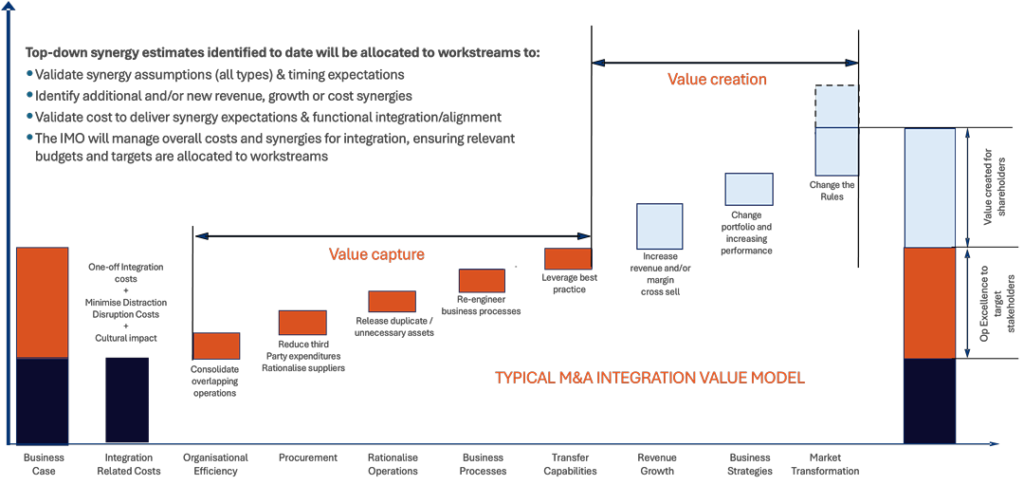
Figure 3 Identifying Value Capture & Value Creation Synergies to Maximise Deal ROI
3. Regulatory and Geopolitical Risk
- Antitrust Scrutiny: Regulatory bodies are closely examining cross-border deals, especially those affecting market competition or energy security.
- Geopolitical Tensions: Sanctions, trade restrictions, and local content rules complicate international growth strategies.
4. Valuation and Financial Exposure
- Market Volatility: Fluctuating commodity prices and uncertain demand projections impact asset valuations and deal structuring.
- Capital Intensity: Large-scale acquisitions require robust financial health and can strain debt ratios or shareholder returns.
Mastering Inorganic Growth: Strategic Levers
1. Strengthen Strategic Fit and Due Diligence
- Cultural Compatibility Assessment: Evaluate alignment early to prevent integration breakdowns.
- Integration Playbooks: Develop phased plans for systems, people, and process integration to preserve value.
2. Retain and Engage Acquired Talent
- Transparent Communication: Articulate integration plans and growth opportunities to reduce employee anxiety.
- Career Mobility and Development: Invest in leadership pathways, mentorship, and training to retain top performers.
- Role Transformation: Make tangible steps to simplify and make work easier, including the use of AI and knowledge systems to support roles and capture feedback and ideas, which can often improve job satisfaction.
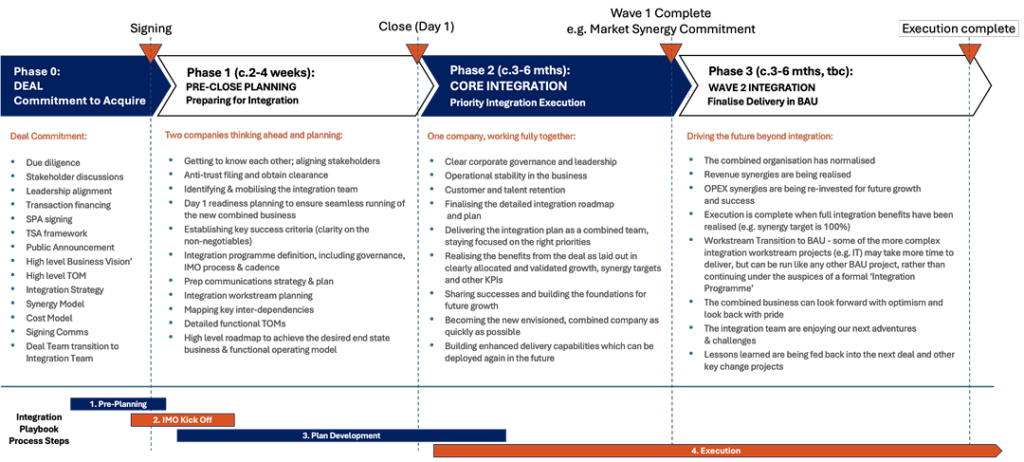
Figure 4 Comprehensive M&A Integration Planning from Due Diligence to Execution
3. Navigate Regulatory and Political Headwinds
- Comprehensive Risk Mapping: Identify regulatory, geopolitical, and financial exposure in potential deals.
- Local Partnerships: Leverage local allies to gain market insight and regulatory acceptance.
4. Optimise Capital Deployment
- Disciplined Valuation Models: Use robust financial modelling to account for market volatility and future risks.
- Portfolio Optimisation: Continuously assess asset performance and divest underperforming or non-core operations.
“In the EU and UK, regulations like CSRD, SFDR, SDR and the UK TPT are making ESG integration a core expectation in M&A strategy. Boards and investors must now assess emissions, transition risk, and green revenue as part of due diligence. Leading firms in the Energy sector, such as Ørsted, BP, Shell, and Iberdrola, are deploying bold capital to drive low-carbon transformations through acquisitions and innovation and to accelerate low-carbon growth. Private equity and infrastructure funds are following suit, targeting transition-aligned assets where ESG premiums are rising and liabilities face scrutiny. The mandate is clear: embed ESG at the core of M&A strategy, align deals with net-zero goals, and ensure integration accelerates sustainability. ESG isn’t a barrier – it’s a catalyst for value creation, risk mitigation, and long-term competitive edge” Dana Hanby, Managing Director, ESG Nexus
Synergising Organic and Inorganic Growth
The most successful companies integrate organic and inorganic strategies into a unified growth architecture. For instance, a firm may:
- Digitally transform its operations to boost efficiency (organic)
- Acquire a cleantech innovator to expand its renewable footprint (inorganic)
- Retain acquired talent through cultural integration and upskilling programs
Key Enablers of Dual-Growth Success:
- Agile Leadership: Empower cross-functional teams to drive innovation and integration simultaneously
- Sustainability Integration: Embed ESG principles into both operational models and deal strategies
- Customer-Centric Innovation: Design solutions that anticipate and exceed evolving customer expectations
- Supply-Centric Innovation: Create opportunities to simplify supply chains, whilst becoming easier to switch
Leading with Strategy Execution and People
Navigating the complexities of today’s energy landscape requires more than tactical fixes. It demands a strategic, holistic approach that blends the discipline of organic growth with the speed and reach of inorganic expansion. By investing in people, embracing technology, and executing purpose-driven M&A, energy companies can build resilient, future-proof business models. Those who master the art of synergising growth will lead the energy transition – not follow it.
The Implications of AI in Energy, Resources & Utilities

AI is transforming the Energy, Resources, and Utilities industries by optimising energy production, improving resource management, and enhancing sustainability efforts. Companies in oil & gas, mining, electricity, and water utilities are leveraging AI to increase efficiency, reduce costs, and meet environmental goals.
1. AI in Energy Production & Grid Management
AI enhances energy efficiency and reliability by:
Smart Grids & Demand Forecasting
- AI predicts energy demand and optimises power distribution.
- Load balancing ensures stable electricity supply during peak and off-peak hours.
Renewable Energy Optimisation
- AI forecasts solar and wind energy output based on weather data.
- AI-powered energy storage systems manage excess power and reduce waste.
Predictive Maintenance in Power Plants
- AI analyses sensor data to detect faults in turbines, generators, and substations before they cause failures.
- Reduces downtime and maintenance costs in power plants.
Example: Google DeepMind helps the UK’s National Grid optimise energy distribution using AI.
2. AI in Oil, Gas & Mining
AI is revolutionising natural resource extraction by:
Exploration & Drilling Optimisation
- AI analyses seismic data and satellite imagery to identify oil, gas, and mineral deposits.
- Improves drilling accuracy and reduces exploration costs.
Predictive Maintenance in Refineries & Rigs
- AI detects pipeline leaks, reducing environmental risks and operational losses.
- AI-powered robots inspect offshore rigs and mines to enhance safety.
Process Automation & Efficiency
- AI automates refinery operations, optimising fuel production.
- Smart mining trucks and drilling systems use AI for autonomous operations.
Example: Shell and ExxonMobil use AI for predictive maintenance and drilling site selection.
3. AI in Water & Utilities Management
AI enhances water and waste utilities by:
Smart Water Management & Leak Detection
- AI monitors water consumption patterns and detects leaks in pipelines.
- Reduces water wastage and improves infrastructure efficiency.
AI in Waste Management & Recycling
- AI-powered robots sort recyclable materials, improving waste processing.
- AI predicts waste generation trends to optimise collection routes.
Example: Veolia uses AI to detect leaks and optimise water distribution networks.
4. AI in Energy Trading & Sustainability
AI supports sustainable energy solutions and trading strategies:
AI-Powered Energy Trading
- AI algorithms predict electricity price fluctuations and optimise trading strategies.
- AI helps companies buy and sell energy efficiently in global markets.
AI for Carbon Emission Reduction
- AI tracks industrial emissions and suggests ways to lower carbon footprints.
- AI-powered carbon capture systems optimise CO₂ removal processes.
Example: BP and Tesla use AI to enhance renewable energy trading and optimise energy storage.
“AI is a tempting silver bullet, but it is dependent on a few things. Well curated data across multiple systems, understanding how that data is being processed, and validation of its outcomes. A well governed AI programme adds value through more efficient processes and providing new insights, without increasing risk. Consider whether delegating to AI will impact your development plans for new talent, as it may significantly reduce the foundational learning and critical thinking that they will need when they grow and replace veterans in your business.”, Neale Stidolph, Head of Strategic Development, Sword Group
Challenges of AI in these Industries
- High implementation costs – AI adoption in energy and utilities requires significant investment. However, there are opportunities for lower cost AI development options, such as in customer service, rather than in major industrial systems.
- Regulatory & ethical concerns – AI in energy trading and automation must comply with environmental laws. Greater transparency in how AI works will help.
- Data security risks – Power grids and pipelines are critical infrastructure, making them vulnerable to cyber threats, including both technical and human access.
AI is transforming energy, resources, and utilities by optimising energy production, improving sustainability, and reducing operational risks. Companies that leverage AI can increase efficiency, cut costs, and meet global clean energy goals.
Conclusion
AI is rapidly reshaping the Energy, Resources, and Utilities sectors—ushering in a new era of intelligent operations, predictive maintenance, and sustainable resource management. From optimising energy production and grid performance to enhancing exploration, waste reduction, and carbon management, AI is proving indispensable across the value chain.
However, realising its full potential requires more than just technological adoption. Organisations must invest in robust data governance, talent development, and cybersecurity to ensure safe, ethical, and effective AI deployment.
As the pressure mounts to meet environmental targets and drive operational efficiency, those that integrate AI thoughtfully and strategically will lead the transition toward a smarter, cleaner, and more resilient energy future.