Executive Summary
The business and professional services (BPS) sector is at a pivotal inflection point. A convergence of economic headwinds, technological disruption, talent shortages, intensifying competition, and rising client expectations is reshaping the market. Firms must respond with resilience, digital maturity, and hybrid growth models that blend organic innovation with inorganic scale.
Those who adapt will emerge stronger – building client trust, talent pipelines, and operational efficiency. Those who lag risk margin erosion, strategic irrelevance, and lost market share.
Key imperatives for leaders:
- Talent as the decisive battleground: Close digital skills gaps, invest in mid-level development, and embrace flexible workforce models.
- Economic resilience: Deploy adaptive strategies: diversification, value-based pricing, and cost optimisation.
- Technology as a necessity: Drive ROI-focused AI adoption and automation, anchored in workforce reskilling.
- Market fragmentation: Differentiate through specialisation, partnerships, and selective M&A.
- Evolving client expectations: Embrace transparency, co-creation, and agile delivery.
- Escalating compliance and risk: Build robust regulatory and cybersecurity capabilities.
- Geopolitical uncertainty: Strengthen resilience through scenario planning and supply chain diversification.
- Hybrid growth strategies: Balance organic innovation with inorganic acceleration.
- AI as a transformative force: Harness AI across service lines while addressing ethical and workforce challenges.
Strategic Challenges
1. Talent Scarcity as the Critical Bottleneck
The industry’s single greatest constraint is talent. Digital and mid-level roles are in critically short supply. Compensation premiums are rising, project delays are common, and lost revenue opportunities are material.
- Tech specialists: Salaries up 25% (2021–23), with tens of thousands of unfilled roles.
- Mid-level professionals: Shortages worsening due to reduced graduate intake during COVID and AI automation reshaping entry-level pathways.
- Impact: Time-to-fill mid-level roles now averages 78 days; project delays cost billions in lost opportunity.
Strategic response:
- Invest in digital upskilling (£15k per employee annually is emerging as best practice).
- Build flexible talent pools (independent contractors, contingent workforce).
- Partner with universities and apprenticeships to rebuild the mid-level pipeline.
- Accelerate career pathways and mentoring to reskill juniors into mid-level roles.
Executive takeaway: Talent is now the sector’s currency. Firms that solve the skills equation will control the growth agenda.
2. Economic Pressures & Margin Compression
Growth expectations are at a five-year low. Inflation, rising social contributions, higher rents, and tech costs are hitting margins hard.
- UK consulting growth projected at 6.4% in 2025, down from 23% in 2022.
- 65% of engagements face budget freezes.
- Labour and infrastructure costs rising 10–20% across the board.
Strategic response:
- Target recession-resilient sectors and diversify service mix.
- Shift to value-based pricing, linking fees to ROI.
- Cut overhead with automation (30% routine task reduction) and remote-first operating models.
Executive takeaway: Only firms that balance cost discipline with value creation will defend margins under pressure.
3. Technology & Digital Transformation: Competitive Necessity
AI and automation are redefining service models. Routine work will be 30% automated by 2025 – but ROI remains uneven.
- Productivity uplift: 20–40% in targeted use cases.
- Barriers: 59% of digital transformations exceed budgets/timelines; costs range $150k–$2.5m.
Strategic response:
- Start small: pilot programs, phased rollouts, focus on high-impact/low-risk areas.
- Build internal change management and reskilling programs (40–60% of workforce affected).
- Use technology partnerships to access expertise without full ownership.
- Redesign service models from time-based to outcome-based delivery.
Executive takeaway: Tech isn’t optional – it’s existential. Winning firms will prove ROI, build trust, and retool their workforce faster than competitors.
4. Intensifying Competition & Market Fragmentation
Digital-first challengers are eroding margins and raising acquisition costs. Since 2020, they’ve captured 15% of UK consulting share.
- Traditional consulting margins down 15–25%.
- Client acquisition costs up 30–40%.
- 82% of firms face price pressure; fixed-fee and subscription models are gaining traction.
Strategic response:
- Differentiate via specialisation and niche expertise.
- Build digital capability internally and via acquisitions.
- Experiment with productised services and transparent pricing.
- Selectively pursue M&A – but only with robust cultural and client integration plans.
Executive takeaway: Competing on breadth and scale is no longer enough – success lies in specialisation, partnerships, and agility.
5. Shifting Client Expectations
Clients demand speed, co-creation, and transparency. They want real-time insights, virtual collaboration, and outcome-driven pricing.
- 65% of client interactions will be virtual.
- Delivery timelines now 30–50% faster.
- Firms that deliver transparency and agility see 95%+ retention rates.
Strategic response:
- Adopt agile methodologies and real-time analytics.
- Embed co-creation – clients as partners in service design.
- Invest in secure collaboration platforms (£500k–£1.5m typical spend).
Executive takeaway: Clients will reward firms that provide clarity, speed, and measurable outcomes.
6. Rising Compliance & Cyber Risks
Regulation and cyber threats are escalating simultaneously.
- 36% of UK financial services firms fined for compliance failures in the past year.
- Average data breach cost: £2.4m–£20m, with 15–25% client loss post-breach.
Strategic response:
- Build systematic compliance frameworks with technology-enabled monitoring.
- Conduct regular training, audits, and certifications.
- Strengthen cybersecurity, incident response, and insurance coverage.
Executive takeaway: Compliance is no longer back-office – it’s a board-level risk with existential implications.
7. Geopolitical Risk & Global Uncertainty
Conflicts, sanctions, and trade restrictions are reshaping operations.
- 85% of risk executives rank geopolitics as the top external threat.
- Supply chain disruption affects 60% of firms with global operations.
Strategic response:
- Deploy geopolitical risk frameworks and scenario planning.
- Diversify supply chains and client portfolios.
- Build crisis response and communication playbooks.
Executive takeaway: Resilience requires anticipating disruption, not just reacting to it.
Strategic Imperatives for Success
- Digital First: Invest in AI, blockchain, and automation for efficiency, compliance, and client trust.
- Talent-Centric: Build pipelines, reskill workforce, and use flexible models.
- Value-Based: Transition to outcome-based pricing and productised services.
- Resilient by Design: Institutionalise scenario planning, compliance frameworks, and crisis readiness.
- Client-Centric: Design agile, transparent, collaborative delivery models.
Organic Growth
Barriers: Talent scarcity, scaling costs, market saturation.
Solutions: Talent pipelines, service productization, niche specialisation, digital marketing-led expansion.
Case: A boutique HR consultancy dropped 30% of its portfolio, sharpened focus, and lifted net profit from 14% to 22%.
Service Innovation & Productization
Turning bespoke services into standardized, repeatable, and scalable offerings.
Case Example – HR Services: A UK HR consultancy standardized its compensation benchmarking into a SaaS-enabled subscription product. Within 18 months, 40% of its revenue base shifted to recurring streams, improving margins and valuation.
Specialization & Differentiation
Deepening expertise in niche sectors where firms can command premium pricing.
Case Example – Legal: A mid-sized law firm repositioned around cybersecurity regulation and data protection advisory. Within two years, they became the go-to advisor for tech clients and doubled their revenues despite wider sector stagnation.
Geographic Expansion
Extending into new markets using technology-enabled delivery and global contractor networks.
Case Example – IT Consulting: An Indian IT services firm entered the UK market virtually, using secure cloud-based platforms for delivery. They avoided £5m+ in setup costs while capturing 20 new European clients within their first year.
Client Relationship Deepening
Moving from transactional engagements to multi-service partnerships.
Case Example – Marketing & Advertising: A digital marketing agency launched CMO-level advisory councils with key clients. This co-creation model increased cross-sell rates by 30% and improved client retention to 97%.

Figure 1 Benefits of Staff Retention
Inorganic Growth
Barriers: 70% of M&A deals fail due to cultural misalignment, client attrition, and integration costs.
Solutions: Full-potential methodology, cultural due diligence, structured integration planning, partnerships.
Case: Strategic alliances deliver scale without overhead or integration risk.
Strategic M&A Execution
Target acquisitions that accelerate entry into new sectors, geographies, or digital capabilities.
Case Example – Recruitment Sector: A mid-market staffing firm acquired a niche IT recruitment specialist to secure access to high-demand digital talent. Post-acquisition, IT placements grew 45% YoY, becoming their fastest-growing practice area.
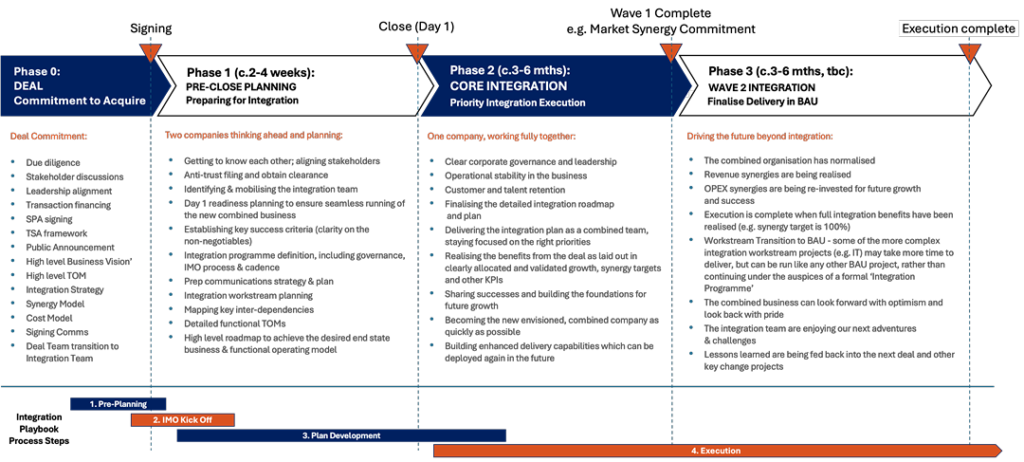
Figure 2 M&A Execution Planning
Cultural Alignment & Integration
Success depends on aligning compensation models, culture, and client transition planning.
Case Example – Consulting: A European management consultancy merged with a U.S. boutique but lost 25% of partners and 15% of clients due to poor cultural integration. A structured change management program was required to restore stability.
Partnerships & Joint Ventures
Acquiring capabilities without full ownership or integration risk.
Case Example – Legal & Compliance: A global law firm created a joint venture with a RegTech startup to provide automated AML compliance monitoring. The JV reduced compliance processing time by 60% and opened a new revenue stream with fintech clients.
Market Access Alliances
Partnering to enter high-barrier markets.
Case Example – Advertising: A U.S. marketing agency partnered with a Chinese digital platform provider to access the Chinese e-commerce market. The partnership drove a 28% uplift in revenues from global clients seeking Asian expansion.
Hybrid Growth
The most resilient firms blend both:
- Organic innovation in AI, cloud, and cybersecurity.
- Selective acquisitions of niche specialists.
- Partnerships for global reach and technology enablement.
Case: A tech consultancy combining organic service development with an analytics acquisition achieved 45% growth in 24 months.
Executive takeaway: The future belongs to firms that balance scale with specialisation, and that execute hybrid strategies with discipline.
Parallel Service Development & Acquisitions
Build internal capabilities while acquiring niche specialists to accelerate entry.
Case Example – IT Services: A U.S. IT consultancy trained staff in AI automation while acquiring a data analytics boutique. The combination delivered 45% revenue growth in 24 months and elevated their market position from regional to national.
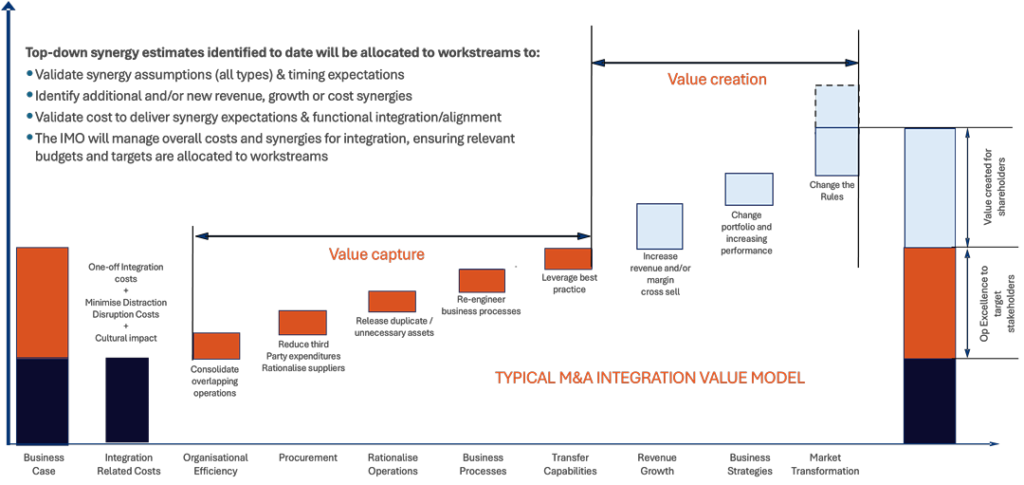
Figure 3 Value Creation Planning
Capability Pairing
Combine internal expertise with acquired or partnered capabilities for end-to-end service delivery.
Case Example – HR & Recruitment: A recruitment firm partnered with an HR tech provider to create an integrated “talent-as-a-service” platform. Clients received sourcing, onboarding, and workforce analytics in one solution, resulting in 35% higher client retention.
Sequential Execution
Alternate between organic development and inorganic acquisition to avoid integration overload.
Case Example – Legal: A fast-growing U.S. law firm alternated between launching new practice groups (cyber, ESG, fintech) and acquiring boutique specialists. By sequencing growth steps, they avoided cultural dilution and achieved 25% compound annual growth.
Technology-Enabled Scaling
Using cloud, AI, and automation to integrate acquired firms more quickly and scale organic services.
Case Example – Consulting: A Big Four firm integrated three acquisitions into its digital practice using a unified collaboration platform, cutting integration time from 18 to 6 months while sustaining delivery quality.
Growth Lessons Across the Sector
- Consulting: Pivot offerings to efficiency, transformation, and resilience services during downturns.
- Legal: Specialize in high-growth niches (cyber, ESG, fintech regulation) while automating routine casework.
- IT Services: Pair AI-enabled delivery with acquisitions in data analytics and cybersecurity.
- HR & Recruitment: Build hybrid models combining tech platforms with human advisory services.
- Marketing & Advertising: Transition from project work to recurring, subscription-based service models.
The Path Forward
The business and professional services sector is under structural transformation. Talent, technology, client expectations, and global volatility define the new playing field.
To succeed, executives must:
- Accelerate digital adoption through targeted AI and automation.
- Close the talent gap with structured development, flexible models, and culture-driven retention.
- Reinvent the value model around outcomes, transparency, and co-creation.
- Strengthen resilience through proactive risk management and scenario planning.
- Pursue hybrid growth to achieve scale, differentiation, and sustainable market leadership.
Firms that act decisively now will not only weather the storm but seize the opportunity to redefine leadership in the next era of professional services.
The Implications of AI in Business & Professional Services…

AI is transforming the business and professional services industry by improving efficiency, automating routine tasks, and enhancing decision-making. Consulting firms, legal services, accounting, HR, and marketing agencies are increasingly leveraging AI to gain a competitive edge.
1. AI in Consulting & Advisory Services
AI is reshaping the consulting industry by:
- Enhancing market research – AI scans industry trends, competitors, and economic indicators for insights.
- Predictive analytics – AI models forecast business risks and opportunities.
- Process automation – AI reduces manual work in financial modelling and client reporting.
Example: Namaste Management, McKinsey, Deloitte, and Accenture use AI for data-driven business strategy recommendations.
2. AI in Legal Services & Law Firms
AI streamlines legal operations by:
- Automating document review – AI scans contracts for risks and compliance issues.
- Legal research acceleration – AI-powered search tools like ROSS Intelligence analyse case law efficiently.
- Contract analytics – AI ensures contracts are consistent, reducing human errors.
Example: JPMorgan’s COiN AI reviews contracts in seconds, replacing 360,000 hours of manual work.
3. AI in Accounting & Finance
AI-driven automation is revolutionising financial services by:
- Automating bookkeeping & audits – AI scans transactions to detect fraud and anomalies.
- Predictive financial modelling – AI forecasts cash flows and tax obligations.
- Compliance & regulatory tracking – AI ensures adherence to tax laws and reporting standards.
Example: Big Four firms (PwC, KPMG, Deloitte, EY) use AI for audit automation and fraud detection.
4. AI in Human Resources & Recruitment
AI improves HR and talent management by:
- Resume screening & talent matching – AI filters candidates based on skills and experience.
- Employee sentiment analysis – AI gauges workplace morale through surveys and internal data.
- AI-driven training & upskilling – Personalised learning paths for employees.
Example: Companies like HireVue and Pymetrics use AI to assess candidate skills through video interviews.
5. AI in Marketing & Advertising
AI enhances marketing strategies by:
- AI-powered content creation – AI tools generate blogs, ads, and social media posts.
- Personalised customer targeting – AI analyses user behaviour to recommend tailored ads.
- Chatbots & AI-driven support – AI handles customer inquiries and improves engagement.
Example: Platforms like ChatGPT, Jasper, and Persado help brands create AI-driven marketing content.
6. AI in Business Process Automation (BPA)
AI-driven Robotic Process Automation (RPA) boosts efficiency in:
- Data entry & document processing – Reduces manual work in administrative tasks.
- Workflow automation – AI streamlines approvals, invoicing, and reporting.
- AI-driven analytics – Real-time dashboards optimise decision-making.
Example: Companies use UiPath and Automation Anywhere for AI-driven business process automation.
Challenges of AI in Business Services
- Data security & compliance – AI must handle sensitive business data securely.
- Bias in AI decision-making – AI recruitment or legal tools must ensure fairness.
- Workforce impact – AI automation may displace some jobs, requiring workforce reskilling.
AI is revolutionising business and professional services by automating tasks, improving decision-making, and enhancing efficiency. However, ethical and regulatory challenges must be managed for responsible AI adoption.