
Business strategy planning and execution face a host of challenges that can impede organisational success. These challenges include aligning strategic objectives with execution capabilities, adapting to market changes, resource constraints, and managing stakeholder expectations. Understanding these issues is crucial for developing effective strategies and achieving desired outcomes. This article explores these challenges and offers insights into overcoming them.
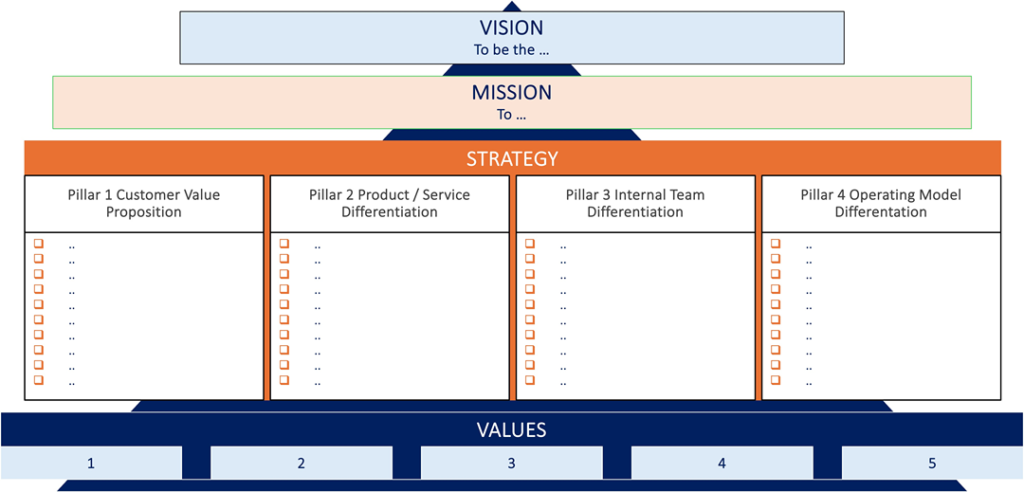
Figure 1 Business Strategy on a Page
1. Strategic Alignment
One of the most significant challenges is ensuring alignment between strategic plans and operational execution. Misalignment can occur when strategic objectives are not clearly communicated or when there is a disconnect between leadership’s vision and the actions of various departments. Without alignment, resources may be misallocated, and efforts may become fragmented.
To tackle this, organisations should establish clear communication channels and ensure that strategic goals are cascaded throughout the organisation. Regular check-ins and feedback loops can help maintain alignment and make necessary adjustments to strategies as needed.
Achieving strategic alignment requires integrating the strategic goals with the day-to-day operations of the company. This involves ensuring that all departments and employees understand and are working towards the same objectives. One effective approach is to use strategic frameworks such as Balanced Scorecards, which translate strategic goals into actionable items across the organisation.
For most of the time, a company’s strategy is just reviewed and updated. From time to time, however, organisations realise that they have a need for a fundamental appraisal of where the business is going. Upon recognising this need for fundamental change or validation, management embarks upon a significant strategic initiative, requiring a shift from the annual strategic (or business planning) cycle into a more structured strategic process. There are two main catalysts to this shift:
- Competitive pressure forces a company to analyse its goals and objectives.
- A fundamental environmental shift that significantly alters opportunities and threats.
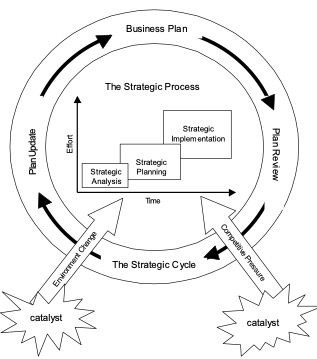
Figure 2 The Strategic Cycle
There is of course no one logical objective approach to planning. Strategic analysis, characterised by free discussion to produce ideas and commitments, should produce the basic input for planning in conjunction with suitable procedures that fit the firm’s way of working. The plan provides the platform for understanding, communicating and gaining the support of those concerned with its implementation. Rarely can planning be conducted in isolation from those that will be responsible for its implementation as it should be recognised right from the start that those with the power to frustrate whatever is suggested must buy-in to the process and to the plan.
Many strategic plans can easily become too complicated. The best plans readily convey the linkages between the various steps in the strategic process, whilst highlighting the principal actions which will allow key milestones to be reached and therefore the goals to be achieved. They should set the objectives for each department or business line across the organisation and become the prime input to the development of detailed business plans and budgets during the implementation phase. At the same time, it also provides a management control framework to ensure successful implementation including structure, reporting, risk management and communications.
2. Responding to Market Dynamics
The business environment is constantly evolving due to technological advancements, regulatory changes, and shifting consumer preferences. These dynamics require businesses to be agile and responsive. However, adapting to these changes can be challenging, especially for larger organisations with established processes.
Businesses can address this by implementing a continuous improvement mindset and fostering a culture of innovation. Scenario planning and risk management can also help organisations anticipate and prepare for potential changes in the market.

Figure 3 Responding to Market Dynamics
Given the rapid pace of change in today’s markets, organisations must be flexible and adaptable. This often means embracing digital transformation, which can help businesses stay relevant and competitive. Digital tools can provide valuable insights into market trends, customer behaviours, and competitive activities, allowing businesses to pivot quickly when necessary.
3. Resource Constraints
Limited resources, such as budget, time, and talent, pose a significant challenge to strategy execution. Organisations must balance competing priorities and allocate resources efficiently to ensure strategic initiatives are successfully implemented.
Effective resource management involves prioritising initiatives based on strategic importance and potential impact. Additionally, leveraging technology and automation can help optimise resource use and improve efficiency.
Efficient resource management is critical for executing strategies effectively. This involves not only financial resources but also human capital. It’s important to have the right people in the right roles and to invest in training and development. Additionally, technology can play a significant role in resource optimisation, with tools like project management software helping to ensure that resources are used efficiently.
Organisations often struggle to allocate resources effectively across various projects, leading to delays and suboptimal outcomes. To overcome this challenge, businesses should prioritise projects based on their alignment with strategic goals and potential ROI. Implementing a robust project management framework can help ensure that resources are used efficiently. Additionally, leveraging external expertise through partnerships or outsourcing can provide access to necessary skills and technologies without overburdening internal teams.
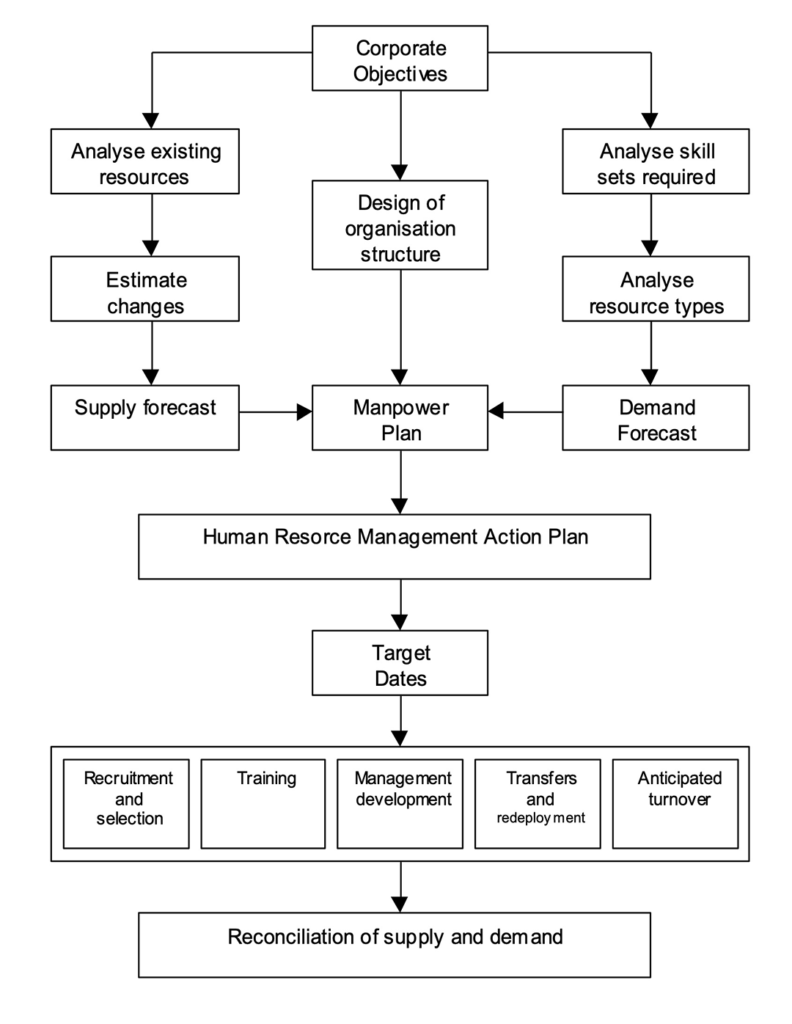
Figure 4 Resource Management Process
Resource management presents a number of typical management challenges:
Firstly, particularly in businesses that are not accustomed to working with projects, it is difficult to achieve an understanding of the resources required for a successful project. There are several reasons why line organisations are reluctant to commit resources:
- They hope that staff can participate in project work on top of their regular job, without any reduction in their original responsibilities.
- They do not understand why the project should take such a long time; and
- They do not understand that a reduction in resources means a reduction in quality.
Secondly, even if there is a real understanding of the need for resources, there are often problems releasing the required people at the required time. Usually, people in the organisation are committed on a full-time basis to other tasks and cannot participate in the project unless these other tasks are covered one way or another.
Thirdly is that a project includes people from different backgrounds having different skills and experience. That a project brings together people with different skills is precisely the point of project management; project tasks are solved by exactly this method. However, these people with different skills probably may not have worked together previously and this is the challenge of the project manager. Their varied backgrounds, expectations and ambitions can impede the success of a project if no effort is made to form a ‘team’. Time must be devoted to providing opportunities for project members to get to know each other, enabling them to draw on each other’s strengths later on.
4. Stakeholder Engagement
Engaging stakeholders, including employees, customers, and investors, is essential for successful strategy execution. Resistance from stakeholders can create roadblocks and undermine strategic initiatives.
To overcome this challenge, businesses should focus on transparent communication and involve stakeholders in the planning process. Building strong relationships and addressing stakeholder concerns can enhance buy-in and support for strategic initiatives.
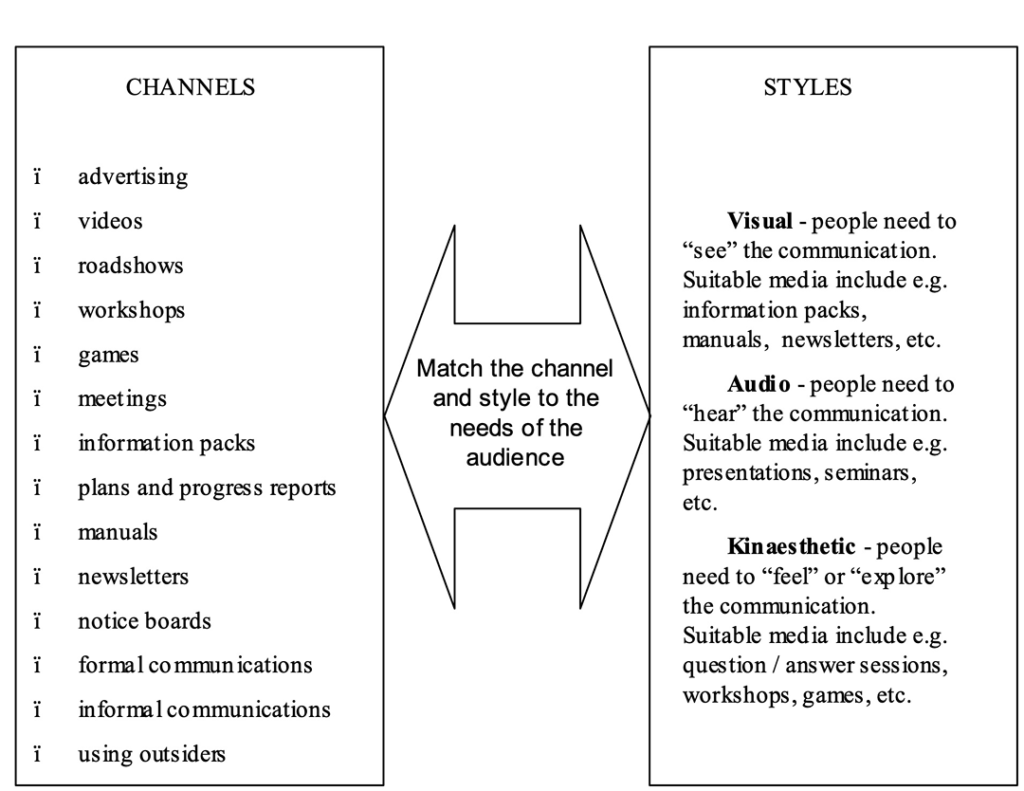
Figure 5 Communication Channels & Styles
Engaging stakeholders is about more than just communication; it’s about building trust and fostering a sense of shared purpose. This can be achieved by involving stakeholders in the strategy development process, actively listening to their concerns, and demonstrating how their input is valued and reflected in the final strategy.
5. Measuring and Monitoring Performance
Measuring and monitoring the performance of strategic initiatives is crucial for ensuring success. Without proper metrics and monitoring, organisations may struggle to assess the effectiveness of their strategies and make informed decisions.
Implementing a robust performance management system with clear key performance indicators (KPIs) can help track progress and identify areas for improvement. Regular reviews and adjustments based on data can enhance strategic execution and drive better outcomes.
To ensure strategies are on track, organisations need to set clear, measurable goals. This involves establishing KPIs that align with strategic objectives. Regular performance reviews and data analysis can help identify areas where strategies are succeeding or need adjustment. Leveraging data analytics tools can provide deeper insights and facilitate more informed decision-making.
Handy Hints: Strategic Planning
- A real strategy looks at both short-term and long-term goals and results. If you don’t survive the short-term, who cares about the long term. If you only focus on the short-term, you’ve got no direction or strategy.
- Think SMART (specific, measurable, achievable, realistic, time-specific) when defining your strategic objectives.
- Commit to a continuous strategic process with plenty of room for change. A good strategy breathes new life every day. Don’t expect to follow a ten-year vision precisely.
- Three years is a good time for planning. Know, for each product category or business line, what you are going to do in the next three years. Once you know this, set short-term goals.
- Remember that creating or planning the strategy is only half the story. Failure most often results from failure to implement. And when implementing, don’t try to find the perfect solution or fit. An 80% solution implemented today is better than a 100% solution that is never implemented.
6. Bridging the Gap Between Business and IT
In the modern business landscape, aligning business and IT strategies is crucial for organisational success. However, this alignment presents significant challenges in both planning and execution. To remain competitive, businesses must navigate a complex array of technological advancements, market demands, and internal dynamics.
One of the primary challenges in strategy planning and execution is bridging the gap between business goals and IT capabilities. Often, there is a disconnect between what the business aims to achieve and what the IT department can deliver. This misalignment can stem from a lack of communication, differing priorities, or a misunderstanding of each other’s roles and capabilities.
To address this, organisations must foster a culture of collaboration and communication. Regular meetings between IT and business leaders can help ensure that everyone is on the same page. Additionally, involving IT in the early stages of business strategy planning can provide valuable insights into technological possibilities and limitations.
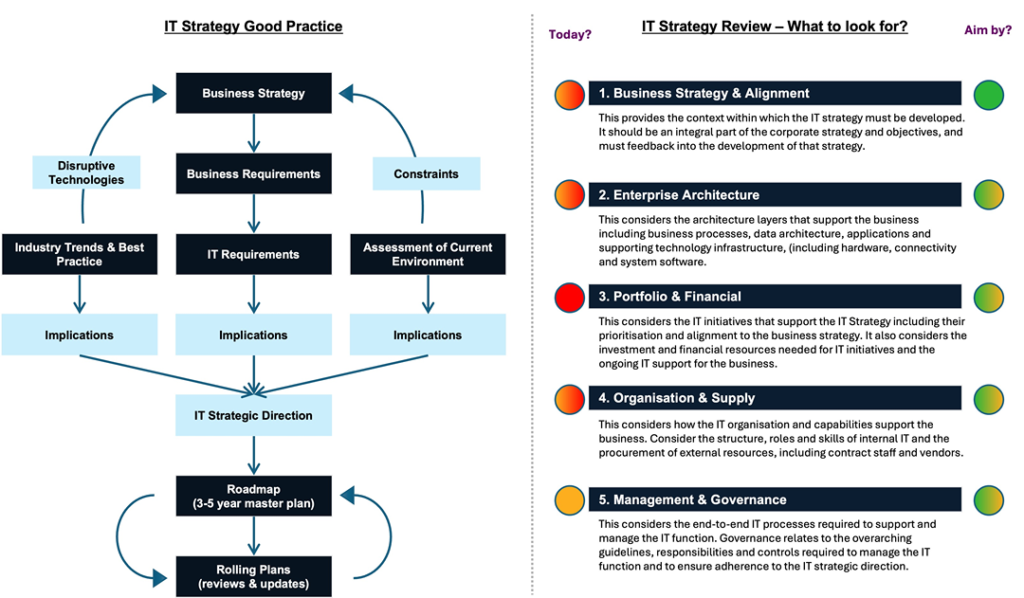
Figure 6 IT Strategy Good Practice
7. Rapid Technological Advancements
The rapid pace of technological change presents another significant challenge. New technologies such as artificial intelligence, machine learning, and blockchain are constantly emerging, each with the potential to disrupt existing business models. Keeping up with these advancements requires continuous learning and adaptation.
Organisations must invest in ongoing training and development for their IT staff to stay current with new technologies. Moreover, they should adopt a flexible strategy that allows for quick pivots in response to technological changes. This agility is crucial for maintaining a competitive edge in the marketplace.
8. Managing Change
Implementing new strategies often requires significant organisational change, which can be met with resistance from employees. Change management is a critical component of successful strategy execution. Employees need to understand the reasons behind changes and how they will benefit the organisation and themselves.
Effective change management involves clear communication, training, and support throughout the transition process. Leaders should engage employees early and often, addressing concerns and providing the necessary resources to facilitate change.
Once you’ve completed a thorough strategic analysis, and prepared your comprehensive strategic plan, now you must implement. You must gain commitment, motivate and mobilise the organisation, prepare detailed plans, create an efficient management structure, manage the change programme and achieve your objectives. Some of the key success factors in making your strategic plan work include:
- Management is committed to implementing the plan, constantly reinforced by their actions. Priorities should be consistently applied and demonstrated.
- An appropriate management structure is established. An inappropriate structure can seriously undermine the implementation process.
- The plan is communicated to all staff. Everybody doesn’t need to know all the detail but should at least be informed of the essence so that they can play their part. A common sense of purpose can dramatically improve your chance of success; and
- Management information reflects what you are trying to achieve, and progress is reviewed regularly.
In many ways, your strategic plan is like a story or a script for a movie. However good the script, the actual production of the movie, the skill of the actors, producers and directors, etc. is essential to success. We are all aware of how different movies of the same book can vary from outstanding success to dismal failure. Similarly, just as a substandard plot can be a successful movie through proficient execution, so a suboptimal strategy may be successful through skillful execution. An implementation is successful if it achieves the predicted consequences, or objectives, within acceptable limits. However, the unexpected does occur so there is a need for some flexibility or, if alternative futures can be set out, you should have contingency plans drawn up.
Handy Hints: Project Management
- Business is not complicated. Keeping it simple will always be better than making it complex.
- Set major goals that make a difference and that can be attained (but don’t be soft – most people relish a challenge).
- Don’t let people stray from these goals; hold them accountable at all times.
- Focus on your goals. If you set too many, you’ll fail.
- Focus on the solutions, not the problems. Do not let managers spend all their time telling you why something can’t be done.
- Avoid large meetings for making decisions. Usually, the result of a large meeting is “let’s have another meeting”! Put a few people round a table, make sure they all contribute, and make a decision.
- Create opportunities to develop your people. Strategy execution offers a fantastic opportunity for staff to learn about project management, other areas of the organisation, as well as getting involved.
- Accept mistakes. The only bad mistake is not to learn from the mistakes you do make. As a manager, if you treat someone like a loser because an idea won’t work, you’ve instantly killed the motivation to come up with other ideas.
- Feedback. Provide regular positive feedback so that staff feel their contributions are noticed and appreciated.