
Introduction
In a business environment where capital efficiency is paramount, deepening wallet share with existing customers stands out as a high-impact, low-cost strategy for driving profitable growth. For private equity (PE)-backed companies facing pressure to deliver accelerated returns in constrained capital markets, expanding penetration within the current customer base offers a compelling alternative to resource-intensive new client acquisition.
This approach leverages existing relationships to unlock untapped potential, delivering measurable value with minimal incremental investment. Integrating robust Go-to-Market (GTM) strategies and disciplined commercial execution is essential here, as they ensure that penetration efforts are not siloed but aligned across marketing, sales, and customer success functions to maximise impact.
While many portfolio leaders prioritise acquiring new clients, the richest growth opportunities often lie within their existing base. Mature B2B companies, in particular, frequently overlook opportunities due to outdated segmentation, inconsistent account management, pricing inefficiencies, or underutilised cross-selling strategies. Operational excellence in this context demands precision: identifying high-potential customers and systematically unlocking their value through targeted GTM plays and flawless commercial execution.
This article outlines three strategic imperatives for CEOs and senior leaders in PE-backed portfolios to drive customer penetration effectively: precision segmentation, data-driven pricing and offer design, and customer success as a growth engine. These are underpinned by GTM frameworks that adapt product positioning, channel strategies, and messaging for existing customers, combined with commercial execution tactics like sales enablement and performance tracking. A real-world case study illustrates how an integrated approach can transform commercial outcomes, delivering sustainable growth and enhanced enterprise value.
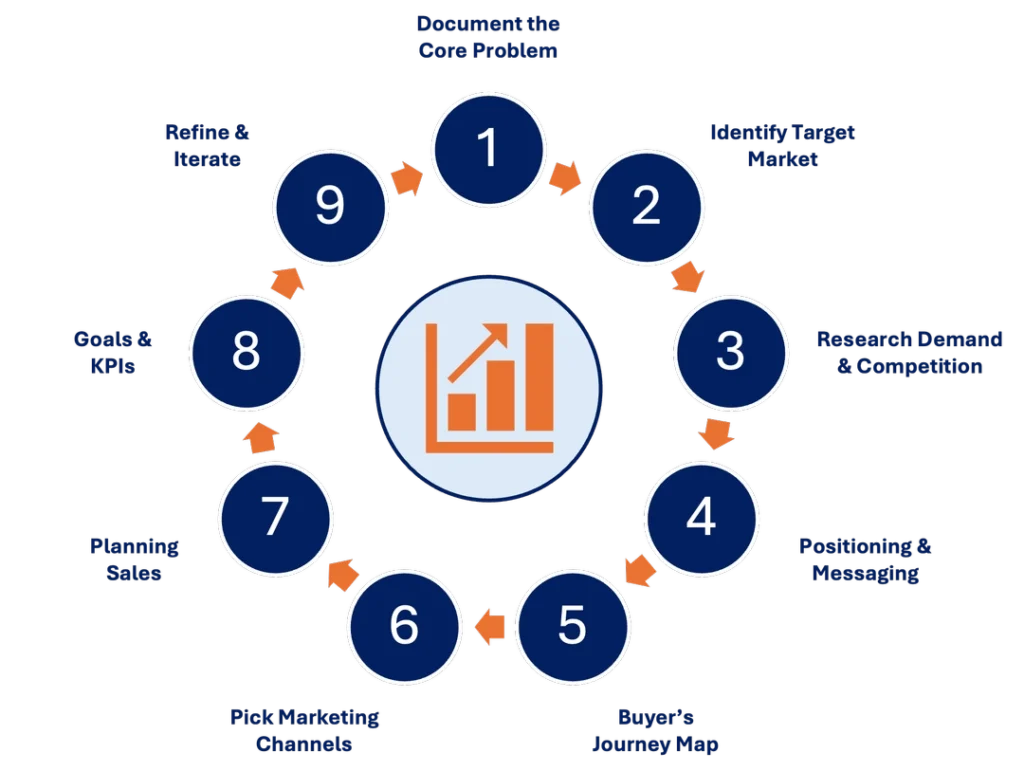
Figure 1 Customer Wallet Share Penetration Framework
Why Deepening Customer Penetration Matters
For PE-backed businesses, organic value creation is increasingly central to investment strategies. In competitive M&A markets and with limited access to growth capital, reliance on buy-and-build strategies is no longer sufficient. Expanding share of wallet with existing clients offers four key advantages:
- Capital Efficiency: Upselling or cross-selling to existing clients costs one-third to one-fifth of acquiring new ones, minimising capital outlay.
- Higher Margins: Deeper relationships reduce servicing costs, improve pricing defensibility, and enhance contribution margins through cross-sold services.
- Predictable Cash Flows: Expansion revenue from established relationships provides greater visibility, stabilising earnings and supporting valuation uplifts at exit.
- Stronger Valuations: Demonstrating sustained wallet share growth and customer longevity signals commercial resilience, a key factor in due diligence.
Unlocking this potential requires a cross-functional approach, integrating segmentation, commercial analytics, pricing, and customer success to drive disciplined execution. Effective GTM strategies play a pivotal role by repurposing new-market tactics—such as value proposition refinement and channel optimisation—for account expansion, while commercial execution ensures these strategies translate into actionable playbooks, training, and metrics that align teams toward penetration goals.
1. Precision Segmentation: Identifying High-Potential Opportunities
Many PE portfolio companies rely on outdated segmentation models based on historical revenue or geographic regions, which offer limited insight into growth potential. Precision segmentation uses data-driven insights to quantify customer headroom and prioritise high-value opportunities, serving as the foundation for tailored GTM strategies.
Key Actions for Precision Segmentation:
- Quantify Headroom: Analyse category spend, product penetration, or service utilisation to estimate untapped potential. For example, if a client spends £10 million annually across providers but only £1 million with your company, the £9 million gap represents actionable headroom.
- Profile Growth Indicators: Identify clients with expanding budgets, recent acquisitions, or increasing usage intensity by combining CRM analytics with external firmographic data.
- Prioritise Profitability: Focus on accounts with favourable cost-to-serve ratios and strategic alignment to maximise ROI.
Implementation:
High-potential accounts may warrant dedicated success managers and tailored engagement plans, while mid-tier segments can be addressed through scalable marketing automation or periodic reviews. This tiered approach balances depth of engagement with cost efficiency. From a GTM perspective, segmentation informs customised messaging and channel selection – such as personalised email campaigns or account-based marketing (ABM) – to drive upsell adoption. Commercial execution involves equipping sales teams with segmentation-derived insights via dashboards and training, ensuring consistent targeting and follow-through.
Diagnostic Question: Does your segmentation reflect future potential, or is it anchored in past performance? In many B2B firms, 20% of accounts generate 80% of revenue, yet most remain underpenetrated.
2. Data-Driven Pricing and Offer Design: Maximising Wallet Share
Pricing is a critical yet underutilised lever for growth. A Bain & Company study notes that a 1% price improvement can boost EBITDA by 8-12% in B2B companies. However, many PE-backed firms rely on generic discounting or legacy pricing models, missing opportunities to align pricing with customer value. This imperative ties directly into GTM by refining offer architecture to match customer needs and competitive positioning.
Core Principles:
- Price Insight: Use transactional data to analyse price variance and elasticity by customer and segment. Advanced analytics can uncover “silent discounting” from inconsistent negotiations or outdated contracts. For example, a facilities management firm identified 15% discounts below marginal value in its top-decile accounts, resetting pricing to achieve a 9% revenue uplift.
- Bundling and Offer Design: Structure offers around customer outcomes, using bundled service packages or modular pricing to drive adoption of adjacent services. This approach simplifies cross-selling and enhances perceived value, aligning with GTM’s emphasis on solution-based selling over product features.
- Value Communication: Align sales collateral and success metrics with tangible ROI (e.g., cost savings, risk reduction). Clear value narratives increase customer willingness to adopt incremental services, supported by GTM messaging that emphasizes long-term partnership benefits.
In Practice:
A mid-market B2B services company redesigned its pricing model by integrating analytics, rationalising discounts, and aligning account teams around value-based selling. Within 12 months, customer lifetime value (CLV) increased by 18%, driven by improved retention and targeted cross-selling, with no additional client acquisition costs. Commercial execution here included rolling out pricing playbooks and monitoring adherence through KPI dashboards, ensuring GTM strategies were operationalised effectively.
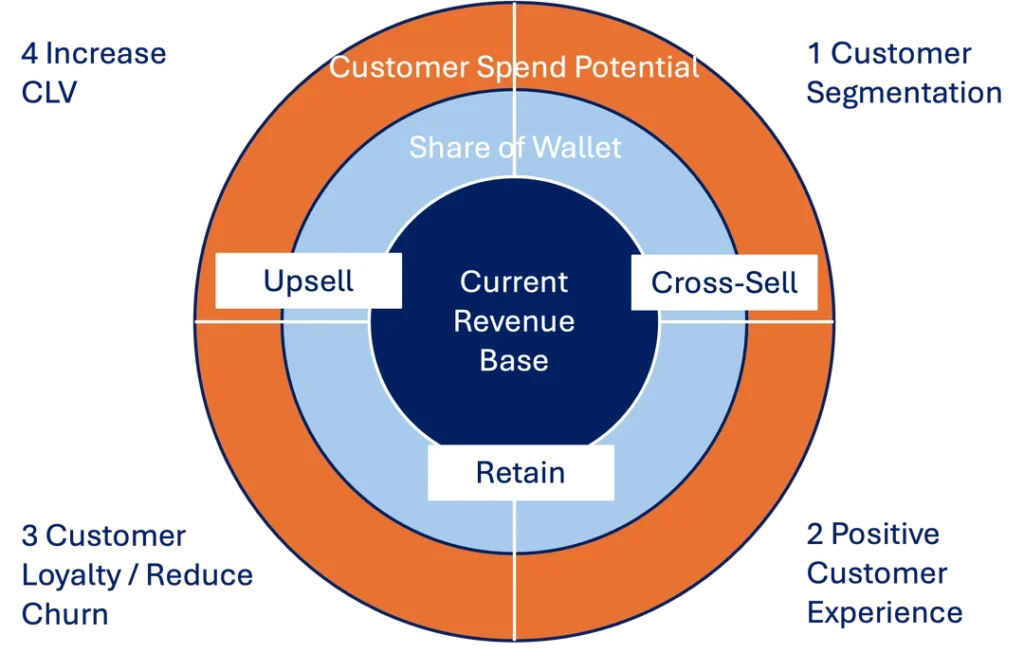
Figure 2 Steps to Build a GTM Strategy
3. Customer Success as a Growth Engine
Traditional account management focuses on relationship preservation; customer success emphasizes outcome realisation and proactive expansion. In subscription-based or recurring revenue models, customer success is both a retention and growth driver, amplified by GTM integration to treat expansions as mini-launches.
Key Steps:
- Systematic Expansion Plays: Map cross-sell and upsell opportunities into the customer lifecycle. For example, post-implementation reviews can identify relevant add-ons, triggered by usage trends or contract milestones. GTM strategies adapt these plays with targeted campaigns, such as webinars or demos tailored to customer pain points.
- Metrics-Driven Behaviour: Shift incentives from sales volume to metrics like net revenue retention (NRR), product adoption, and time-to-value. This aligns teams with penetration goals and reinforces commercial execution through balanced scorecards.
- Sales-Success Collaboration: Integrate customer success and sales through regular reviews, enabling success managers to feed usage insights back to sales for targeted proposals. This closed-loop approach embodies strong commercial execution, with GTM providing the overarching framework for joint planning and resource allocation.
In Practice:
A PE-backed professional services firm launched a customer success function, assigning managers to 20-25 strategic accounts. By integrating project performance data with cross-sell tracking, retention rose from 84% to 92%, and cross-sell penetration increased by 14 points, generating £6 million in incremental revenue with minimal headcount growth. GTM elements included co-developed expansion roadmaps, executed commercially through cross-training and quarterly alignment sessions.
The CEO Agenda: Building a Penetration-Led Growth System
Executing a customer penetration strategy requires systemic capabilities, with GTM and commercial execution at the core. CEOs can follow this blueprint:
- Governance and Accountability:
- Appoint a Chief Revenue Officer or Chief Commercial Officer as Executive Sponsor for penetration metrics, overseeing GTM strategy development and commercial execution.
- Ensure board alignment with the investment thesis through regular reporting on NRR, CLV, and cross-sell ratios.
- Customer Data Infrastructure:
- Consolidate CRM, pricing, and usage data into a unified analytics platform to support GTM decision-making.
- Start with a minimal viable dataset, scaling to predictive analytics over 12-18 months to inform real-time commercial adjustments.
- Capability Development:
- Train teams in commercial analytics, consultative selling, and customer success methodologies, with a focus on GTM tools like ABM platforms and execution frameworks such as sales playbooks.
- Use investor backing to fund targeted skill development, including simulations for expansion scenarios.
- Success Metrics:
- Track NRR, gross retention, product adoption, cross-sell ratios, and CLV progression, incorporating GTM-specific KPIs like campaign conversion rates.
- Integrate these KPIs into quarterly board reports to link execution with investor visibility.
Embedding Penetration into the Investment Thesis
For PE sponsors, customer penetration enhances value throughout the holding period:
- 100-Day Plans: Include segmentation, pricing, success model reviews, and GTM audits alongside operational priorities to set the stage for commercial execution.
- Incentives: Tie management compensation to retention, expansion, and GTM metrics, not just EBITDA.
- Exit Value: Highlight NRR growth, CLV improvement, cross-sell velocity, and GTM maturity to justify premium valuations.
Avoiding Common Pitfalls
- Fragmented Ownership: Establish cross-functional accountability to align sales, pricing, success, and GTM teams.
- Data Underinvestment: Prioritise reliable, unified datasets before scaling automation, ensuring they fuel both GTM planning and commercial execution.
- Cultural Inertia: Use pilot programs to demonstrate early wins and build momentum, fostering a GTM-oriented culture.
Case Study: Transforming a B2B Services Firm
A mid-market B2B services company in the UK and Europe, backed by a PE investor, faced stagnant revenue despite high customer loyalty. The investor’s 100-day plan prioritised wallet share expansion through:
- Segmentation Overhaul: Integrated headroom modelling to identify underpenetrated accounts, informing GTM targeting.
- Pricing Redesign: Eliminated leakage and introduced value-based bundles, aligned with GTM offer positioning.
- Customer Success Launch: Systematised retention and cross-selling with dedicated managers, supported by commercial execution playbooks.
Execution involved a unified GTM framework: marketing developed expansion content, sales executed targeted outreach, and success teams monitored outcomes.
Results (12 Months):
- CLV increased by 18%.
- NRR improved from 104% to 119%.
- Cross-sell ratio rose by 22%.
- EBITDA margin grew by 240 basis points without new client acquisition.
The company reinvested profits into analytics and customer experience, scaling the GTM model across European markets with investor support.
Conclusion: A Mindset for Sustainable Growth
Deepening customer penetration is not a one-time initiative but a cultural shift toward maximizing customer value, powered by integrated GTM strategies and rigorous commercial execution. For PE-backed CEOs, answering three questions is critical:
- Do we understand our true customer potential?
- Are our teams empowered with data-driven insights and GTM tools?
- Is customer success positioned as a growth engine, with strong commercial execution?
Companies that embed these principles build not just revenue but lasting customer trust and partnership, positioning them for superior returns and competitive advantage.