
Executive Summary
The consumer and retail sector is navigating one of the most disruptive decades in its history. Economic turbulence, shifting consumer expectations, technological acceleration, and heightened sustainability demands are reshaping business models at speed. Retailers face margin pressures from inflation and labour costs while competing against digital-first disruptors and evolving loyalty dynamics. At the same time, AI and data-driven tools are redefining supply chains, pricing, and customer engagement. Success in this environment will depend on balancing operational resilience with bold innovation and blending organic growth with targeted acquisitions to build future-ready organisations.
Key Takeaways:
- Economic and Consumer Pressures – Inflation, high interest rates, and the cost-of-living crisis are reshaping demand toward value-based formats, forcing retailers to rethink pricing, promotions, and loyalty strategies.
- Shifting Consumer Behaviour – Omnichannel experiences, personalisation, and convenience are now baseline expectations, with experiential retail becoming a critical differentiator for younger consumers.
- Digital Disruption & AI – Retailers must scale digital transformation beyond e-commerce to include AI-powered forecasting, dynamic pricing, and automation, while simultaneously strengthening cybersecurity and data governance.
- Supply Chain Agility – Volatility from geopolitical, environmental, and resource shocks requires nearshoring, advanced analytics, and flexible supplier networks to mitigate risk and control inventory.
- Workforce & Sustainability Imperatives – Labour shortages, wage pressures, and regulatory demands around ESG compel companies to invest in automation, upskilling, and transparent sustainability initiatives to secure long-term brand equity.
- Hybrid Growth Strategies – With organic growth stagnating and M&A risks high, retailers must adopt a hybrid “build–buy” model – leveraging AI and internal innovation while acquiring capabilities (e.g., digital, wellness, sustainability) to stay competitive.
Strategic Challenges In The Consumer & Retail Sector
Navigating Complexity in a Transforming Market
The consumer and retail industry is undergoing seismic shifts. A volatile macroeconomic environment, digital disruption, and changing consumer values are redefining how retailers must operate to stay competitive. Companies must adapt quickly, make bold investments, and build resilience across their value chains to navigate the decade ahead.
1. Economic Headwinds and Cost Pressures
Rising Operating Costs
Retailers are under pressure from escalating fixed and variable costs – energy prices, rent, insurance, business rates, government taxation and higher inventory holding expenses. These costs are particularly burdensome for mid-sized and independent retailers with limited pricing and buying power compared to larger national players.
Inflation and Interest Rates
Persistent inflation reduces consumer disposable income and shifts demand toward essentials and value-based purchases. Meanwhile, higher interest rates limit both consumer credit and corporate borrowing, reducing retail investment in growth and innovation.
Cost-of-Living Crisis
The squeeze on household budgets is forcing retailers to adapt pricing strategies. Discount formats (e.g., Aldi, Lidl) continue to gain share, while premium brands must justify price points through quality, experience, or sustainability.
Example: In the UK, retailers like Primark and Iceland have introduced price freezes and multi-buy offers targeting budget-sensitive consumers, reflecting strategic responses to household affordability challenges. Other retailers not following suit have suffered somewhat during this consumer behaviour shift, where they are unable to justify a premium price. The top 5 UK grocery retailers all quote price match to Aldi in their marketing campaigns, both in store and OOH (out of home). Firms are also competing and matching on loyalty schemes.
2. Evolving Consumer Preferences and Shopping Behaviour
Omnichannel Expectations
Modern consumers demand seamless integration across physical, digital, and mobile touchpoints. Retailers must unify inventory, pricing, and experience through omnichannel platforms – often requiring rearchitecting legacy systems. Consumer behaviour and demand patterns has shifted decision-making on new in-store investments to online platforms.
Brand Loyalty Erosion
With digital price comparison and subscription fatigue rising, brand loyalty is declining. Personalised marketing and loyalty programs must be data-driven and offer real value, not just transactional rewards.
Shift to Experiences and Convenience
Consumers – especially Gen Z and Millennials – prioritise experiences over products and convenience over brand prestige. Retailers are responding by investing in immersive physical spaces and frictionless digital journeys.
Example: Nike’s House of Innovation stores combine interactive displays, mobile checkout, and product personalisation, transforming traditional retail into experiential engagement. IKEA introduced new store concepts in its London Oxford Street branch.
3. Digital Transformation and Competitive Disruption
E-Commerce Acceleration
Post-pandemic e-commerce growth has plateaued but remains well above pre-2020 levels. Digital-first players like Amazon and Shein continue to gain share, pushing traditional retailers to blend brick-and-click strategies.
Technology Modernisation
To remain competitive, retailers must invest in AI-driven demand forecasting, robotic process automation, CRM platforms, and cloud infrastructure. However, many struggle to deliver ROI from fragmented or siloed digital investments.
Cybersecurity and Data Governance
As digital footprints grow, so do risks. Cyberattacks targeting retail platforms and customer data breaches have surged. A strong security posture and compliance with regulations (e.g., GDPR, CCPA) are now essential to maintaining trust.

Figure 1 FMCG Value Chain
“The FMCG Value Chain is critically dependent on agile supply chain management to rapidly adapt to changing consumer preferences and global market dynamics. Technological integration across the value chain, from product development to after-sales service, is essential for operational efficiency and personalised customer engagement. Sustainability initiatives in the value chain, particularly in sourcing and packaging, are increasingly influencing consumer choices and brand loyalty.” Flevy Lean
4. Supply Chain Volatility and Inventory Risk
Geopolitical and Environmental Disruptions
Global trade tensions, climate-related events, and raw material shortages continue to disrupt supply chains. Retailers must diversify sourcing and increase agility in supplier relationships.
Inventory Optimisation
Advanced analytics and real-time tracking are now critical for managing stock efficiently. Poor visibility and inaccurate demand forecasting can result in costly overstock or stockouts. AI and MRP tools are driving performance improvement.
Example: Sara uses real-time sales data and nearshore production to rapidly adjust inventory levels, enabling agility while controlling excess stock.
5. Workforce Challenges and Talent Scarcity
Labour Shortages and Retention
The industry continues to face a labour crunch, especially in warehousing, logistics, and in-store roles. High turnover in frontline retail increases training costs and impacts service levels.
Rising Wage Pressure
Minimum wage hikes and benefits costs (e.g., health insurance, pensions) are squeezing margins, especially for low-price retailers. Automation and self-service models are being explored to offset rising payroll burdens.
Example: Walmart has piloted AI-powered scheduling systems and robotic stock assistants to improve labour productivity in stores.
6. Sustainability and Regulatory Complexity
Environmental Compliance
Governments and consumers are raising the bar on environmental responsibility. Regulations such as the EU’s Corporate Sustainability Reporting Directive (CSRD) require detailed ESG disclosures, product traceability, and waste reduction.
Consumer-Driven Sustainability
Beyond compliance, 60%+ of consumers say sustainability influences their purchasing decisions. Brands must embed environmental ethics into product design, packaging, and operations – or risk reputational damage.
Example: Patagonia has built a brand identity around environmental activism and repair/reuse programs, earning deep consumer loyalty while maintaining profitability.
7. Market Saturation and Competitive Intensity
Hyper-Competitive Landscape
From DTC disruptors and digital marketplaces to global discount chains, the fight for consumer attention is relentless. Margins are compressed and differentiation increasingly depends on agility, not just scale.
Private Label Growth
Retailers are expanding high-margin private label lines (e.g., Target’s Good & Gather, Tesco’s Finest) to improve profitability and create unique offerings that can’t be price-matched online. This can also drive customer loyalty for retailers.
8. Shrinkage, Loss Prevention, and Store Security
Rising Theft and Fraud
Shoplifting, organised retail crime, and return fraud have risen sharply—particularly in markets experiencing social or economic strain. Retailers must invest in tech-enabled prevention and smart surveillance.
Self-Checkout Risks
While self-checkout improves labour efficiency, it also introduces vulnerabilities in high-theft environments. Retailers are experimenting with AI-powered checkout monitoring and employee-assisted models.
Example: CVS and Walgreens are reconsidering their self-checkout strategies in high-theft locations, shifting back to staffed counters in certain stores.
Strategic Challenges Summary Table
| Challenge | Strategic Implications |
| Economic Headwinds | Pricing strategy, margin pressure, discount model resilience |
| Consumer Behavior Shifts | Omnichannel tech, personalised experiences, loyalty reinvention |
| Digital Transformation | E-commerce maturity, data infrastructure, cybersecurity investment |
| Supply Chain Volatility | Agile sourcing, nearshoring, advanced inventory analytics |
| Workforce Dynamics | Talent strategy, automation, employee value proposition |
| Regulatory & ESG Pressures | Compliance systems, ESG reporting, green product innovation |
| Competitive Saturation | Brand differentiation, private label expansion, customer segmentation |
| Loss Prevention & Shrinkage | Anti-theft technology, store design, checkout redesign |
From Challenge to Competitive Advantage
The future of retail belongs to agile, tech-enabled, consumer-centric companies that can turn disruption into differentiation. Leaders in the sector must:
- Embrace Digital at Scale: Integrate AI, automation, and omnichannel platforms to drive efficiency and personalisation.
- Reimagine the Store: Treat physical retail as a brand-building and experiential channel, not just a transaction point.
- Lead on Sustainability: Make ESG commitments tangible, transparent, and tied to brand values.
- Invest in People: Build resilient frontline teams and future-proof digital capabilities through training and upskilling.
- Plan for Resilience: Build agile supply chains, flexible pricing models, and dynamic inventory strategies.
Retailers that adapt with clarity, boldness, and innovation will not only survive this disruption—but shape the future of the industry.
“Data is important, but retailers need to ask themselves when analysing it ‘So what?’ What is the data telling us? Particular attention should be paid to what consumers are purchasing in what pack sizes and importantly where i.e. what retail channel and then ask themselves why this is the case? And how we do alter our offering to meet consumer demand?” Greg Sanders, Consumer Consultant
Balancing Growth in The Consumer & Retail Sector: Strategic Imperatives for a Disruptive Era
The consumer and retail sector are confronting a strategic paradox: organic growth is stagnating, yet inorganic growth carries high integration risks. With FMCG firms facing historic lows in organic expansion – and M&A deal values rising 10% year-over-year – firms can no longer afford to choose one path over the other. A hybrid growth strategy that blends operational resilience with targeted acquisitions is now essential for long-term success.
The Growth Imperative in Consumer & Retail
- Organic growth: Expansion through internal innovation, product and service development, customer acquisition, and operational efficiency.
- Inorganic growth is driven by mergers, acquisitions, and strategic partnerships that rapidly expand capabilities, technologies, or market access.
While distinct, these paths must be synergised to build resilient, scalable, and future-ready organisations.
The Organic Growth Challenge: Building from Within
Systemic Headwinds
- Stagnant Expansion
Organic growth for major CPGs has slowed for six consecutive years. Market saturation, fragmented consumer preferences, and inflationary pressure have all contributed to flatlining top lines. Value-driven consumption and the rise of “experiential retail” continue to erode traditional growth levers.
- Innovation Bottlenecks
Organic innovation remains costly and uncertain. Over 85% of new FMCG product launches fail within two years, weighed down by sluggish R&D cycles, regulatory hurdles, and weak product-market fit.
- Operational Inflexibility
Legacy IT systems and siloed teams impede responsiveness to fast-moving trends such as wellness, sustainability, or direct-to-consumer (DTC) models – leading to incremental updates rather than transformative change.
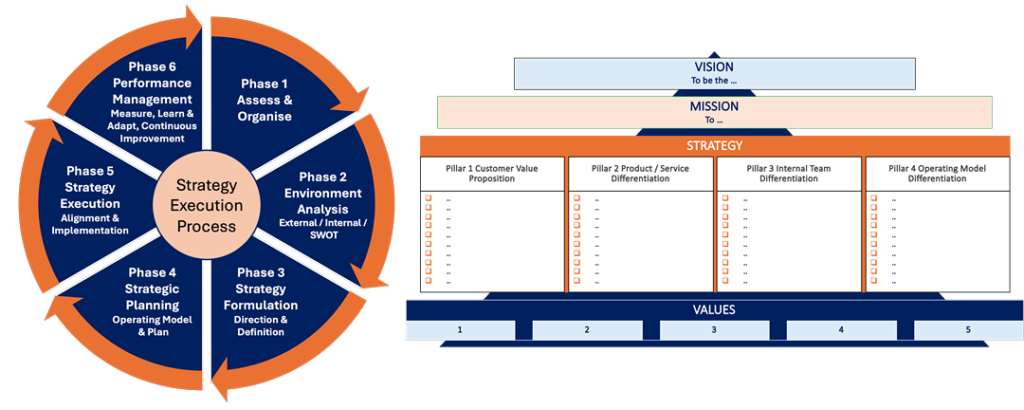
Figure 2 Strategy Execution Process
Strategic Responses to Reinvigorate Organic Growth
- AI-Driven Commercialisation
Advanced analytics can pinpoint emerging micro-trends (e.g., “skinification” of hair care) and dynamically optimise pricing, merchandising, and promotional campaigns – yielding 3-5% same-store sales increases.
- Asset-Light Globalisation
Mimic models like Amazon’s international expansion, which avoids high fixed-cost commitments by leveraging local partnerships and cloud-native platforms.
- Hyper-Localised Brand Building
Customizing brand narratives and formats for regional preferences – like Apple’s flagship stores in India or China – enhances relevance and customer loyalty without requiring acquisition.
The Inorganic Growth Imperative: Buying to Scale and Adapt
Inorganic Growth: Promise and Pitfalls
| Advantages | Risks |
| Instant market access | Integration failure rates exceeding 70% |
| Capability acquisition (e.g., AI, DTC) | Cultural misalignment and key talent attrition |
| Portfolio diversification | Post-acquisition EBITDA compression and debt exposure |
M&A Outlook: Smarter Deals, Sharper Focus
- Deal Surge Continues
Consumer & Retail M&A reached $120bn in Q4 2024, fuelled by health & wellness rollups, sustainability acquisitions, and consolidation in specialty retail.
- Shift to Capability-Led Acquisitions
Strategic buyers now prioritise tech enablement over pure scale. In 2025, 63% of announced deals targeted DTC platforms, AI firms, or digital-first wellness brands, reflecting a pivot toward agility, not just volume. An example is AO’s acquisition of Music Magpie, which built capability in trade-in, enhancing sustainability credentials – it also drove record earnings for AO, with PBT growing 32% in the latest full results published in July 2025.
Example: A global food conglomerate acquired a plant-based protein startup for its data-rich consumer base and proprietary flavour tech – offering both market access and innovation infusion.
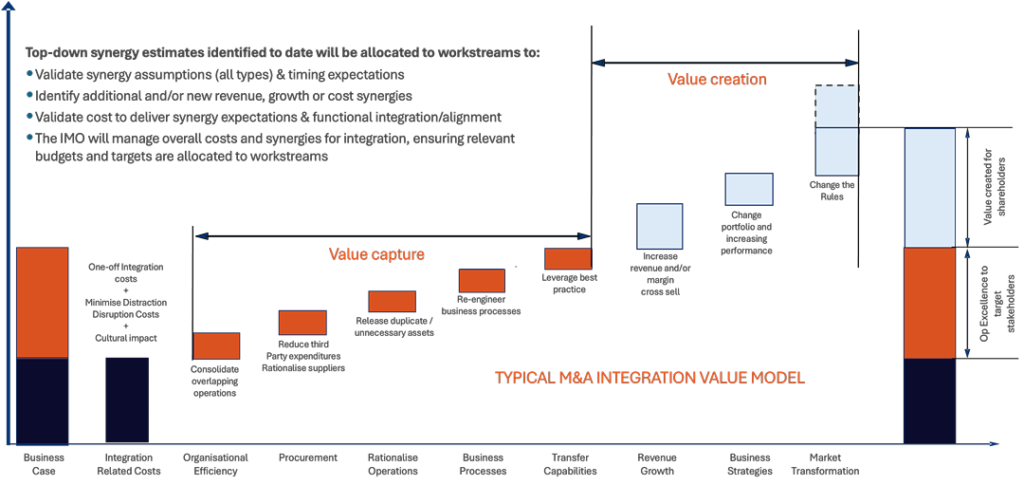
Figure 3 Identifying Value Capture & Value Creation Synergies to Maximise Deal ROI
Bridging the Gap: Hybrid Strategies for Sustainable Growth
1. The “Build–Buy” Framework
- Build the Core First
Reinforce internal capabilities before acquisition. For example, a global beverage firm leveraged AI-driven logistics optimisation to free capital for downstream acquisitions in the premium coffee segment.
- Buy for Complementarity
Target acquisitions that fill capability gaps – such as personalisation AI, green packaging tech, or last-mile logistics – not simply adjacent revenue streams.
2. Smarter M&A Integration
- Pre-Deal Synergy Mapping
Quantify both revenue and cost synergies before deal signing to avoid post-merger disillusionment.
- Cultural Bridging
Use integration teams and agile governance structures to align corporate cultures. Incentivise retention of critical personnel with equity and purpose-driven messaging.
Example: After acquiring a digital wellness brand, a multinational FMCG company created joint culture workshops and assigned brand “guardians” to preserve startup DNA.
3. Portfolio Rebalancing and Ecosystem Play
- Divest to Reinvest
Reallocate capital by shedding low-growth units. Unilever’s divestment of its tea business, for instance, freed resources to invest in higher-growth wellness categories.
- Non-Ownership Partnerships
Collaborate through joint ventures or strategic alliances with fintech, logistics, or tech companies for capability-sharing without full M&A risk.
Example: A fashion retailer partnered with a payment startup to build a white-label BNPL (Buy Now, Pay Later) platform – gaining speed to market without capital exposure.
Future-Proofing Growth: Strategic Imperatives
| Strategic Lever | Actionable Opportunity |
| AI-Powered Agility | Use predictive analytics for demand forecasting, reducing CAC by 20% |
| Sustainability-Led Innovation | Develop green SKUs internally; acquire circular-economy disruptors |
| Regulatory Foresight | Monitor business tax reforms, ESG disclosures, and digital trade rules |
| Omnichannel Convergence | Use tech to seamlessly connect DTC, retail, and marketplace models |
The Agile Growth Portfolio
Consumer & Retail firms can no longer afford to view organic and inorganic growth as separate or competing strategies. Success in 2025 and beyond requires an orchestrated, agile portfolio approach that combines internal innovation with carefully curated acquisitions.
Winning companies will:
- Scale Organically by leveraging data, AI, and local insights to re-energise brand and operational performance.
- Expand Inorganically by acquiring transformative capabilities, not just top-line revenue.
- Stay Flexible – adapting their growth mix as macroeconomic and consumer conditions evolve.
Firms like Amazon, Apple, and Nestlé exemplify this model – balancing bold, forward-looking M&A with robust internal transformation. In a sector defined by speed, complexity, and consumer empowerment, equilibrium isn’t optional. It’s a strategic necessity.
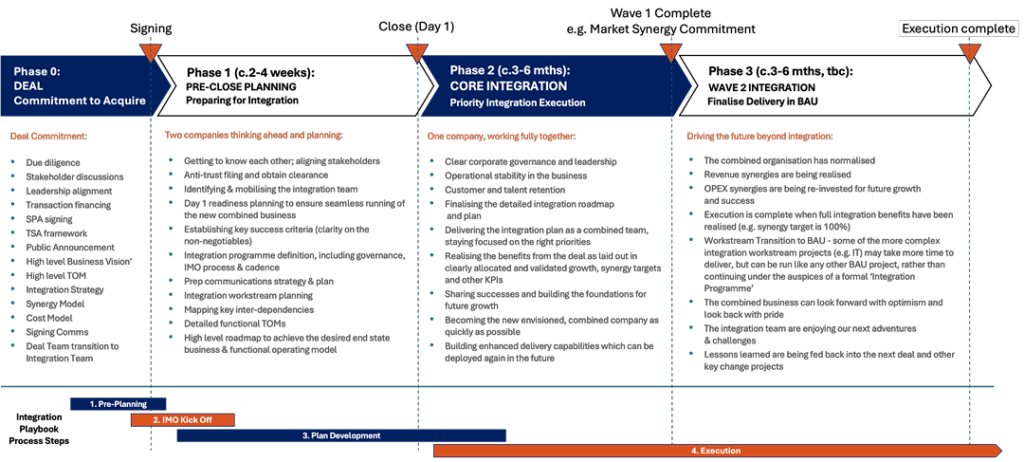
Figure 4 Comprehensive M&A Integration Planning from Due Diligence to Execution
The Implications of AI in Consumer & Retail

AI is revolutionising the Fast-Moving Consumer Goods (FMCG) and Retail industries by enhancing supply chain efficiency, personalising customer experiences, optimising pricing, and improving inventory management. Here’s a breakdown of AI’s key impacts on both sectors:
1. AI in FMCG & Retail Supply Chain Management
AI improves supply chain operations by:
- Demand forecasting – AI predicts future demand based on market trends, seasonality, and customer behaviour.
- Inventory optimisation – AI minimises stockouts and overstocking using real-time data analysis.
- Logistics & route optimisation – AI-powered systems improve delivery efficiency and reduce costs.
- Supplier risk management – AI detects disruptions in the supply chain (e.g., raw material shortages).
Example: Walmart uses AI to analyse real-time sales data and optimise inventory levels across stores.
2. AI-Powered Customer Personalisation & Engagement
AI enhances the shopping experience by:
- Personalised recommendations – AI suggests products based on customer preferences and past purchases.
- AI-powered virtual assistants & chatbots – Handles customer inquiries and recommends products.
- Computer vision for in-store experiences – AI enables cashier less checkouts and smart shelf tracking.
Example: Amazon’s recommendation engine drives 35% of its total sales using AI-based personalisation.
3. AI in Pricing & Promotions
AI-driven pricing strategies include:
- Dynamic pricing – Adjusting prices in real-time based on demand, competition, and customer behaviour.
- Optimised discounting & promotions – AI identifies the best discount strategies to maximise profits.
- Predictive pricing models – AI forecasts how customers will respond to price changes.
Example: Walmart and Target use AI-driven pricing models to adjust prices based on demand trends.
4. AI in Retail Store Operations & Automation
AI optimises in-store efficiency through:
- Cashier less stores – AI-powered checkout eliminates queues (e.g., Amazon Go).
- AI-driven inventory tracking – Smart shelves and robots monitor stock levels.
- Smart planograms – AI analyses store layouts to optimise product placement and boost sales.
Example: Sephora uses AI-driven smart mirrors for virtual makeup trials, enhancing customer engagement.
5. AI-Powered Marketing & Customer Insights
AI revolutionises retail marketing by:
- Sentiment analysis – AI scans social media and reviews to understand customer preferences.
- AI-generated content – AI writes personalised email campaigns and ad copy.
- Automated A/B testing – AI optimises ad creatives and product listings for better conversions.
Example: Coca-Cola uses AI-driven sentiment analysis to craft marketing campaigns that resonate with consumers.
6. AI in Product Development & Innovation
AI speeds up product innovation in FMCG by:
- Trend prediction – AI analyses consumer preferences to guide new product launches.
- Recipe & formula optimisation – AI refines food, beverage, and cosmetics formulations for better taste and efficiency.
- Sustainable packaging & waste reduction – AI helps brands develop eco-friendly packaging solutions.
Example: Nestlé uses AI to develop healthier food formulations based on consumer health data.
7. AI in Fraud Prevention & Security
AI enhances security in FMCG & retail by:
- Preventing retail fraud & theft – AI-powered cameras detect suspicious activities in stores.
- Securing online transactions – AI analyses transaction data to detect fraud and prevent chargebacks.
- Counterfeit detection – AI ensures product authenticity and protects brand reputation.
Example: Luxury brands like LVMH use AI-powered blockchain to verify product authenticity.
Challenges of AI in FMCG & Retail
- Data privacy concerns – AI-driven personalisation must comply with data protection laws (e.g., GDPR).
- High implementation costs – AI adoption requires investment in new technologies and training.
- AI bias & accuracy – Poor-quality data can lead to inaccurate demand forecasts or biased recommendations.
AI is transforming FMCG and Retail by optimising supply chains, personalising shopping experiences, and driving innovation. Companies that leverage AI effectively can improve efficiency, boost sales, and enhance customer satisfaction.