
Executive summary
The pharmaceutical and broader healthcare sectors are at a transformative crossroads, facing a convergence of scientific breakthroughs and systemic pressures. Navigating growth in this complex environment demands an integrated strategy combining operational excellence, regulatory agility, digital transformation, and bold leadership. The future of health innovation lies in mastering both organic and inorganic growth levers while embedding sustainability, patient-centricity, and AI into the industry’s core operating model.
Key Insights:
- Scientific Innovation vs. Systemic Barriers: Despite rapid advancements in AI, mRNA, and personalised medicine, companies face escalating development costs, slow regulatory pathways, and payer resistance, making commercialisation and ROI increasingly difficult.
- Cost Pressures and Pricing Constraints: Inflationary costs and global pricing reforms – such as the U.S. Inflation Reduction Act – are compressing margins and shifting investment away from high-risk, high-reward R&D.
- Patent Cliffs and Inorganic Growth Urgency: With over £250 billion in sales at risk by 2028 due to expiring patents, pharmaceutical firms are intensifying M&A activity to replenish pipelines, despite rising regulatory and integration hurdles.
- Talent Deficits and Workforce Strain: Acute shortages in STEM, digital, and clinical roles – exacerbated by burnout – are threatening innovation and care delivery, making talent development and retention a top strategic priority.
- Digital and AI Transformation: AI is revolutionising diagnostics, drug discovery, and patient care, but adoption is hindered by cultural resistance, data fragmentation, and regulatory complexity.
- From Strategy to Execution: The future belongs to companies that blend agile, patient-centric organic growth with targeted M&A. Those that treat growth as a system – integrating people, platforms, and partnerships – will define the next era of healthcare leadership.
- Case Example: A US-based integrated care provider combined the acquisition of a behavioural health network with expansion of its virtual care platform, leading to a 35% increase in patient retention and a 27% revenue uplift over two years.
Strategic Challenges In Pharmaceuticals & Wider Healthcare
The pharmaceutical and broader healthcare industries are navigating a period of profound transformation. Driven by scientific breakthroughs, evolving demographics, economic volatility, and shifting regulatory landscapes, the strategic challenges these sectors face are both urgent and multifaceted. Below is an analysis of the most critical issues shaping the industry today:
1. Scientific Innovation vs. Commercial and Regulatory Hurdles
Recent advances – such as AI-driven drug discovery, mRNA platforms, genomic editing, and personalised medicine – have accelerated the pace of scientific innovation. Yet these breakthroughs face significant headwinds. Development costs are soaring, regulatory approval pathways remain protracted, and commercialisation is increasingly constrained by payer scrutiny and regional policy divergence. The risk of pipeline attrition continues to rise, demanding smarter clinical trial design and stronger cross-functional alignment.
- Case Example: A biotech focusing on gene therapy faced repeated trial delays due to varying EU country requirements. By building a cross-border regulatory taskforce and incorporating real-world evidence into submissions, they secured approval 14 months faster than industry average.
2. Escalating Costs and Intensifying Pricing Pressures
Both pharmaceutical and healthcare providers are under strain from inflationary input costs – spanning raw materials, R&D, energy, labour, and logistics. Simultaneously, price controls, reimbursement pressures, and public scrutiny are limiting revenue growth. For instance, legislative reforms like the U.S. Inflation Reduction Act and pending EU pharmaceutical revisions threaten to dampen returns on innovation and shift investment incentives away from high-risk therapeutic areas.
- Case Example: A multinational pharma firm implemented lean manufacturing in two flagship plants, reducing energy use by 17% and annual operating costs by $50M while meeting ESG targets.
3. The Looming Patent Cliff and Competitive Disruption
Between 2025 and 2029, a wave of blockbuster drug patents will expire, triggering one of the most significant “patent cliffs” in industry history. The resulting surge in generic and biosimilar competition is expected to erode billions in revenue. To counteract this, pharmaceutical firms must adopt aggressive lifecycle management strategies, invest in next-generation therapies, and pursue M&A to replenish pipelines and maintain market relevance.
- Case Example: A Japanese pharma company developed an extended-release formulation of its top-selling cardiovascular drug, retaining 60% of market share two years post-patent expiry.
4. Talent Gaps and Workforce Strain
The global healthcare and life sciences workforce is facing acute shortages – especially in digital, clinical, and STEM roles. Healthcare systems may face a deficit of over 10 million workers by 2030. In pharmaceuticals, the competition for data scientists, AI experts, and regulatory professionals is intense. The resulting stress on remaining staff is contributing to burnout and diminishing service quality, making talent attraction, retention, and upskilling a top strategic priority.
- Case Example: A Middle Eastern healthcare group partnered with local universities to co-create clinical research internships, filling 35% of its open research roles internally within two years.
5. Supply Chain Fragility and Geopolitical Uncertainty
The COVID-19 pandemic exposed deep vulnerabilities in global supply chains – from raw material dependencies to single-sourced manufacturing nodes. Ongoing geopolitical tensions, trade restrictions, and climate disruptions are compounding risks. In response, firms are investing in supply chain diversification, reshoring, smart manufacturing, and real-time risk monitoring to build greater resilience.
- Case Example: A US vaccine manufacturer diversified suppliers across three continents and added blockchain-based traceability, reducing risk exposure from single-source APIs by 80%.
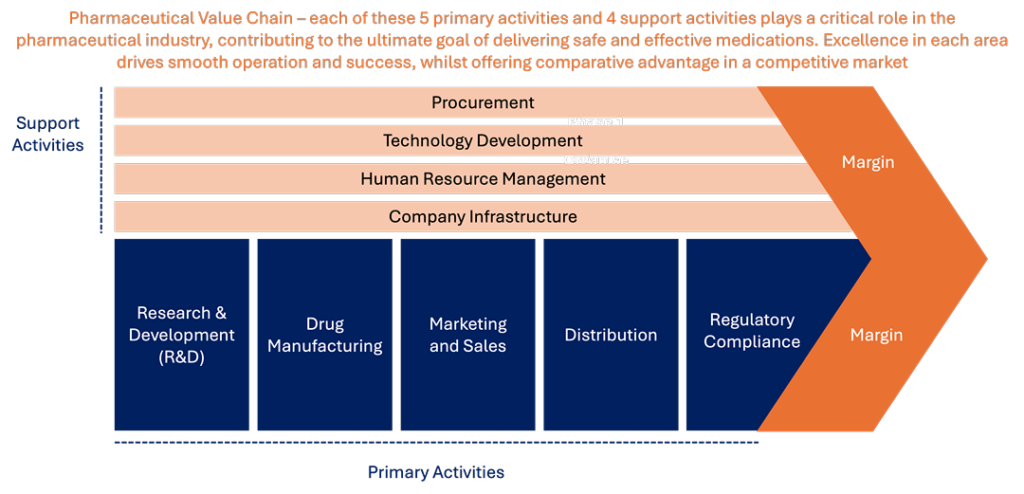
Figure 1 Pharmaceutical Value Chain
“The Pharmaceutical Industry Value Chain integrates complex R&D processes with stringent regulatory environments, requiring a delicate balance of innovation, compliance, and market dynamics to deliver effective treatments. Efficiency, particularly in drug manufacturing and distribution, directly impacts global health outcomes by determining how quickly and widely new treatments can reach patients. Strategic collaborations and partnerships within the value chain are essential for enhancing drug discovery and development efficiencies, reducing costs, and speeding up time-to-market.” Flevy Lean
6. Regulatory Complexity and Compliance Burden
Global regulatory frameworks continue to evolve rapidly, often in fragmented and inconsistent ways. Extended approval timelines, conflicting clinical evidence requirements, and stricter standards for data governance are straining both time-to-market and operational budgets. Staying ahead requires early engagement with regulators, greater use of real-world evidence, and investment in scalable compliance infrastructure.
- Case Example: A specialty pharma company digitised its pharmacovigilance process, reducing compliance breaches to zero and cutting case handling time by 30%.
7. Demographic Shifts and Systemic Healthcare Strain
The global population is aging at an unprecedented rate, with the number of people over 60 expected to double by 2050. This demographic shift is driving higher incidence of chronic conditions and increasing demand for long-term care, straining already overstretched health systems. Addressing this challenge will require integrated care models, preventive health strategies, and scalable service delivery innovations.
- Case Example: A Nordic healthcare system introduced AI-assisted remote monitoring for elderly heart patients, reducing hospital readmissions by 28% and freeing up 15% of cardiology capacity.
8. Digital Transformation and Advanced Technology Integration
AI, machine learning, digital health platforms, and advanced diagnostics offer significant potential to enhance patient care, streamline R&D, and improve decision-making. However, integration remains a challenge – requiring cross-functional collaboration, data harmonisation, and organisational culture change. Firms that fail to digitise effectively risk falling behind on cost, speed, and patient outcomes. See later for detailed analysis of the implications of AI for the sector.
- Case Example: A global CRO built a unified clinical data platform, enabling a 25% faster trial close-out and improving multi-country study coordination.
9. Patient-Centricity and Evolving Consumer Expectations
Patients are demanding more control, transparency, and personalisation in their care journeys. In response, both healthcare providers and pharmaceutical companies are shifting toward patient-centric models – emphasising digital engagement, outcomes-based care, and value-based pricing. Success will hinge on omnichannel strategies, real-time feedback loops, and equitable access to innovation.
- Case Example: A chronic care management provider launched an app with real-time glucose tracking, leading to a 32% improvement in patient adherence.
10. Sustainability and Environmental Accountability
As climate concerns rise, the healthcare and pharmaceutical industries are under increasing pressure to reduce their environmental impact. From lowering emissions in production and logistics to minimising clinical trial waste and packaging footprints, sustainability is now a board-level concern. Regulatory pressures and investor scrutiny are accelerating the shift toward greener operations and ESG-integrated decision-making.
- Case Example: A UK-based generics manufacturer redesigned its packaging, cutting plastic use by 45% and saving £2.5M annually.
Agility, Collaboration, and Innovation as Strategic Imperatives
In summary, the key strategic challenges confronting the pharmaceutical and healthcare industries include:
- Bridging scientific innovation with regulatory and commercial viability
- Managing costs amid tightening pricing constraints
- Navigating patent cliffs and competitive headwinds
- Addressing workforce shortages and burnout
- Building resilient, geopolitically aware supply chains
- Complying with complex, evolving regulations
- Preparing for demographic shifts and healthcare system overload
- Leading digital transformation with patient value at the core
- Meeting rising consumer expectations
- Embedding sustainability into core operations
To thrive in this environment, companies must adopt a more agile, collaborative, and forward-looking approach. This means investing in next-gen talent, accelerating digital and data strategies, forging ecosystem partnerships, and embedding resilience into both strategy and operations. The future belongs to those who can innovate boldly – while executing with discipline.
“The time where pharmaceutical companies were combining under a single roof the key activities of Drug Discovery, Pre-clinical then Clinical Development from phase I to III, Regulatory and Market Access, but also Manufacturing and Supply Chain Handling and finally Marketing and Detailing to Doctors has elapsed. Today, companies have narrowed their focus, relying only on a limited amount of highly specialised skills to conduct the selected activities that will make the difference in becoming or remaining leaders in their market segment. This requires leaders with a great deal of communication skills to stay connected within their ecosystem.” Jean-François Hilaire, Pharmaceuticals Strategic Advisor
Navigating Growth in Pharma & Healthcare
A Strategic Guide to Organic and Inorganic Expansion
The pharmaceutical and healthcare industries are at a strategic inflection point. Faced with intensifying regulatory pressure, accelerating scientific innovation, and growing financial constraints, leaders must rethink how they drive growth. As a specialist consultant, we’ve seen that success increasingly hinges on the ability to harmonise organic and inorganic growth strategies – while overcoming deep-rooted structural barriers. This article provides a structured analysis of the key challenges impeding growth and outlines actionable strategies to unlock value across both dimensions.
Understanding the Growth Imperative
Sustainable growth requires a blend of:
- Organic growth: Achieved through innovation, operational efficiency, and customer-centric transformation.
- Inorganic growth: Driven by mergers, acquisitions, joint ventures, and strategic partnerships.
Each path offers unique opportunities – and distinct challenges – success can be achieved by those that integrate both into a cohesive, adaptable growth strategy.
“Unlocking growth and operational excellence in today’s healthcare sector requires a clear strategic vision that aligns scientific innovation with disciplined execution. This means that the board and the exec teams must be aligned in prioritising investment in differentiated R&D capabilities, strengthening the product pipeline, and actively seeking value-creating partnerships and acquisitions to diversify revenue streams. Equally important is a commitment to a patient-centric commercial strategy that leverages digital health, personalised medicine, and global market expansion to secure long-term, sustainable growth in an increasingly competitive landscape.” Jonathan Wogel, Healthcare M&A Consultant
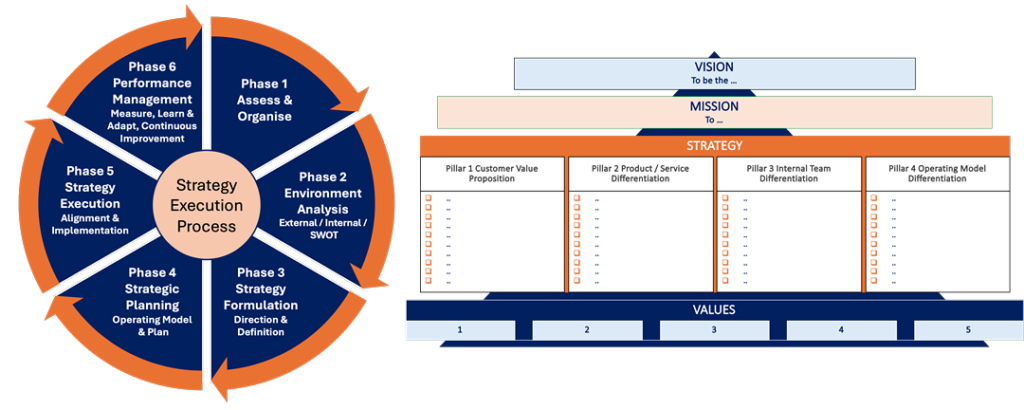
Figure 2 Strategy Execution Process
The Challenges of Organic Growth
- Escalating R&D Costs
Drug development now averages over $2.6 billion per therapy, with high attrition rates and increasing trial complexity. The ROI on innovation is under pressure.
- Regulatory Headwinds
Policy shifts like the U.S. Inflation Reduction Act and EU pharmaceutical reform have added layers of complexity, prolonging timelines and squeezing margins.
- Talent Shortages
By 2030, a projected global healthcare workforce gap of 10 million threatens both innovation and care delivery – specially in STEM, digital, and clinical roles.
- Technology Adoption Barriers
Implementing AI, automation, and advanced data platforms requires not just capital – but also cultural change and cross-functional integration.
“The value of any company is grounded on the skills of its employees. Firstly, are current skills enough to take on leadership of the desired growing, premium price segment? Secondly is to know if missing skills or capabilities can be developed internally within a reasonable timeframe or if it would be more efficient to buy them. The answer is sometimes obvious – ‘it will take us years to build internally such capabilities’ – or opportunistic – ‘acquiring this asset will fill a large part of my skill gap’. Time is in most cases the pivotal parameter.” Jean-François Hilaire, Pharmaceuticals Strategic Advisor
Unlocking Organic Growth: Strategies that Work
1. Drive Operational Excellence and Digital Transformation
- Lean Process Redesign: A US-headquartered Medical Centre was able to cut defects by 50% and improved productivity by 93% using lean principles.
- AI & Automation: AI in drug discovery and administrative workflows accelerates R&D and improves resource allocation.
- Data-Driven Innovation: Leverage real-world evidence (RWE) and predictive analytics to optimise clinical trial design and improve treatment personalisation.
- Case Example: A European medtech company deployed AI to optimise maintenance schedules in its manufacturing plants, reducing downtime by 19% and improving throughput by 14%.
2. Build Talent Pipelines and Resilience
- Academic Partnerships: Collaborate with universities to shape future talent pipelines in data science, biotechnology, and regulatory affairs.
- Workforce Innovation: Redesign outdated workflows – such as rigid consultation slots – to reduce burnout and improve care quality.
- Case Example: A Southeast Asian hospital group introduced flexible career pathways for nurses, reducing attrition by 18% and increasing internal promotions by 25%.
3. Strengthen Patient-Centric Models
- Proactive Care Models: Shift toward prevention, wellness, and remote monitoring via wearables and telehealth.
- Extended Services: Develop ancillary offerings like chronic care management, digital therapeutics, and behavioural health programs.
- Case Example: A US primary care network expanded telehealth services for chronic disease patients, increasing follow-up compliance by 40% and lowering ER visits by 15%.
The Challenges of Inorganic Growth
- Patent Cliffs and Pipeline Gaps
More than £250 billion in revenue is at risk due to expiring patents by 2028. Many firms turn to acquisitions to replenish pipelines, but competition for high-value assets is fierce.
- Integration Failures
Up to 70% of M&A deals fail to meet expectations due to cultural misalignment, fragmented systems, and unclear synergy realisation.
- Regulatory Scrutiny
Cross-border deals are increasingly scrutinised for antitrust, pricing, and compliance risks – slowing execution and adding uncertainty.
- Market Saturation
In mature markets, incumbents dominate access channels, raising entry costs for newcomers and challenging commercial scalability.
Mastering Inorganic Growth: Strategic Levers
1. Targeted M&A and Ecosystem Partnerships
- Focus on Specialisation: Pursue niche biotech firms with high scientific differentiation – such as J&J’s acquisition of Intra-Cellular Therapies for neuroscience.
- Digital Collaborations: Form JVs with health tech innovators to access next-gen capabilities without full-scale integrations.
- Case Example: A global pharma firm acquired a digital therapeutics start-up, integrating its platform into two blockbuster drug franchises and achieving a 20% uplift in patient engagement scores.
2. Mitigate Integration Risk
- Cultural Due Diligence: Go beyond financials to assess mission, values, and team dynamics early. GSK’s acquisition of IDRx succeeded by aligning on oncology strategy.
- Modular Integration: Integrate IT, operations, and supply chain in phases to avoid disruption and preserve agility.
- Case Example: A European medical device manufacturer used a phased integration model after acquiring a diagnostics company, maintaining 95% of key staff post-merger and achieving synergy targets six months early.
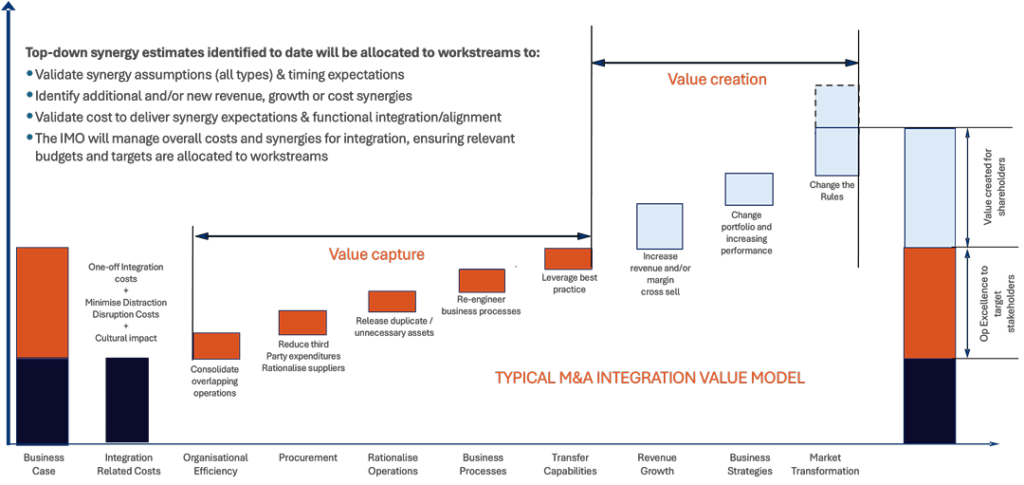
Figure 3 Identifying Value Capture & Value Creation Synergies to Maximise Deal ROI
“Value capture funds the integration journey, while value creation secures long-term strategic relevance and shareholder returns. Effective deals align both dimensions from Day 1 of integration planning. Ultimately, healthcare M&A fails most often when boards and executives focus disproportionately on the financial model and insufficiently on the operational, cultural, and regulatory execution. The winners are those that treat integration as a core strategic capability, not an afterthought.” Jonathan Wogel, Healthcare M&A Consultant
3. Navigate Regulatory and Financial Headwinds
- Proactive Policy Engagement: Collaborate with regulators to shape future frameworks for AI, personalised medicine, and fair pricing.
- Portfolio Diversification: Combine branded drugs, generics, and biosimilars to reduce exposure to single-product cliffs.
- Case Example: A Latin American pharma group engaged early with competition authorities during a cross-border acquisition, securing approval without divestiture requirements and closing three months ahead of schedule.

Figure 4 Comprehensive M&A Integration Planning from Due Diligence to Execution
The Future is Hybrid: Blending Growth Approaches
High-performing companies don’t choose between organic and inorganic growth – they integrate both. For example, AbbVie mitigated Humira’s $20B patent loss by acquiring Allergan (inorganic) while investing heavily in precision medicine and immunology (organic).
Key Enablers of Success:
- Agile Leadership: Empower cross-functional, decentralised teams to drive innovation, adapt quickly, and execute integrations effectively.
- Sustainability Alignment: Commit to ESG goals by decarbonising operations, minimising clinical trial waste, and embedding green R&D practices.
From Trade-Off to Synergy
The growth equation in pharma and healthcare is no longer binary. Organic and inorganic strategies, when executed in concert, can become powerful complements rather than competing priorities.
Firms that invest in digital transformation, talent development, patient engagement, and strategic M&A will not only navigate regulatory and economic headwinds – but also shape the future of global health.
Those that treat growth as a system – not a set of disconnected initiatives – will be best positioned to create sustainable, long-term value.
- Case Example: A Canadian biopharma firm offset declining sales in its legacy portfolio by acquiring a rare disease specialist (inorganic) while expanding its AI-enabled drug discovery pipeline (organic), delivering 18% CAGR over four years.
Leading with Strategy Execution and People
To thrive in today’s pharmaceutical and healthcare environment, firms must master both organic and inorganic growth strategies. That means investing in insights, empowering talent, embracing technology, and maintaining a relentless focus on customer value. It also requires strategic discipline in M&A – careful planning, cultural alignment, risk mitigation, and talent retention.
Those that can balance speed with stability, growth with governance, and innovation with empathy will not only survive market change – but they’ll also lead it.
The Implications of AI in Pharmaceuticals & Wider Healthcare

AI is revolutionising the Healthcare, Pharmaceutical, Medical Device, and Life Sciences industries by improving diagnostics, accelerating drug discovery, personalising treatment, and enhancing patient care. Here’s how AI is driving transformation across these sectors:
1. AI in Healthcare & Patient Care
AI is enhancing efficiency, accuracy, and accessibility in healthcare through:
AI-Powered Diagnostics & Imaging
- AI detects diseases in X-rays, MRIs, and CT scans with high accuracy.
- AI algorithms identify early signs of cancer, cardiovascular diseases, and neurological disorders.
Example: Google’s DeepMind developed an AI system that detects over 50 eye diseases as accurately as doctors.
AI in Virtual Health Assistants & Chatbots
- AI-driven chatbots (e.g., Ada, Babylon Health) provide initial diagnoses and schedule appointments.
- AI-powered virtual assistants help monitor chronic conditions like diabetes and hypertension.
Predictive Analytics & Early Disease Detection
- AI analyses electronic health records (EHRs) to predict patient risks and suggest preventive care.
- AI-driven wearables (e.g., Apple Watch, Fitbit) detect irregular heartbeats and potential health issues.
Example: Mayo Clinic and IBM Watson use AI to analyse patient data for early diagnosis.
2. AI in the Pharmaceutical Industry
AI is accelerating drug discovery and reducing development costs through:
AI-Driven Drug Discovery & Development
- AI analyses molecular structures to identify new drug candidates faster than traditional research.
- AI predicts how different compounds interact, reducing trial-and-error in drug formulation.
Example: *AI helped discover Insilico Medicine’s potential drug for fibrosis in just 46 days.
AI in Clinical Trials & Research
- AI finds ideal trial candidates by scanning patient data.
- AI simulates drug effects, reducing the need for large-scale human trials.
AI in Personalised Medicine
- AI tailors treatments based on genomic and biomarker analysis.
- AI-powered precision medicine identifies the best therapies for individual patients.
Example: Pfizer and Novartis use AI for faster drug development and clinical trial optimisation.
3. AI in Medical Devices & Robotics
AI is enhancing medical device performance and robotic-assisted surgeries through:
AI in Medical Imaging Devices
- AI improves the accuracy of CT, MRI, and ultrasound scans.
- AI detects tumours, fractures, and abnormalities faster than radiologists.
AI-Powered Robotic Surgery
- AI-driven robots (e.g., da Vinci Surgical System) assist in minimally invasive surgeries.
- AI enhances precision, reducing surgery risks and recovery times.
Example: Medtronic’s AI-powered endoscopy system detects early signs of colorectal cancer.
AI in Smart Prosthetics & Wearables
- AI-powered prosthetic limbs adapt to user movement patterns.
- AI-driven wearables track heart rate, oxygen levels, and sleep patterns for real-time health monitoring.
Example: Neuralink and BrainCo use AI to develop brain-controlled prosthetics.
4. AI in Life Sciences & Biotechnology
AI is driving breakthroughs in genetics, disease research, and biotech innovations through:
AI in Genomics & DNA Sequencing
- AI speeds up gene sequencing and mutation detection.
- AI identifies genetic disorders and predicts hereditary disease risks.
Example: Google’s DeepVariant AI system improves DNA sequencing accuracy.
AI for Epidemic & Pandemic Predictions
- AI analyses global health data to predict and track disease outbreaks.
- AI-powered models forecast the spread of infectious diseases like COVID-19.
Example: BlueDot’s AI detected early signs of COVID-19 before WHO’s official announcement.
AI in Biomanufacturing & Lab Automation
- AI automates laboratory experiments, reducing human error.
- AI-driven robotic systems speed up biotech research and drug production.
Example: IBM Watson is used for AI-driven protein engineering and biotech innovation.
Challenges of AI in Healthcare & Life Sciences
- Regulatory & ethical concerns – AI-driven medical decisions must meet strict regulatory approvals (e.g., FDA, EMA).
- Data privacy & security risks – AI must protect sensitive patient health data (e.g., HIPAA compliance).
- Bias in AI models – AI algorithms must be trained on diverse datasets to avoid healthcare disparities.
AI is transforming healthcare, pharmaceuticals, medical devices, and life sciences by enhancing diagnostics, accelerating drug discovery, and personalising treatments. As AI technology advances, it will continue to improve efficiency, patient outcomes, and medical research breakthroughs.