
Executive Summary
The media and telecommunications industries stand at a decisive inflection point. Technological convergence, shifting consumer behaviours, and relentless competition from digital-native platforms are redrawing the growth map. Boundaries between the two sectors are dissolving as content, connectivity, and data integrate into unified, experience-driven ecosystems. The winners will be those that can balance resilience with reinvention – blending infrastructure, storytelling, and digital intelligence to deliver seamless, personalised, and trusted customer experiences.
Media: Reinventing for Fragmented Attention
Media companies face eroding trust, shrinking ad revenues, and audience migration to short-form, creator-led, and interactive platforms. Subscription fatigue is squeezing recurring revenue models, while soaring content costs accelerate consolidation. AI offers a dual opportunity: hyper-personalisation to recapture audience attention and production efficiencies to manage costs. Strategic imperatives include omnichannel distribution, hybrid revenue models, partnerships for scale, and robust editorial and ethical frameworks to counter misinformation.
Telco: Scaling in a Capital-Intensive Era
Telecom operators are under pressure from massive 5G and fibre investment requirements, while over-the-top (OTT) players and hyperscalers capture disproportionate value on their infrastructure. Regulatory complexity, price caps, and intensifying competition further erode margins. Future growth will depend on pairing infrastructure upgrades with high-margin services (IoT, private 5G, bundled media), accelerating automation and AI adoption for network optimisation, and pursuing consolidation to unlock economies of scale – particularly in markets such as Europe.
The Growth Imperative: Organic and Inorganic Synergy
Both industries must master a dual growth strategy. Organic growth hinges on internal innovation, AI-driven customer personalisation, and operational efficiency. Inorganic growth – through M&A, alliances, and ecosystem partnerships – offers speed to scale but demands disciplined integration, cultural alignment, and regulatory agility. The most competitive players will synchronise these modes, ensuring each acquisition or alliance is tied to a clear strategic outcome.
AI: The Force Multiplier
AI is transforming every link in the value chain – from automated content creation and recommendation engines in media to predictive maintenance, self-healing networks, and personalised marketing in telecoms. Yet adoption must be balanced with ethical governance to mitigate bias, preserve privacy, and safeguard trust.
Strategic Priorities for a Converged Future
- Balance growth modes – Integrate organic innovation with disciplined M&A and partnerships.
- Accelerate digital transformation – Deploy AI, cloud-native platforms, and automation at scale.
- Prioritise customer-centricity – Deliver intuitive, value-rich, and trustworthy experiences.
- Build ecosystems – Forge cross-industry partnerships with OTTs, hyperscalers, and adjacent sectors.
- Shape the regulatory agenda – Engage proactively to influence fair and innovation-friendly policy.
In a converged, AI-driven marketplace, the ability to integrate infrastructure, content, and customer insight into adaptive growth models will define the next generation of leaders. Those who fail to evolve risk being relegated to commodity providers—while those who execute with precision will define the future of connected experiences.
Strategic Challenges in the Media Industry
- Changing Consumption, Fragmented Attention and Platform Proliferation
- Audiences consume content across diverse platforms – streaming, social, podcasts, gaming – making attention harder to capture.
- Demand is rising for personalised, short-form, and interactive experiences.
- Reduced appeal of traditional media to younger demographics.
Response: Planning content distribution across multiple platforms (e.g., streaming and FTA/broadcast, radio broadcast/podcast) can be a useful mechanism to defend and grow audience. Use AI and behavioural data to tailor content delivery – right place, right time, right format.
- Revenue Model Pressures
- Ad revenues are shifting to social platforms and influencers.
- Subscription fatigue is increasing, with limited customer tolerance for multiple services.
Response: Implement hybrid revenue models, intelligent bundling, and data-driven pricing.
- Rising Costs and Consolidation
- Content production costs are soaring, especially for larger players, which is squeezing smaller players.
- M&A activity is growing to secure IP and distribution scale.
Response: Embrace partnerships, IP licensing, and AI-enhanced production (e.g., localisation, synthetic voice, lower cost alternatives such as Tik Tok) to manage costs.
- Technology and Data Gaps
- Siloed data restricts personalisation and insight generation.
- AI adoption is uneven, raising quality and bias concerns.
Response: Build integrated, privacy-compliant data platforms and deploy responsible AI across operations.
- Maintaining Trust in the AI Era
- Misinformation Proliferation: With 42% of professionals citing trust as a top concern, misinformation across social platforms erodes audience confidence and advertiser interest.
- AI Content Risks: AI-generated content raises ethical concerns around accuracy and source transparency.
Response: Establish robust editorial standards and transparent, explainable AI tools to safeguard credibility.
Strategic Challenges in the Telco Industry
- Capital-Intensive Infrastructure Rollouts
- 5G, fibre, and edge networks require massive investment, with delayed returns.
- Continued growth in data consumption, including streaming video services and the development and the adoption of display technology (beyond 4k) is driving the need for significant capex in network capacity.
- Many telcos lack experience in media services integration. That said, bundling has become increasingly prevalent, a must-have rather than an optional extra.
Response: Pair infrastructure investment with high-margin services like IoT, private 5G, and content bundling.
- Disintermediation by OTTs and Hyperscalers
- OTT platforms and hyperscalers capture value while using telco infrastructure.
Response: Forge alliances and joint ventures to co-create services and monetise data. Rethinking business models and revenue diversification (e.g., through adjacent services) has become a key challenge for telco operators to redress the imbalance of market domination of massive content providers and encourage their contribution to growing network capacity.
- Evolving Customer Expectations
- Consumers demand seamless, personalised, high-speed connectivity.
- Consumer expectations of unlimited data for a fixed price are putting pressure on providers to fund capex investments through additional revenue.
Response: Use AI for network optimisation, predictive maintenance, lean and hyper-automated operations and personalised offers.
- Regulatory and Security Complexity
- Data privacy laws, cyber threats, and spectrum policies complicate operations.
Response: Integrate compliance and cybersecurity into core operations using automation and AI.
- Innovation Fatigue
- Telcos struggle to scale AI, edge computing, and platform innovations.
- Opportunities for efficiencies include automation, particularly in customer support and field engineering support.
Response: Adopt platform models with open APIs and partnerships across fintech, gaming, and content sectors.
“Without any significant moves to address fair pricing with the major content streamers, consolidation within the telco industry is the most likely outcome. Individually telcos may struggle to gain efficiencies through transforming their legacy IT stacks, which will require significant investment. However, the same efficiencies can be achieved by consolidation, where multiple legacy networks can be migrated unto new generation cloud-based IT stacks for telco. This opportunity is very imminent in Europe, where both national and pan-European consolidation opportunities exist, in addition to fixed and mobile consolidation.”, Campbell Scott
Summary Table: Strategic Challenges Across Sectors
| Industry | Strategic Challenge |
| Media | Erosion of trust and misinformationPlatform fragmentation and short-form consumptionSubscription fatigue and ad revenue declineRising content costs and consolidationData fragmentation and AI ethics |
| Telco | Capital-intensive 5G and fibre deploymentCompetition from OTT and hyperscalersExperience-led service expectationsRegulatory compliance and cybersecuritySlow pace of innovation and ecosystem engagement |
From Industry Silos to Ecosystem Strategies
The media and telco industries are no longer separate. Their futures are converging around content, data, and connectivity. To survive and thrive, companies must think beyond traditional boundaries – blending infrastructure, distribution, storytelling, and technology into unified experiences – companies such as BT and Comcast have been on this journey for a while, with investments into the content delivery value chain.
Success will hinge on:
- Reinventing business models that align with digital behaviours.
- Operationalising AI and data across every touchpoint.
- Forging partnerships to accelerate innovation and scale.
- Embedding trust, transparency, and ethical standards in all customer interactions.
As convergence accelerates, the winners will be those who can balance resilience with reinvention, offering experiences that are seamless, personalised, and meaningful in an increasingly complex digital world. The alternative is to remain focused as a dedicated player in either media or telco, especially where convergence between content and underlying connectivity continues to be challenging.
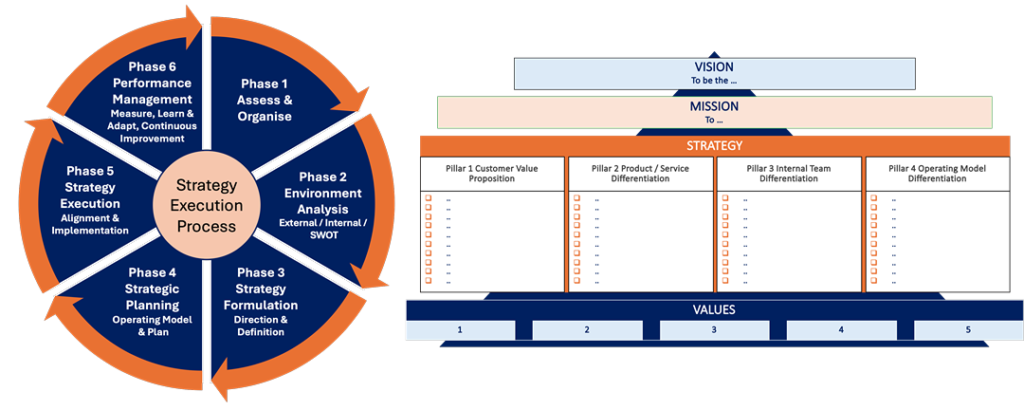
Figure 2 Strategy Execution Process
The Dual Growth Challenge in Media and Telco: Navigating Organic and Inorganic Strategies
The media and telco industries are in the throes of an extraordinary transformation, shaped by converging technologies, shifting consumer behaviours, and heightened competition from digital-native players. In this disruptive context, companies must actively balance organic growth – driven by internal innovation, talent, and capability-building – with inorganic growth, via mergers, acquisitions, and strategic partnerships.
Each growth path comes with unique complexities. Organic growth demands sustained innovation and adaptability, while inorganic strategies require disciplined integration, regulatory navigation, and cultural harmonisation.
The Growth Imperative in Media & Telco
- Organic growth: Expansion through internal innovation, product development, customer acquisition, and operational efficiency.
- Inorganic growth is driven by mergers, acquisitions, and strategic partnerships that rapidly expand capabilities, technologies, or market access.
While distinct, these paths must be synergised to build resilient, scalable, and future-ready organisations.
Case in Point – Dual-Track Growth
A European media–telco invested €150M in AI analytics (organic) while acquiring a 3M-subscriber streaming service (inorganic). In 18 months: churn fell 15%, ARPU rose 9%, and content launch times dropped by 60%, delivering 22% above-target ROI.
Media Industry: Organic vs. Inorganic Growth Dynamics
Organic Growth: Innovation and Reinvention from Within
1. Fragmented Markets and Changing Audiences
- Cross-Platform Fragmentation: Audiences are dispersed across streaming, social platforms, gaming, and traditional media. Competing for time and attention in this fractured landscape requires omnichannel distribution and real-time personalisation.
- Youth-Led Content Evolution: Younger generations are migrating toward short-form, interactive, and creator-led formats, placing pressure on legacy media to reimagine traditional content and delivery.
- Rising Content Costs: High-quality, original content remains the cornerstone of differentiation but is increasingly expensive to produce – pushing firms to favour predictable, franchised IP over riskier, creative storytelling.
2. Revenue Model Volatility
- Subscription Saturation: Consumers are facing “subscription fatigue,” making it harder to scale paywalled content without clear value differentiation or bundling strategies.
- Digital Advertising Displacement: Platforms like YouTube, TikTok, and Instagram are redefining ad engagement, compelling media companies to invest in first-party data, ad tech, and programmatic precision.
3. Regulatory and Distribution Hurdles
- Market Entry Constraints: Regulatory frameworks often limit foreign ownership, local content quotas, or broadcasting rights – hindering organic geographic expansion.
- Legacy Distribution Inefficiencies: Despite digital access, content discoverability remains a bottleneck, with platforms increasingly acting as gatekeepers.
4. Innovation and Talent Scarcity
- Talent Drain to Tech: Tech platforms are absorbing creative and technical talent with higher compensation and scalable tools.
- Tech-Driven Content Strategies: Organic innovation now requires investing in AI, personalisation engines, and data-driven storytelling – not just creative excellence.
Case in Point – Personalisation at Scale
A global broadcaster used AI to customise shows by audience segment and launched a short-form channel. Result: 27% higher engagement in 18–34s, 18% ad yield uplift, 12% lower production costs.
Inorganic Growth: M&A, Consolidation, and Alliances
1. Integration and Cultural Misalignment
- Operational Incompatibility: Differing content pipelines, tech stacks, and organisational priorities frequently stall post-merger integration.
- Culture Clashes: Mergers between legacy broadcasters and digital startups often suffer from strategic incoherence and executive churn.
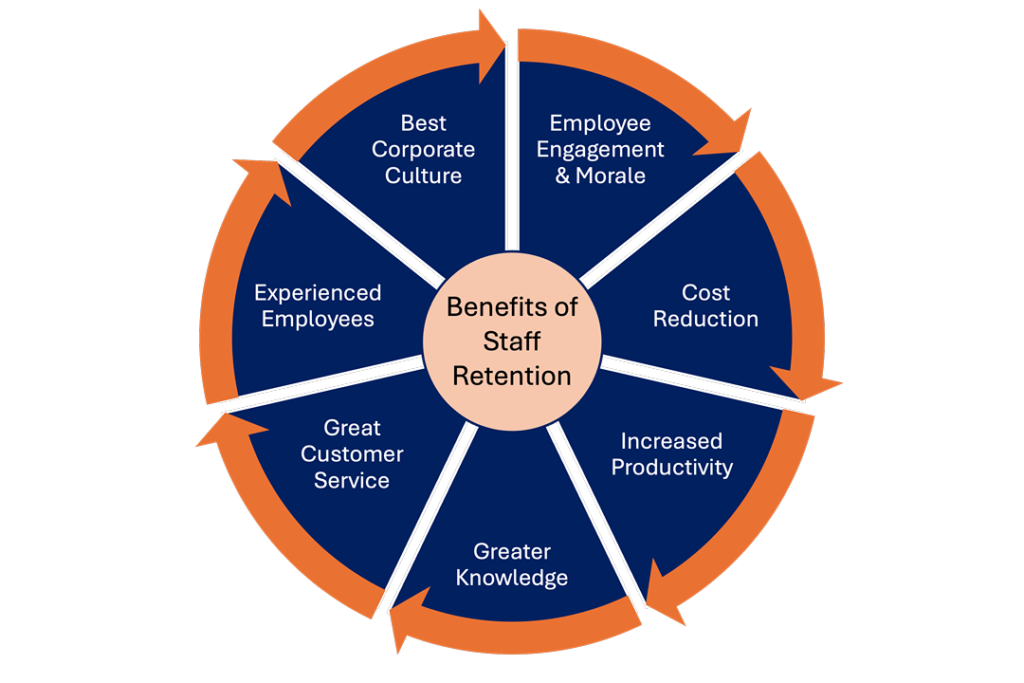
Figure 3 Benefits of Staff Retention
2. Financial Risk and Value Realisation
- Debt-Driven Deals: Many M&A transactions are debt-financed, stretching balance sheets and limiting strategic optionality. Value creation timelines are long and uncertain.
- Asset Monetisation Gaps: Even with deep content libraries, monetising assets across new channels and markets can prove elusive without digital fluency.
“For telco, the reducing viability of the current model, due to growing capex costs for capacity, with little opportunity for similar revenue growth, means that telcos need to explore more efficient models. Consolidation offers a solution to this, by combining networks to achieve investment efficiencies and to scale services across multiple markets (particularly in Europe). As many telcos are also faced with the challenge of digital transformation, consolidation opportunities can be a way to achieve both more efficient and scalable investment, whilst achieving efficient transformation.” Campbell Scott
3. Regulatory Barriers
- Antitrust Roadblocks: Increasing regulatory scrutiny is stalling major deals in the name of protecting consumer choice and content plurality.
- Cross-Border Complexity: Licensing rights, IP localisation, and data transfer laws vary by country, complicating global M&A strategies.
4. Technology Obsolescence
- Disrupted Thesis Risk: The rationale for an acquisition can quickly collapse due to the pace of disruption – a key lesson from the AOL-Time Warner and AT&T-WarnerMedia collapses.
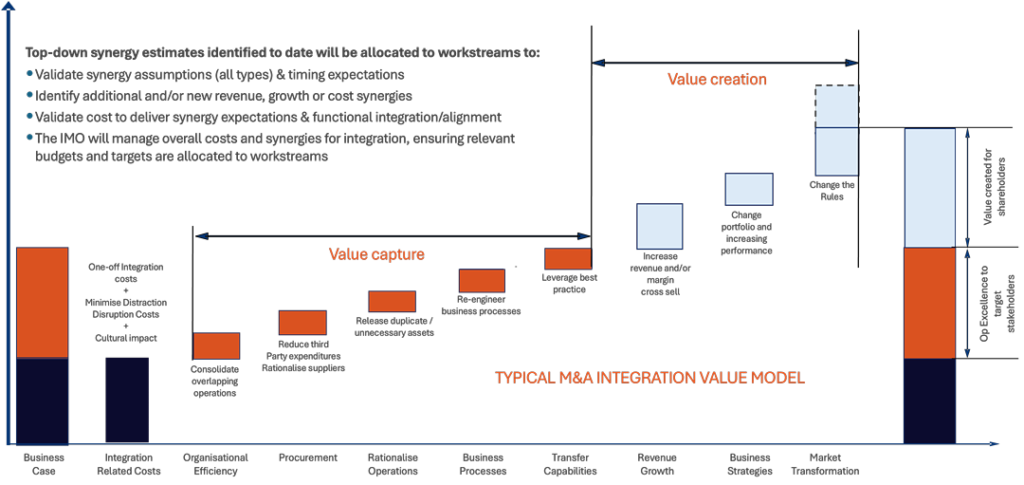
Figure 4 Identifying Value Capture & Value Creation Synergies to Maximise Deal ROI
Case in Point – Owning Niche IP
A mid-tier media firm acquired a niche sports rights holder, boosting OTT subs 31%, sponsorships 24%, and ad sales by €8m in year one.
Telco Industry: The Pursuit of Scale and Service Innovation
Organic Growth: Upgrading Infrastructure and Experience
1. Capital Intensity and Marginal Returns
- 5G and Fibre Investments: Billions are being spent to deploy next-gen infrastructure with slow payback periods, creating an ROI disconnect.
- ROIC Decline: Despite network upgrades, telcos face eroding margins and declining capital efficiency in the face of price competition and commoditisation.
2. Escalating Competition
- Lower Barriers to Entry: e-SIMs and MVNOs allow non-traditional players – like big retailers and fintechs – to launch telco-like services without infrastructure.
- Platform Cannibalisation: Hyperscalers such as Amazon, Apple, and Google are embedding telco infrastructure into bundled ecosystems while capturing disproportionate value.
- Cost and ARPU Pressures: Many firms need to adjust to the reality that lean players will outprice them, such that Telco’s need to get very efficient very quickly.
3. Regulation and Compliance Complexity
- Price Caps and Tariff Controls: Regulatory frameworks in many regions restrict revenue potential through pricing constraints.
- Cybersecurity and Privacy Compliance: Laws like GDPR and CCPA force significant investment in data management, increasing OPEX without immediate upside.
4. Customer-Centric Imperatives
- Seamless UX Expectations: Consumers demand always-on, personalised, multi-device connectivity and support, putting pressure on legacy customer service models.
- Churn Management: Customer loyalty is waning, with switching costs at an all-time low.
Case in Point – AI-Optimised Networks
An Asia-Pacific telco deployed AI for predictive 5G maintenance and a virtual CX assistant. Downtime fell 40%, support calls dropped 35% ($15m saved), NPS up 12 points.
Inorganic Growth: Consolidation, Ecosystems, and Adjacent Bets
1. Integration and Network Harmonisation
- Technical Overhead: Merging different network technologies and IT architectures is time-consuming and expensive. A 2023 GSMA survey found 67% of telco executives cite post-merger integration as their biggest challenge.
- Organisational Inertia: Aligning cultures and leadership across national or regional players is often underestimated.
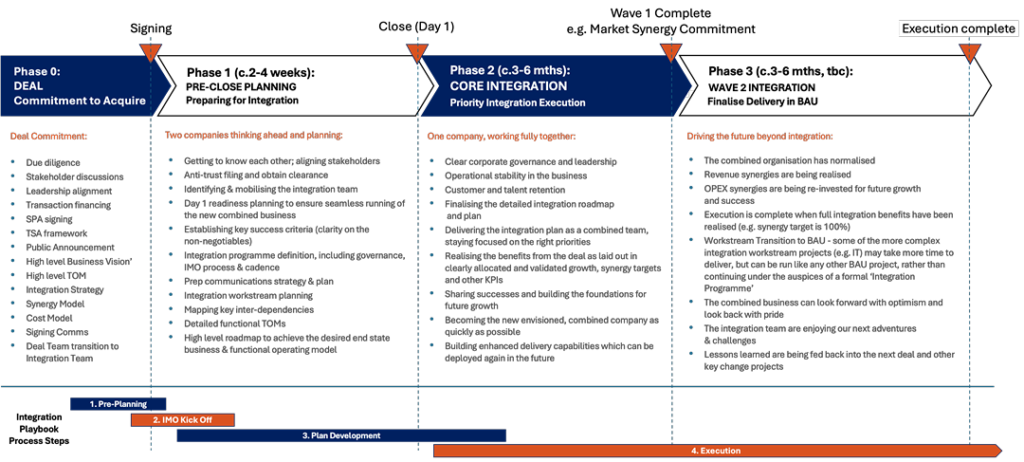
Figure 5 Comprehensive M&A Integration Planning from Due Diligence to Execution
Case in Point – Merging for Scale
Two national telcos merged, moving to a shared cloud IT stack. Within 24 months: 20% capex efficiency, €150M opex savings, 15% bundle penetration uplift driving 7% ARPU growth.
2. Regulatory Headwinds
- Approval Delays: Cross-border and large-scale deals face significant delays and scrutiny, particularly regarding consumer pricing and competitive fairness.
- Anti-Consolidation Pushback: Regulators worry that fewer players will reduce service competition and innovation.
3. Financial Risk and Unrealised Synergies
- Debt Load from Acquisitions: Inorganic growth often requires significant capital deployment, which can constrain future flexibility.
- Failure to Deliver Synergies: Many deals underperform due to integration failures or mismatches between the expected and realised value.
4. Strategic Alliances and Ecosystem Play
- Platform Partnerships: Relying on trust with customers, Telcos are increasingly partnering with OTT providers (e.g., Netflix, Microsoft, Zoom) to deliver value-added services like bundled media, edge computing, and enterprise solutions.
- Innovation via Ecosystems: Inorganic growth now includes partnerships—not just acquisitions—to co-create new offerings (e.g., private 5G for industrial IoT, fintech bundling).
Comparative Table: Organic vs. Inorganic Growth Challenges
| Industry | Organic Growth Challenges | Inorganic Growth Challenges |
| Media | Market fragmentation, evolving consumer habits, rising content costs, regulatory friction, innovation lag, talent scarcity | Integration complexity, cultural clash, mounting debt, obsolete acquisition logic, monetisation difficulty, antitrust scrutiny |
| Telco | High capital intensity, margin pressure, price regulation, customer churn, innovation inertia | Post-merger integration, regulatory approval risk, financial overreach, synergy shortfall, complexity in managing tech alliances |
To thrive amid disruption and scale effectively, media and telco firms must embrace a set of cross-cutting strategic priorities:
1. Balance Growth Modes
- Combine organic innovation with disciplined M&A and partnerships, ensuring each move aligns with a clearly defined strategic intent and ROI framework.
2. Accelerate Digital Transformation
- Leverage AI, cloud-native infrastructure, and automation to enhance personalisation, efficiency, and agility.
3. Prioritise Customer-Centricity
- Create seamless, intuitive, and value-rich customer experiences to retain loyalty and reduce churn.
4. Orchestrate Ecosystem Partnerships
- Build open platforms that connect infrastructure, content, and services—co-creating value with hyperscalers, OTT players, and adjacent industries.
5. Navigate Regulation Proactively
- Establish dedicated compliance and policy teams to work with regulators and shape industry-friendly policy outcomes.
Growth in a Converged Era
The distinction between media and telco is increasingly blurred. Both are evolving into experience-driven, data-powered ecosystems, competing not only with each other but also with global tech platforms. Whether through in-house innovation or strategic acquisition, companies must design growth pathways that are agile, resilient, and deeply customer focused.
In an environment of volatility, regulation, and relentless technological change, the winners will be those who can master both internal transformation and external orchestration—creating hybrid growth models that are adaptive, scalable, and future-ready.
The Implications of AI in Media & Telco

AI is transforming the Media and Telecommunications industries by enhancing content creation, optimising network performance, improving customer experiences, and enabling personalised marketing. Through advanced analytics, automation, and AI-driven content solutions, these industries are adapting to changing consumer demands and the increasing volume of data. Here’s a detailed look at how AI is impacting these sectors:
1. AI in the Media Industry
AI is revolutionising content creation, distribution, and consumption in the media industry:
Content Creation & Automation
- AI-powered tools help create and edit content, including automated video editing, scriptwriting, and even news generation.
- AI analyses audience preferences and helps producers create content that aligns with what viewers want to watch.
- Deep learning algorithms generate visual effects, improve post-production processes, and even automate animation and graphic design.
Example: The Associated Press (AP) uses AI to write automated news reports, especially for routine topics like earnings reports and sports updates.
Personalisation & Recommendation Systems
- AI powers recommendation engines in streaming services like Netflix, Spotify, and YouTube, suggesting content based on user behaviour, preferences, and viewing history.
- AI algorithms optimise content curation to ensure consumers are presented with the most relevant content, improving engagement.
Example: Netflix’s AI-powered recommendation engine analyses user behaviour, tailoring movie and show suggestions for each user, contributing to higher retention rates.
Audience Analytics & Sentiment Analysis
- AI processes social media interactions, comments, and reviews to provide insights into audience sentiment, helping media companies understand public perception.
- Natural Language Processing (NLP) and sentiment analysis tools identify trends, allowing businesses to adapt their content strategies accordingly.
Example: Disney uses AI to analyse audience sentiment and adjust their film marketing or content strategies.
AI in Journalism & Newsrooms
- AI can automatically gather and organise information, track events in real time, and produce data-driven stories (e.g., weather reports, election results).
- AI tools assist journalists by analysing large datasets, producing reports faster, and ensuring more accuracy.
Example: Reuters and Bloomberg use AI for financial reporting, creating automated articles from real-time data feeds.
2. AI in Telecommunications
AI is reshaping the telecommunications industry by optimising network management, improving customer service, and enabling the development of new services:
Network Optimisation & Management
- AI helps telecom companies monitor and optimise their networks, predicting maintenance needs and improving 5G infrastructure management.
- AI-powered self-healing networks can automatically detect and resolve network issues, ensuring higher uptime and better service quality.
- AI-driven automation reduces the time needed to detect and fix network failures, improving efficiency and reducing costs.
Example: Telefonica and Vodafone use AI for predictive maintenance and network optimisation to ensure smooth operations and minimise service disruptions.
AI in Customer Service & Support
- AI-powered chatbots and virtual assistants handle customer inquiries, troubleshoot problems, and assist with billing, 24/7.
- Natural Language Processing (NLP) enables telecom companies to understand and resolve customer issues more efficiently by analysing customer queries and providing automated solutions.
- AI-powered systems also enable proactive customer support, predicting service issues before they occur.
Example: T-Mobile uses AI-based chatbots to assist customers with account management, troubleshooting, and service inquiries.
Personalised Marketing & Customer Experience
- AI analyses customer data to create personalised offerings based on customer preferences, usage behaviour, and location.
- AI can target ads more effectively, tailoring marketing campaigns to the right audience segment, improving ROI.
- AI helps telecom companies develop customised service packages, offering personalised mobile plans or internet options to users.
Example: AT&T and Verizon use AI to optimise customer experience by offering tailored recommendations, service bundles, and personalised marketing campaigns.
Predictive Analytics & Customer Retention
- AI uses customer data to predict churn rates, identifying users who are likely to cancel services and enabling companies to intervene with personalised offers or support.
- AI helps telecom operators improve customer lifetime value (CLV) by enhancing service personalisation and resolving issues proactively.
Example: BT Group uses AI-powered predictive analytics to enhance customer retention by identifying at-risk customers and offering targeted incentives.
3. AI in Content Delivery & Distribution
AI is also enhancing how content is delivered across the internet and mobile devices:
Content Delivery Networks (CDNs)
- AI-powered CDNs optimise video streaming quality by predicting network congestion and ensuring smooth delivery of content, even in areas with limited bandwidth.
- AI algorithms ensure adaptive bitrate streaming, adjusting video quality based on network conditions to minimise buffering.
Example: Akamai’s AI-driven CDN system optimises delivery speeds, ensuring that users experience smooth streaming across devices.
Nascent AI in Augmented & Virtual Reality (AR/VR)
- Telecom companies are integrating AR and VR technologies into their offerings, creating immersive experiences for users (e.g., virtual sports events, AR-powered shopping).
- AI enhances the interactivity and realism of AR/VR content by analysing user movements, preferences, and environmental factors.
Example: T-Mobile’s 5G network supports AR/VR experiences, enabling users to engage with live events, virtual meetings, and gaming in a more immersive way. Rayban Meta AI is another great example providing on the go interactivity – they allow you react to what you see, take pictures and videos, listen on the go, and make calls and send messages without touching your phone.
4. AI in Data Analytics & Insights
AI-driven analytics are helping media and telecom companies make smarter decisions:
Content Analytics & Audience Insights
- AI uses big data analytics to track user behaviour, predict content preferences, and assess audience engagement across various channels.
- Telecom providers use AI to understand how customers use data, helping them refine service offerings and deliver more value.
Real-Time Insights & Business Intelligence
- AI provides real-time insights into business operations, enabling media companies and telecom providers to make data-driven decisions.
- Telecom companies use AI to analyse call data records, improve network planning, and optimise infrastructure deployment.
Example: Sky Group and Comcast use AI for data analytics to predict viewer behaviour and customise content offerings based on user preferences.
Challenges of AI in Media & Telecommunications
- Data privacy concerns – Telecom and media companies must ensure that AI-driven personalisation respects user privacy and adheres to GDPR and other regulations.
- Complexity of implementation – Integrating AI across large-scale networks and systems can be costly and technically challenging.
- Ethical implications – AI in media can raise concerns regarding content manipulation, deepfakes, and the spread of misinformation.
- Bias in AI algorithms – AI models trained on biased data can lead to unintended consequences, such as reinforcing stereotypes or excluding certain groups.
AI is revolutionising the Media and Telecommunications industries by enhancing content creation, improving customer experiences, automating operations, and optimising service delivery. As these industries embrace AI technologies, they can meet the growing demands for personalised content, smarter network management, and more efficient customer service.