Executive Summary
The technology sector is at a pivotal crossroads – caught between unprecedented opportunity and mounting complexity. Rapid AI adoption, evolving customer demands, talent shortages, and intensifying competitive pressures are forcing software, technology, and IT services companies to reinvent strategies while safeguarding resilience. Success now hinges on mastering both organic and inorganic growth, integrating cutting-edge technologies without losing operational discipline, and building deep digital trust.
Artificial intelligence has moved from competitive edge to operational necessity, transforming everything from software development and IT operations to customer engagement and cybersecurity. But with this potential comes heightened risks in governance, security, and talent readiness. Legacy system debt, shifting pricing models, and geopolitical uncertainty add further strain.
Leaders who can combine strategic agility, ethical foresight, and disciplined execution – while balancing growth with resilience – will define the sector’s next era.
Key Takeaways:
- AI is the New Baseline – Competitive advantage depends on enterprise-wide AI integration, supported by robust governance to avoid fragmentation, inefficiencies, and ethical pitfalls.
- Security & Trust Are Strategic Assets – As cyber threats and privacy regulations tighten, building digital trust through transparency, resilience, and compliance is a core differentiator.
- Talent Gaps Threaten Growth – Demand for AI, cloud, and cybersecurity expertise far outpaces supply, requiring aggressive upskilling, reskilling, and educational partnerships.
- Growth Requires Dual Engines – Sustainable advantage comes from synchronising organic innovation with inorganic expansion via disciplined, synergy-focused M&A.
- Customer-Centric, Outcome-Based Models Win – Transitioning to value-aligned pricing and hyper-personalised experiences is essential to meet rising client expectations.
- Modernisation is Non-Negotiable – Addressing technical debt through cloud-first architectures and scalable infrastructure is critical to unlocking innovation and agility.
Strategic Challenges In The Technology Sector
Competing in a New Era of Tech Transformation
The software, technology, and IT services industries are undergoing seismic shifts driven by technological innovation, evolving customer expectations, and intensifying competition. As these forces converge, companies must navigate a landscape marked by disruption and opportunity. Below are the key strategic challenges shaping the industry in 2025 and beyond:
1. Accelerating AI Adoption and Managing Its Complexity
Artificial intelligence is no longer a strategic differentiator – it’s a baseline requirement. Companies must integrate AI across products, workflows, and customer interactions to stay competitive. However, this urgency often leads to fragmented implementations, inefficiencies, and governance gaps. Scaling AI responsibly remains a major hurdle: 55% of tech leaders cite AI integration as their most pressing business challenge. The focus must now shift from experimentation to enterprise-wide orchestration. See later for detailed implications of AI on the sector.
- Example: A global software solutions provider replaced fragmented AI initiatives with a centralised AI Centre of Excellence. This alignment delivered 25% faster feature releases and a 40% cut in duplicated R&D spend, driving company-wide adoption.
2. Security, Data Privacy, and Digital Trust
Cyber threats are more sophisticated and frequent than ever. In 2025, top concerns among developers and executives include system security (51%), AI code reliability (45%), and data privacy (41%). As digital ecosystems expand, maintaining user trust has become a strategic imperative. Companies must reinforce security, ensure transparency, and uphold privacy standards to earn and retain digital trust – a critical differentiator in a hyperconnected world.
- Example: A multinational IT infrastructure company implemented zero-trust security, automated compliance reporting, and advanced anomaly detection. Customer trust ratings rose 22%, and the firm won two major enterprise contracts citing compliance strength.
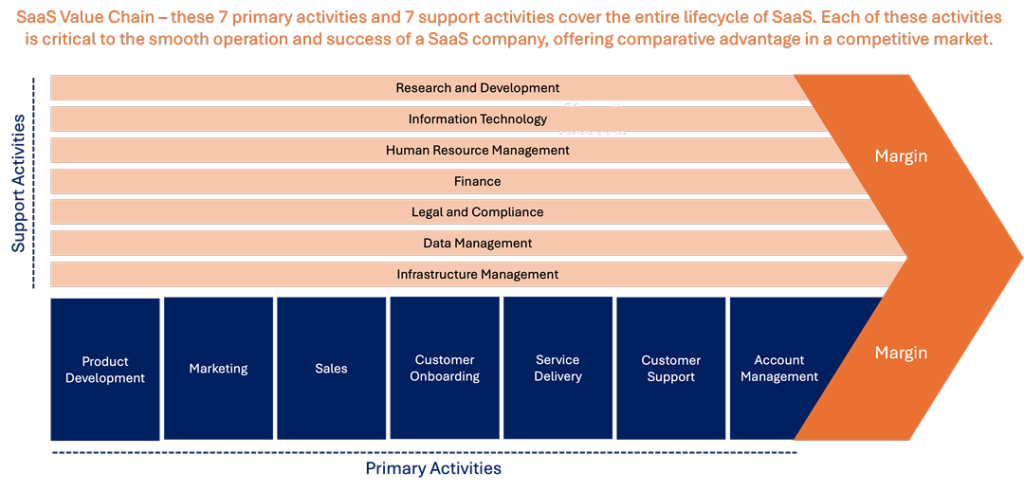
Figure 1 SaaS Industry Value Chain
“The SaaS Value Chain integrates continuous product innovation with agile service delivery to respond swiftly to evolving market demands and customer feedback. Effective customer onboarding and support are critical for driving user adoption and long-term subscription renewal rates. Scalability and security are the cornerstones ensuring that services can grow with customer demand without compromising data integrity. The integration of advanced analytics and machine learning enables predictive capabilities that refine customer targeting and product personalisation.” Flevy Lean
3. Talent Shortages and Skills Gaps
A widening skills gap is impeding innovation. There’s a growing need for specialised roles, including AI engineers (28%), IT security engineers (16%), and cybersecurity experts (13%). As emerging technologies evolve faster than educational pipelines can adapt, companies face an uphill battle in recruiting and retaining the talent necessary to stay ahead of the curve. Continuous upskilling and adaptive workforce strategies are essential.
- Example: A cloud computing services firm launched an internal academy with a leading university, certifying over 200 employees in AI and cybersecurity. Contractor reliance dropped 30%, and product roadmap delivery accelerated by 20%.
4. Balancing Efficiency with Strategic Growth
The era of “efficiency above all” is giving way to a new mandate: efficient growth. Organisations must now optimise costs while simultaneously investing in data-driven product development, strategic talent acquisition, and market expansion. This requires disciplined portfolio rationalisation, operational excellence, smarter resource allocation, and agility in navigating shifting customer needs and market dynamics.
- Example: A digital transformation firm divested two low-margin products and reinvested in a high-growth AI-enabled platform. EBITDA margins improved, and core offering revenue grew 28% YoY.
5. Navigating AI Governance and Ethical Complexity
As AI systems become more autonomous and embedded in decision-making processes, robust governance is vital. Legal, ethical, and operational risks must be proactively managed. Businesses need structured frameworks to ensure AI aligns with corporate values, regulatory requirements, and societal expectations – while also remaining agile enough to adapt to evolving standards and technologies.
“AI usage, exploitation and monetization is the key challenge for the Technology sector. However, in order to truly exploit AI using an enterprise’s own data, this data has to be available and useable through a meticulously planned Hybrid cloud strategy, whilst also being governed and secured with robust technology, policies and procedures. Only then will the true value of an enterprises own data be realised through AI.” Craig Aston, Chief Executive Officer, Celerity
6. Customer-Centricity and Outcome-Based Pricing
AI is transforming go-to-market strategies and redefining customer expectations. Companies must move beyond traditional pricing models to outcome-aligned approaches that reflect the value delivered. This shift also demands seamless, personalised experiences across all touchpoints – from sales and onboarding to support and customer success. Winning in 2025 means becoming truly customer-centric, not just customer-aware.
- Example: An enterprise process automation firm switched to outcome-based pricing tied to client savings. Average contract value rose 25%, sales cycles shortened 30%, and retention improved significantly.
7. Legacy System Modernisation and Technical Debt
Outdated infrastructure continues to be a significant barrier to transformation. Technical debt slows innovation, limits scalability, and increases security vulnerabilities. Modernising legacy systems is no longer optional – it’s essential for integrating emerging technologies, enhancing operational agility, and unlocking new business models.
- Example: A financial technology platform migrated 80% of workloads to a cloud-native architecture, reducing maintenance costs 40% and cutting feature time-to-market from six months to eight weeks.
8. Investment and Competitive Pressures
With lowering interest rates and fierce competition for high-quality assets, the investment landscape is rapidly evolving. To attract capital and outperform rivals, companies must act boldly – prioritising innovation, operational excellence, and differentiated value creation. Strategic clarity and disciplined execution will separate industry leaders from laggards.
To thrive in 2025 and beyond, software, technology, and IT services companies must master the dual challenge of rapid innovation and operational resilience. Success depends on navigating AI complexity, reinforcing digital trust, bridging talent gaps, modernising infrastructure, and aligning closely with customer outcomes. Strategic agility, ethical foresight, and bold investment will define the leaders of tomorrow.
Balancing Growth in The Tech Sector: Strategic Imperatives for a Disruptive Era
As a specialist consultant, we have witnessed the software, technology, and IT services sectors undergo profound transformation. The dual engines of organic and inorganic growth are more vital than ever for long-term competitiveness – yet both present unique and overlapping challenges. This article explores these growth pathways, identifies critical roadblocks, and outlines actionable strategies for navigating today’s complex and fast-evolving market landscape.
The Growth Imperative in Technology
- Organic growth: Expansion through internal innovation, product development, customer acquisition, and operational efficiency.
- Inorganic growth is driven by mergers, acquisitions, and strategic partnerships that rapidly expand capabilities, technologies, or market access.
While distinct, these paths must be synergised to build resilient, scalable, and future-ready organisations.
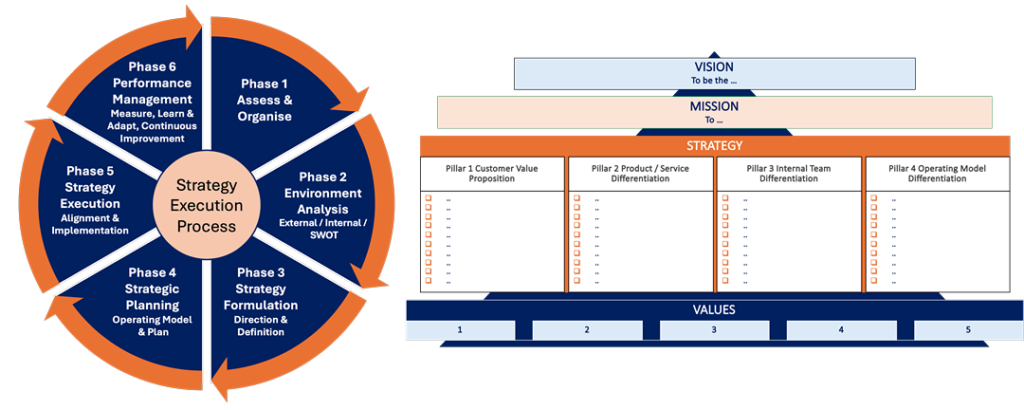
Figure 2 Strategy Execution Process
Barriers to Organic Growth
1. Talent Shortages and Skills Gaps
Demand for AI engineers, cybersecurity professionals, and data scientists far outpaces supply. The semiconductor and AI chip industries are especially constrained. Organisations must close this gap through internal training programs and long-term partnerships with educational institutions.
2. Technological Complexity and Legacy Infrastructure
Modernising systems to support AI, automation, and cloud solutions is hampered by legacy architectures and fragmented platforms. Low-code/no-code tools and third-party integrations add further complexity, requiring careful orchestration to avoid process silos and inefficiencies.
- Example: A managed IT services provider consolidated six legacy platforms into one low-code system, reducing maintenance by 35% and cutting onboarding time by two-thirds.
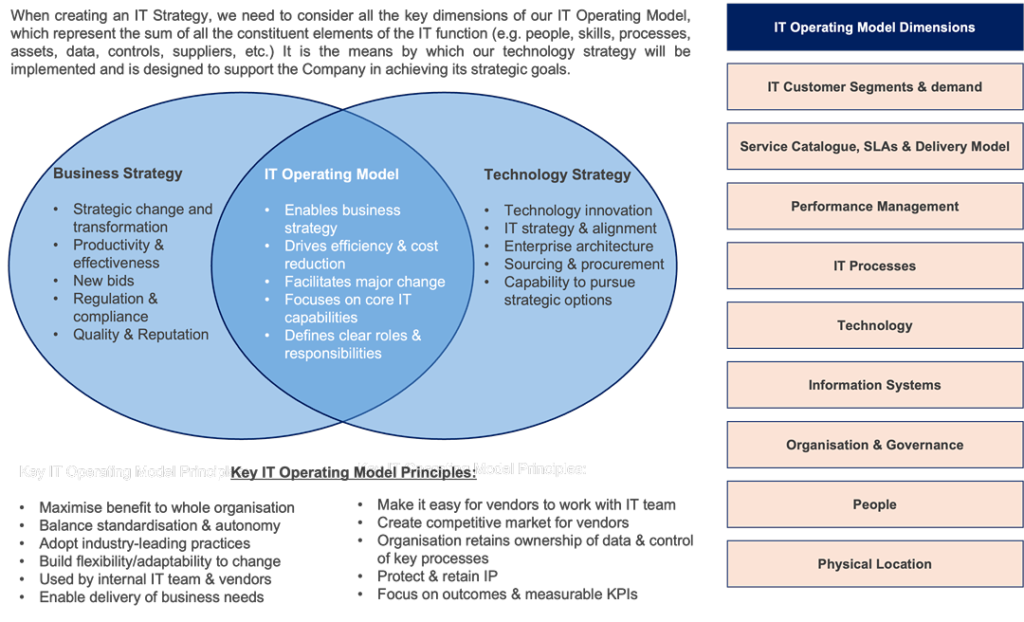
Figure 3 Customer View: IT Operating Model
3. Security, Privacy, and Digital Trust
Cyber threats are escalating, and evolving regulations around data protection demand ongoing vigilance. Organisations must implement robust security protocols while fostering trust through transparent, ethical data practices.
- Example: A fintech software vendor deployed AI threat detection, preventing three major breach attempts and avoiding £4m in potential losses.
4. Scaling Infrastructure and Managing Data
As organisations grow, infrastructure must scale seamlessly. Outdated systems create bottlenecks, while data silos hinder real-time insights. Centralised, scalable data platforms and cloud-native architectures are essential for operational agility.
5. Rising Customer Expectations
Clients expect personalised, outcome-driven solutions across integrated platforms. The shift toward outcome-based pricing and service delivery models intensifies pressure to deliver measurable results and seamless customer experiences.
“Transitioning to outcome-based pricing models will be challenging for most incumbent software providers. It requires a fundamental mindset shift, and investments. That said, Outcome-as-a-Service is a game changing opportunity in the post-AI world.” Manish Jar, CEO, Neosap Global
Unlocking Organic Growth: Strategies that Work
1. Invest in Workforce Development
- Launch targeted upskilling and reskilling programs in AI, cybersecurity, and cloud.
- Partner with academic institutions to co-create talent pipelines and industry-aligned curricula.
- Example: A cloud software vendor certified 150 engineers in AI solutions, enabling launch of two AI-powered products generating $12M ARR within a year.
2. Drive Digital Transformation
- Upgrade infrastructure with scalable, cloud-first solutions.
- Adopt end-to-end AI platforms to reduce fragmentation and accelerate innovation.
- Example: An automotive technology firm implemented an end-to-end AI platform, halving testing times and enabling simultaneous multi-line product development.
3. Build Resilient Security Frameworks
- Strengthen cybersecurity with proactive threat detection and continuous compliance.
- Promote a culture of digital trust through ethical governance and transparency.
- Example: An enterprise compliance platform achieved ISO 27001 certification, securing contracts with three multinational clients.
4. Deepen Customer-Centricity
- Use data analytics to personalise offerings and anticipate evolving needs.
- Transition to outcome-aligned pricing models to clearly demonstrate value delivered.
- Example: A customer experience software provider used AI to predict churn and target at-risk accounts, reducing churn by 19%.
The Challenges of Inorganic Growth
1. Integration Complexity
Post-M&A integration remains a top reason for deal failure. Misaligned cultures, incompatible systems, and lack of early IT involvement can derail synergies. Integration must be meticulously planned and collaboratively executed across all functions.
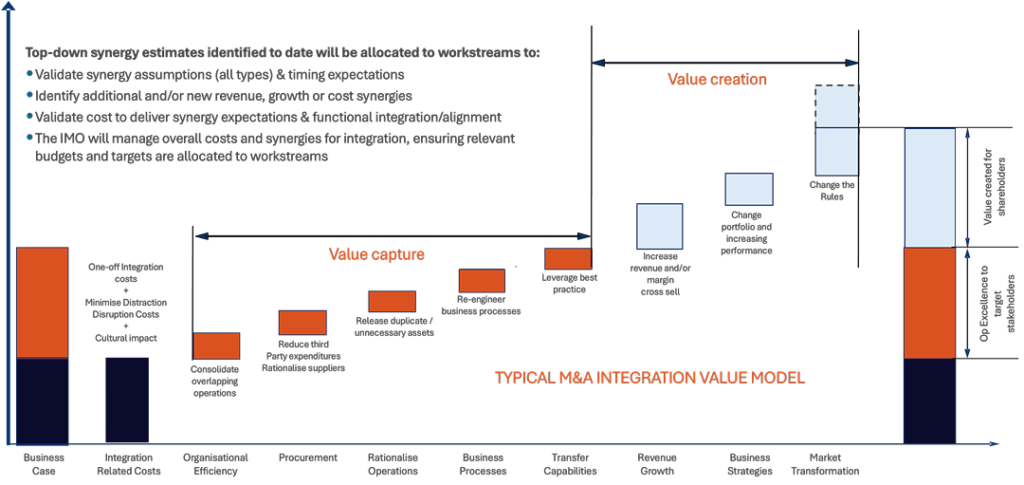
Figure 4 Identifying Value Capture & Value Creation Synergies to Maximise Deal ROI
2. Regulatory and Geopolitical Risk
Cross-border transactions face heightened scrutiny over data sovereignty, antitrust concerns, and operational resilience. Geopolitical tensions and regulatory shifts can delay or derail deals, especially in sensitive sectors like cloud, AI, and cybersecurity.
3. Valuation and Financial Risk
Market volatility, rising capital costs, and diverging valuation expectations complicate deal structuring. Particularly in fast-growth SaaS and cloud sectors, managing trade-offs between revenue growth and cost synergies is increasingly critical.
4. Talent Retention Post-M&A
Uncertainty during integration can trigger attrition of high-impact talent—jeopardising innovation, culture, and deal value. Clear communication, retention plans, and cultural alignment are essential to mitigate this risk.

Figure 5 Benefits of Staff Retention
Mastering Inorganic Growth: Strategic Levers
1. Prioritise Strategic Alignment
- Evaluate cultural, operational, and technology fit during pre-deal due diligence.
- Develop detailed integration roadmaps with measurable KPIs and cross-functional ownership.
2. Optimise Deal Structuring and Capital Allocation
- Adopt flexible financing models and dynamic portfolio strategies.
- Factor in AI readiness, regulatory complexity, and risk exposure when modelling scenarios.
3. Retain and Engage Critical Talent
- Clearly communicate integration plans and career paths.
- Offer retention incentives, recognition programs, and opportunities for innovation.
- Example: A SaaS product company offered retention bonuses and equity to acquired leaders, keeping 88% through the first 18 months.
4. Leverage Technology for Integration
- Use AI and automation to streamline workflows, unify systems, and reduce transition costs.
- Deploy standardised platforms to ensure consistent processes across the post-merger enterprise.
- Example: A software conglomerate unified CRM and ERP systems within 90 days post-acquisition, cutting integration costs by 25%.
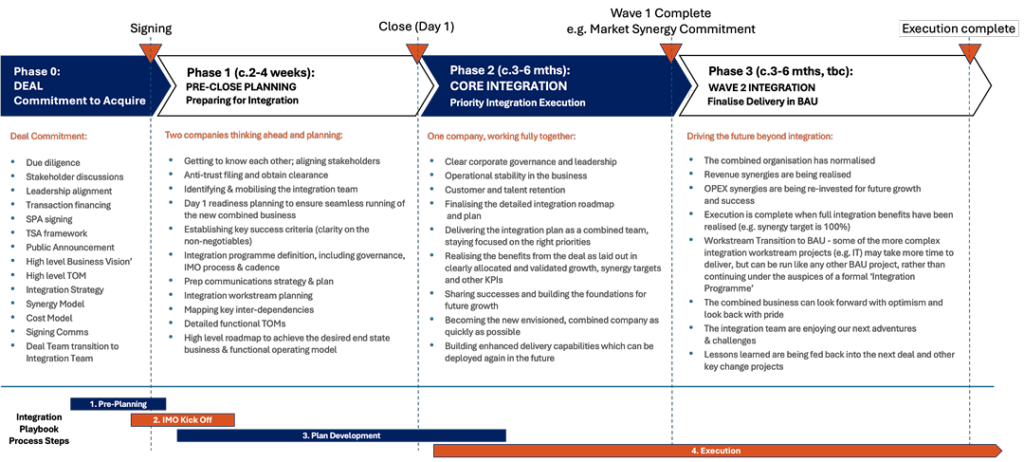
Figure 4 Comprehensive M&A Integration Planning from Due Diligence to Execution
Bridging Organic and Inorganic Growth
The most resilient companies treat organic and inorganic growth not as separate tracks, but as complementary levers. For instance:
- Investing in internal cloud modernisation (organic) can be accelerated by acquiring a cloud-native startup (inorganic).
- Building in-house AI capabilities can be enhanced through strategic partnerships or acqui-hires.
- Example: A cloud services provider modernised its internal cloud stack while acquiring a niche AI analytics firm. Product innovation accelerated by 50%, enabling entry into three new verticals within a year.
This integrated approach enables faster execution, stronger innovation, and deeper market penetration.
Turning Growth Challenges into Strategic Advantage
To overcome growth challenges in today’s high-velocity tech environment, organisations must adopt a holistic, adaptive, and integrated growth strategy. This means:
- Investing in talent and digital infrastructure,
- Fortifying security and trust,
- Executing disciplined, synergy-driven M&A,
- And aligning all efforts with long-term customer and shareholder value.
The future belongs to firms that can scale innovation from within – while also embracing external opportunities to leap forward. Those that master both organic and inorganic growth will not only survive industry disruption – they’ll define the next era of competitive advantage.
The Implications of AI in Technology & IT Services

AI is transforming the Software, Technology, and IT Services industries by automating processes, enhancing development cycles, improving customer support, and enabling innovation at a rapid pace. These industries are leveraging AI for everything from automated coding and testing to AI-powered software solutions and enhanced cybersecurity. Here’s how AI is impacting each of these sectors:
1. AI in Software Development
AI is revolutionising how software is created, tested, and maintained:
Code Generation & Automated Development
- AI is used to automate coding and suggest improvements to software development processes. AI-powered code assistants like GitHub Copilot use natural language to generate code snippets or complete functions, making development faster.
- Machine learning (ML) algorithms are employed to assist in writing better code, debugging, and identifying patterns in code that may lead to potential errors.
Example: GitHub Copilot (powered by OpenAI) helps developers by suggesting code as they type, significantly speeding up the development process.
AI-Powered Testing & Quality Assurance
- Automated testing tools powered by AI can run tests, detect bugs, and suggest fixes without requiring manual intervention. These tools can identify complex, hidden issues more effectively than traditional testing methods.
- AI can also predict where bugs are likely to occur in the software by analysing historical data from previous versions.
Example: Testim.io uses AI to automate UI testing and detect issues in real-time by analysing application behaviour.
Continuous Integration & Delivery (CI/CD)
- AI streamlines the CI/CD pipeline by enabling smarter, automated decisions for deployment. It can optimise the timing of code deployments, detect issues in real-time, and assist in the continuous improvement of the software.
Case Study: A DevOps tools provider adopted AI-assisted coding, reducing feature development times by 40% and post-release defects by 18%.
2. AI in IT Services
AI is reshaping the way IT services are delivered, managed, and supported:
AI in IT Support & Service Desk Automation
- AI-driven chatbots and virtual assistants are used to resolve common IT issues, help with password resets, and provide immediate troubleshooting.
- AI tools such as RPA (Robotic Process Automation) automate repetitive tasks like user provisioning, system monitoring, and data backup management, allowing IT staff to focus on more complex issues.
Example: ServiceNow and IBM’s Watson offer AI-driven service desk platforms that handle customer queries, automate ticket management, and resolve issues efficiently.
Predictive Maintenance & Proactive Issue Resolution
- AI tools monitor system performance, predict failures, and trigger automated responses to prevent downtime.
- IT services companies use AI to manage cloud infrastructure, monitor server health, and ensure smooth performance by proactively addressing potential issues.
Example: Splunk uses AI for predictive monitoring of IT systems, enabling companies to prevent outages and performance issues by detecting anomalies early.
Automation of IT Operations (AIOps)
- AIOps (AI for IT operations) uses AI to manage and automate IT operations, such as incident detection, root cause analysis, and performance monitoring in real time.
- It helps IT service providers detect patterns in large datasets and automatically remediate issues without human intervention.
Example: Moogsoft provides an AIOps platform that uses AI to automatically detect, diagnose, and resolve IT issues, reducing the time spent on manual incident management.
Case Study: An IT managed services company deployed AI service desk automation, resolving 65% of tickets without human intervention and cutting resolution time from 12 hours to 2.
3. AI in Cloud Computing & Data Management
AI is crucial in enhancing the capabilities of cloud infrastructure and data management:
AI for Cloud Optimisation
- AI-powered systems optimise the allocation of cloud resources based on demand, improving cost efficiency and resource management.
- AI can predict future workloads and ensure dynamic scaling of cloud resources, ensuring applications run smoothly and efficiently at all times.
Example: Amazon Web Services (AWS) uses AI for predictive scaling to automatically adjust cloud resources based on usage patterns, ensuring optimal performance and cost savings.
AI-Driven Data Analytics & Insights
- AI and ML algorithms process vast amounts of data in real time to generate actionable insights. This enables business intelligence tools to offer predictive analytics, spot trends, and improve decision-making.
- AI helps in the automation of data processing, ensuring that large volumes of data can be analysed quickly and at scale.
Example: Google Cloud offers AI and ML tools that help companies derive insights from large datasets, enhancing data-driven decision-making.
Case Study: A cloud optimisation vendor used AI for predictive scaling, reducing over-provisioning by 30% while maintaining 99.99% uptime.
4. AI in Cybersecurity
AI is enhancing the security posture of software and IT services:
Threat Detection & Prevention
- AI systems can analyse network traffic and system behaviour to detect unusual patterns and potential security threats such as malware, phishing, and ransomware.
- Machine learning algorithms constantly learn from new data and improve their ability to detect and respond to emerging security threats.
Example: Darktrace uses AI to detect anomalies in network traffic, identifying cybersecurity threats in real time.
AI for Identity & Access Management
- AI-powered systems are used to monitor user behaviour and predict potentially fraudulent access attempts.
- Biometric authentication systems powered by AI improve user security by recognising unique patterns like fingerprints, facial recognition, or voice recognition.
Example: Okta’s AI-driven identity management systems use behaviour analytics to ensure secure authentication and prevent unauthorised access.
Case Study: A network security provider deployed AI-based anomaly detection, stopping ransomware before impact and avoiding £2m in potential losses.
5. AI in Software as a Service (SaaS)
AI is being integrated into SaaS platforms to improve functionality and deliver more value:
Personalised SaaS Solutions
- AI helps SaaS providers offer customised solutions by analysing customer data and understanding specific business needs.
- AI can personalise dashboards, content, and workflows based on user behaviour and business goals, ensuring a better user experience.
Example: Salesforce’s Einstein AI analyses customer data and provides personalised recommendations for sales teams, improving productivity and customer engagement.
AI-Powered Automation & Optimisation
- SaaS applications integrated with AI automate business processes such as customer support, data analysis, and inventory management, making operations more efficient.
- ML algorithms in SaaS platforms can analyse business performance and suggest improvements to marketing, sales, and financial strategies.
Example: HubSpot uses AI to automate tasks like lead scoring, email marketing, and sales workflows, enabling businesses to optimise their marketing efforts.
Case Study: A CRM platform developer integrated AI personalisation, boosting sales productivity by 22% and closing rates by 15%.
Challenges of AI in Software, Technology, and IT Services
- Data Privacy & Security – AI systems rely on vast amounts of data, which raises concerns about data privacy, protection, and compliance with regulations (e.g., GDPR).
- Skill Shortage – AI development requires a high level of expertise, and there is a shortage of skilled professionals in AI, making it difficult for some companies to fully leverage the technology.
- Integration Complexity – Integrating AI into legacy IT systems or complex infrastructures can be challenging and require significant investment.
- Ethical Considerations – AI algorithms need to be transparent, fair, and unbiased, ensuring that decisions made by AI are ethical and justifiable.
AI is driving innovation and efficiency in the Software, Technology, and IT Services industries by automating complex tasks, improving decision-making, optimising performance, and enhancing security. As AI continues to evolve, it will unlock new possibilities for these industries, enabling businesses to better serve customers, stay competitive, and create innovative products and services.