
New Market Entry: An Introduction
Entering new markets with existing products or services is one of 8 key strategies for driving business growth. This could mean targeting a different geographical area or a new segment of customers. Key elements include:
- Geographical Expansion: Entering new regions or countries to access a broader customer base and tap into different market dynamics.
- Targeting New Customer Segments: Identifying and marketing to new demographics or user groups that have not previously been served by the company.
- Alternative Distribution Channels: Exploring new ways to distribute products, such as e-commerce platforms, partnerships with local retailers, or direct-to-consumer sales models.
- Adapting Marketing Strategies: Tailoring marketing and promotional efforts to fit the preferences and cultural nuances of the new market.
- Product Customisation: Modifying existing products to better suit the needs and preferences of the new market.
Market development can significantly drive business growth by opening up new revenue streams and diversifying the company’s market presence.
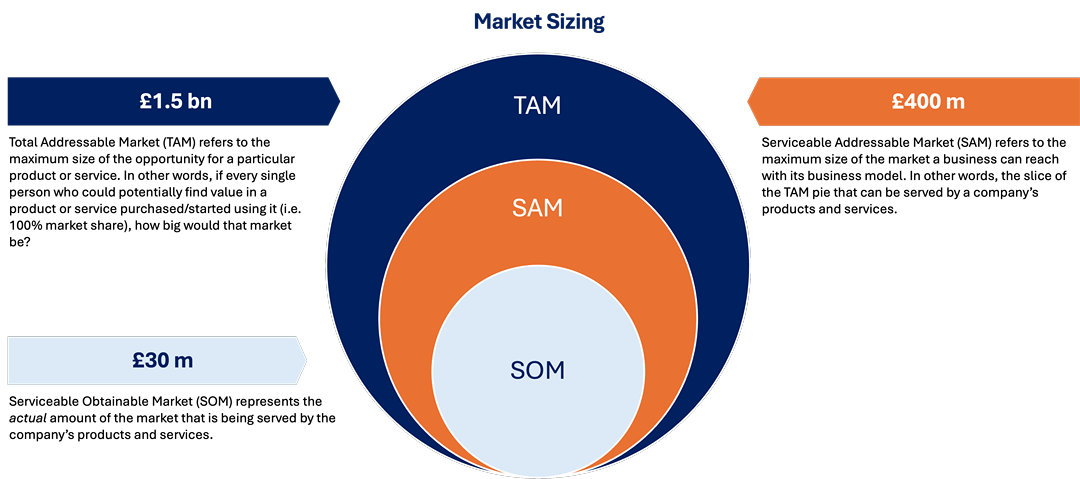
Figure 1 Market Sizing Diagram
This is distinct from market penetration which involves increasing market share within existing markets through tactics such as competitive pricing, increased marketing efforts, and improving product or service features. Key tactics include:
- Competitive Pricing: Offering products at a lower price than competitors to attract price-sensitive customers.
- Increased Promotion: Enhancing marketing efforts to raise awareness and encourage more frequent purchases from existing customers.
- Improving Product Features: Enhancing the product quality or adding features to differentiate from competitors and appeal more to the target audience.
- Expanding Distribution Channels: Increasing the availability of products by expanding into new retail outlets or online platforms.
- Customer Loyalty Programs: Encouraging repeat purchases and fostering loyalty through rewards and incentives.
Market penetration can help a business solidify its position, improve brand recognition, and ultimately drive revenue growth within its existing market.

Figure 2 Example Market Penetration Strategies
Diversification is a growth strategy where a company expands its operations by adding new products, services, or markets that are distinct from its current offerings. This approach aims to reduce risk by minimising dependency on a single product or market and can lead to significant business growth. Key elements of diversification include:
- Related Diversification: Introducing new products or services that are related to the existing business, leveraging current expertise and resources.
- Unrelated Diversification: Venturing into completely different industries or markets, which can spread risk but also requires new competencies.
- Cross-industry Synergies: Leveraging synergies between different business units to create additional value, such as shared technology or marketing strategies.
- Market Research and Analysis: Conducting thorough market research to identify promising opportunities and assess potential risks.
- Strategic Partnerships and Acquisitions: Collaborating with or acquiring other companies to quickly gain a foothold in new markets or sectors.
Diversification can drive business growth by opening new revenue streams, enhancing competitiveness, and providing stability against market fluctuations.
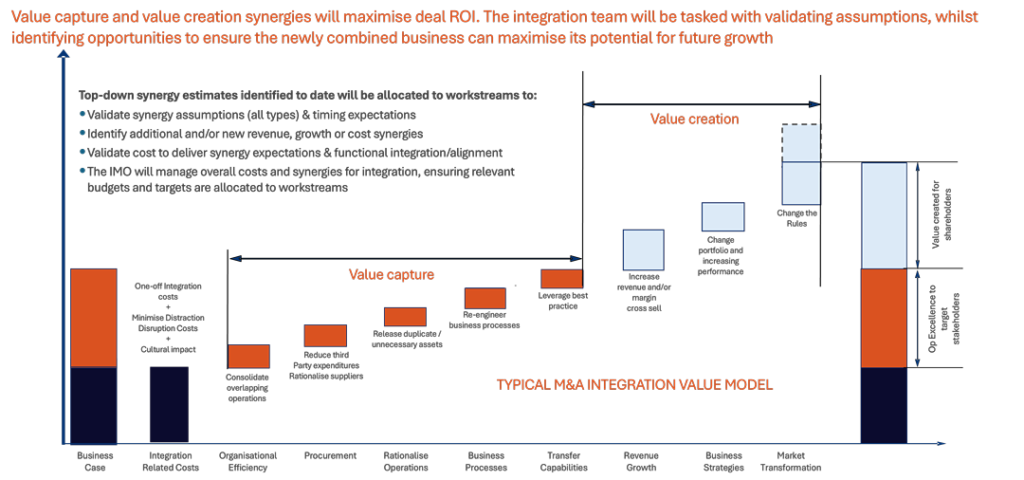
Figure 3 Identifying synergies from Acquisitions
Collaborating with other businesses can open up new opportunities for growth by leveraging each other’s strengths. This strategy enables companies to enter new markets, develop new products, and enhance competitive advantage more efficiently than going it alone. Key aspects include:
- Resource Sharing: Combining resources such as technology, expertise, and distribution networks to achieve mutual goals and expand capabilities.
- Market Access: Gaining entry into new markets or customer segments by partnering with companies that have established presence and knowledge.
- Risk Mitigation: Sharing risks associated with new ventures or projects, thus reducing the burden on a single entity.
- Innovation and Development: Collaborating on research and development to create innovative products or services and accelerate time-to-market.
- Cost Efficiency: Reducing costs through shared operations, marketing efforts, and economies of scale.
Strategic partnerships and alliances can drive business growth by expanding reach, enhancing product offerings, and improving overall efficiency.
New Market & Geographic Region Entry: Key Challenges
Entering new markets or geographical regions can offer major growth opportunities but also brings significant challenges. Here are the key challenges businesses typically face:
1. Market Understanding
- Insufficient local knowledge: Misjudging customer behaviour, needs, and preferences.
- Incorrect market sizing: Overestimating demand or failing to identify viable customer segments.
2. Cultural Differences
- Communication barriers: Language, tone, negotiation styles, and body language vary.
- Consumer behaviour: Attitudes toward branding, product usage, and decision-making differ widely.
- Management styles: Leadership expectations and employee engagement norms vary.
3. Regulatory and Legal Hurdles
- Local compliance: Tax laws, employment regulations, data privacy laws (e.g., GDPR in Europe).
- Licensing and permits: Lengthy or complex approval processes.
- Trade restrictions: Tariffs, import/export controls, and local ownership requirements.
4. Competitive Landscape
- Entrenched local players: Existing businesses may have strong brand loyalty and local networks.
- Price sensitivity: New entrants often face intense pricing pressure.
- Market saturation: Lack of room for new competitors or niche differentiation.
5. Supply Chain and Logistics
- Infrastructure limitations: Poor transport, warehousing, or digital systems in some regions.
- Local sourcing difficulties: Quality or consistency issues.
- Distribution challenges: Reaching customers in rural or fragmented markets.
6. Brand Recognition and Trust
- Low awareness: Lack of credibility in the new region.
- Different positioning needs: What works in one country may not resonate in another.
7. Talent and Staffing
- Finding skilled local talent: Especially challenging in emerging markets.
- Cultural integration: Merging home-office practices with local customs.
- Leadership gaps: Lack of experienced local managers who understand both corporate and regional contexts.
8. Cost and Investment Risks
- High setup costs: Legal, logistical, and marketing expenses add up quickly.
- Currency and inflation risks: Especially in volatile or developing economies.
- Delayed ROI: It often takes longer than expected to become profitable.
9. Technology and Digital Adaptation
- Digital infrastructure gaps: Limited internet access or mobile penetration.
- Platform localisation: Adapting digital products to local preferences, languages, and behaviours.
10. Political and Economic Stability
- Unpredictable regulations: Policy changes, trade barriers, or nationalization.
- Economic volatility: Recession risks, inflation, or fluctuating demand.
Many businesses underestimate the importance of local partnerships – alliances with regional distributors, suppliers, consultants or local market specialists can greatly reduce these challenges. There are also some useful organisations that focus on supporting businesses expanding into new regions, one example follows in our case study.
Conclusion
Entering a new market is a powerful growth strategy, but it is not without complexity. While the potential rewards – new revenue streams, expanded customer bases, and increased brand presence – are compelling, success depends on navigating a wide array of challenges, from cultural nuances and regulatory hurdles to competitive pressures and operational risks.
To maximise the chances of a successful market entry, businesses must take a strategic, research-driven approach. This includes thoroughly understanding the local market landscape, adapting products and messaging, building strong local partnerships, and committing to a long-term investment mindset.
Ultimately, the organisations that succeed are those that combine global ambition with local sensitivity – balancing scale with agility, and vision with execution. With careful planning and the right support, new market entry can unlock transformational opportunities for sustainable growth.