Artificial intelligence (AI) is reshaping businesses in multiple ways, with both opportunities and challenges. Here are the main implications:
1. Increased Efficiency and Automation
AI can handle repetitive tasks, reducing human labour costs and increasing efficiency. Examples include:
- Robotic Process Automation (RPA) for data entry and processing
- AI-powered chatbots for customer service
- Predictive maintenance in manufacturing
2. Data-Driven Decision Making
AI helps businesses analyse vast amounts of data to gain insights and make informed decisions. This includes:
- Customer behaviour analysis for personalised marketing
- Predictive analytics to forecast demand and sales
- AI-driven financial analysis to detect fraud or investment opportunities
3. Enhanced Customer Experience
AI enables hyper-personalisation and better user engagement through:
- Recommendation engines (e.g., Netflix, Amazon)
- Voice assistants (e.g., Siri, Alexa)
- AI-powered sentiment analysis for improved customer interactions
4. Competitive Advantage and Innovation
Companies using AI can develop new business models and gain a competitive edge by:
- Creating AI-driven products/services (e.g., self-driving cars, AI healthcare diagnostics)
- Optimising supply chain management through AI logistics
- Improving cybersecurity with AI-driven threat detection
5. Workforce Disruption and Job Transformation
While AI automates many tasks, it also creates new roles requiring advanced skills:
- Job displacement in routine/manual work
- Emergence of new AI-related roles (e.g., AI engineers, data scientists)
- Need for workforce reskilling to adapt to AI-driven changes
6. Ethical and Regulatory Challenges
AI brings challenges related to fairness, privacy, and compliance:
- Bias in AI algorithms leading to unfair decisions
- Data privacy concerns in AI-driven analytics
- Regulations like GDPR affecting AI deployment
7. Cost Savings and Revenue Growth
AI can significantly reduce operational costs while unlocking new revenue streams:
- Automating routine business processes
- Optimising pricing strategies with AI models
- Identifying new business opportunities through AI insights

The rest of this article explores the key implications and impacts of AI on each industry sector, including:
- Private Equity
- Financial Services
- Business Services
- Consumer & Retail
- Travel & Leisure
- Energy & Resources
- Healthcare
- Industrials & Engineering
- Transport & Logistics
- Media & Telco
- Technology
- Public Sector
AI is revolutionising every industry, improving efficiency, accuracy, and customer experience. However, challenges such as ethical concerns, data privacy, and job displacement must be addressed.
1. Private Equity

AI is transforming the private equity (PE) industry by improving deal sourcing, due diligence, portfolio management, and risk assessment. Here’s a breakdown of its key impacts:
1.1. Faster and Smarter Deal Sourcing
AI helps PE firms identify investment opportunities faster by:
- Scanning public and private data – AI scrapes financial reports, news articles, and social media to spot potential targets.
- Predictive analytics – AI models analyse market trends to identify high-growth companies before they become widely known.
- Enhanced screening – AI filters deals based on predefined criteria, reducing manual effort.
Example: Firms like Blackstone and KKR use AI to scan thousands of companies for potential acquisitions.
1.2. Enhanced Due Diligence & Risk Assessment
AI streamlines the traditionally slow due diligence process by:
- Automating financial analysis – AI detects inconsistencies in financial statements and identifies red flags.
- Natural Language Processing (NLP) – AI reviews contracts, regulatory filings, and compliance documents efficiently.
- Risk prediction models – AI predicts company failures, fraud risks, and macroeconomic risks.
Example: AI-driven platforms like Kensho and Palantir help PE firms analyse vast amounts of unstructured data to make better investment decisions.
1.3. Portfolio Management & Value Creation
AI optimises portfolio performance through:
- Real-time performance tracking – AI continuously monitors financial metrics, industry trends, and operational efficiency.
- Operational improvements – AI suggests cost-cutting measures, pricing strategies, and customer behaviour insights.
- AI-driven hiring strategies – AI predicts leadership success, helping PE firms hire top executives for portfolio companies.
Example: PE firms use AI to optimise supply chains, enhance digital marketing, and automate back-office functions in portfolio companies.
1.4. Exit Strategy Optimisation
AI helps PE firms maximise returns by:
- Predicting market timing – AI analyses economic trends to identify the best time for exits.
- Finding strategic buyers – AI recommends potential buyers based on acquisition patterns.
- Optimising IPO decisions – AI models assess valuation trends for public offerings.
Example: AI tools help PE firms decide whether to exit via IPO, strategic sale, or secondary buyout.
1.5. Automation of Back-Office Operations
AI reduces costs and inefficiencies in administrative tasks:
- Automated reporting – AI generates financial and investor reports with minimal human input.
- Smart contract analysis – AI reviews and manages legal agreements efficiently.
- Enhanced investor relations – AI chatbots handle investor queries and generate performance insights.
Example: AI-powered tools like Symphony and Eigen automate contract analysis and compliance reporting.
Challenges of AI in Private Equity
Despite its benefits, AI adoption in PE faces challenges:
- Data quality issues – AI models require high-quality, structured data, which is often lacking in private markets.
- Regulatory concerns – AI-driven investment decisions may face scrutiny from regulators.
- Human judgment is still key – AI can’t replace the intuition and experience of PE professionals.
AI is reshaping private equity by making deal sourcing, due diligence, and portfolio management more efficient. While AI can’t replace human expertise, it’s becoming an essential tool for PE firms looking to stay competitive.
2. Financial Services

AI is revolutionising the financial services industry by enhancing efficiency, reducing risks, and improving customer experiences. From banking and insurance to investment management and fraud detection, AI is reshaping how financial institutions operate.
2.1. Automated Customer Service & Personalisation
AI-driven chatbots and virtual assistants improve customer engagement by:
- Providing 24/7 support for account inquiries and transactions.
- Offering personalised financial advice based on user behavior.
- Reducing wait times and improving customer satisfaction.
Example: Bank of America’s Erica and JPMorgan’s COiN AI systems enhance customer interactions and automate document review.
2.2. Fraud Detection & Cybersecurity
AI enhances security by:
- Analysing transaction patterns to detect fraudulent activities in real time.
- Using biometric authentication (e.g., voice and facial recognition) for secure banking.
- Preventing cyber threats through AI-driven anomaly detection.
Example: Mastercard and Visa use AI to monitor millions of transactions per second to detect fraud instantly.
2.3. Algorithmic Trading & Investment Management
AI-driven models analyse market trends and execute trades faster than humans:
- High-frequency trading (HFT) – AI makes split-second buy/sell decisions based on real-time data.
- AI-powered robo-advisors – Platforms like Wealthfront and Betterment use AI to create personalised investment portfolios.
- Sentiment analysis – AI scans news, social media, and reports to predict market movements.
Example: Hedge funds like Renaissance Technologies use AI for predictive analytics and algorithmic trading.
2.4. Risk Management & Credit Scoring
AI improves financial risk assessment by:
- Analysing creditworthiness beyond traditional FICO scores, using alternative data (e.g., spending habits, social behaviour).
- Predicting loan defaults with machine learning models.
- Assessing macroeconomic risks to guide investment decisions.
Example: AI-powered platforms like ZestFinance and Upstart offer fairer, data-driven loan approvals.
2.5. Process Automation & Cost Reduction
AI-driven Robotic Process Automation (RPA) improves operational efficiency by:
- Automating repetitive tasks like data entry, compliance checks, and reporting.
- Reducing back-office costs and improving accuracy.
- Enhancing compliance by ensuring regulatory requirements are met.
Example: JPMorgan’s COiN system processes legal documents in seconds, reducing manual work by 360,000 hours per year.
2.6. Personalised Banking & Financial Planning
AI provides hyper-personalised financial solutions:
- Smart budgeting tools – AI tracks spending and suggests savings strategies.
- Automated wealth management – AI advises users on investment strategies.
- Real-time financial insights – AI-powered dashboards predict cash flow trends.
Example: AI-driven fintech apps like Mint and Cleo provide real-time financial insights and automated savings plans.
2.7. Insurance & Claims Processing
AI transforms the insurance industry by:
- Automating claims processing – AI detects fraud and speeds up payouts.
- Improving risk assessment – AI predicts claim probabilities based on customer profiles.
- Enhancing underwriting decisions – AI analyses medical history and behaviour patterns for policy pricing.
Example: Insurtech firms like Lemonade and Root use AI to assess risk and process claims within minutes.
Challenges of AI in Financial Services
Despite its benefits, AI faces key challenges:
- Regulatory concerns – AI decision-making must comply with strict financial laws (e.g., GDPR, SEC regulations).
- Data privacy risks – AI requires sensitive financial data, raising security concerns.
- Bias in AI models – AI-driven credit scoring and risk assessment may lead to unfair outcomes if trained on biased data.
AI is reshaping financial services by improving efficiency, security, and customer experience. However, regulatory challenges and ethical concerns must be addressed to ensure fair and responsible AI adoption.
3. Business Services

AI is transforming the business and professional services industry by improving efficiency, automating routine tasks, and enhancing decision-making. Consulting firms, legal services, accounting, HR, and marketing agencies are increasingly leveraging AI to gain a competitive edge.
3.1. AI in Consulting & Advisory Services
AI is reshaping the consulting industry by:
- Enhancing market research – AI scans industry trends, competitors, and economic indicators for insights.
- Predictive analytics – AI models forecast business risks and opportunities.
- Process automation – AI reduces manual work in financial modelling and client reporting.
Example: McKinsey, Deloitte, and Accenture use AI for data-driven business strategy recommendations.
3.2. AI in Legal Services & Law Firms
AI streamlines legal operations by:
- Automating document review – AI scans contracts for risks and compliance issues.
- Legal research acceleration – AI-powered search tools like ROSS Intelligence analyse case law efficiently.
- Contract analytics – AI ensures contracts are consistent, reducing human errors.
Example: JPMorgan’s COiN AI reviews contracts in seconds, replacing 360,000 hours of manual work.
3.3. AI in Accounting & Finance
AI-driven automation is revolutionising financial services by:
- Automating bookkeeping & audits – AI scans transactions to detect fraud and anomalies.
- Predictive financial modelling – AI forecasts cash flows and tax obligations.
- Compliance & regulatory tracking – AI ensures adherence to tax laws and reporting standards.
Example: Big Four firms (PwC, KPMG, Deloitte, EY) use AI for audit automation and fraud detection.
3.4. AI in Human Resources & Recruitment
AI improves HR and talent management by:
- Resume screening & talent matching – AI filters candidates based on skills and experience.
- Employee sentiment analysis – AI gauges workplace morale through surveys and internal data.
- AI-driven training & upskilling – Personalised learning paths for employees.
Example: Companies like HireVue and Pymetrics use AI to assess candidate skills through video interviews.
3.5. AI in Marketing & Advertising
AI enhances marketing strategies by:
- AI-powered content creation – AI tools generate blogs, ads, and social media posts.
- Personalised customer targeting – AI analyses user behaviour to recommend tailored ads.
- Chatbots & AI-driven support – AI handles customer inquiries and improves engagement.
Example: Platforms like ChatGPT, Jasper, and Persado help brands create AI-driven marketing content.
3.6. AI in Business Process Automation (BPA)
AI-driven Robotic Process Automation (RPA) boosts efficiency in:
- Data entry & document processing – Reduces manual work in administrative tasks.
- Workflow automation – AI streamlines approvals, invoicing, and reporting.
- AI-driven analytics – Real-time dashboards optimise decision-making.
Example: Companies use UiPath and Automation Anywhere for AI-driven business process automation.
Challenges of AI in Business Services
- Data security & compliance – AI must handle sensitive business data securely.
- Bias in AI decision-making – AI recruitment or legal tools must ensure fairness.
- Workforce impact – AI automation may displace some jobs, requiring workforce reskilling.
AI is revolutionising business and professional services by automating tasks, improving decision-making, and enhancing efficiency. However, ethical and regulatory challenges must be managed for responsible AI adoption.
4. Consumer & Retail

AI is revolutionising the Fast-Moving Consumer Goods (FMCG) and Retail industries by enhancing supply chain efficiency, personalising customer experiences, optimising pricing, and improving inventory management. Here’s a breakdown of AI’s key impacts on both sectors:
4.1. AI in FMCG & Retail Supply Chain Management
AI improves supply chain operations by:
- Demand forecasting – AI predicts future demand based on market trends, seasonality, and customer behaviour.
- Inventory optimisation – AI minimises stockouts and overstocking using real-time data analysis.
- Logistics & route optimisation – AI-powered systems improve delivery efficiency and reduce costs.
- Supplier risk management – AI detects disruptions in the supply chain (e.g., raw material shortages).
Example: Walmart uses AI to analyse real-time sales data and optimise inventory levels across stores.
4.2. AI-Powered Customer Personalisation & Engagement
AI enhances the shopping experience by:
- Personalised recommendations – AI suggests products based on customer preferences and past purchases.
- AI-powered virtual assistants & chatbots – Handles customer inquiries and recommends products.
- Computer vision for in-store experiences – AI enables cashier less checkouts and smart shelf tracking.
Example: Amazon’s recommendation engine drives 35% of its total sales using AI-based personalisation.
4.3. AI in Pricing & Promotions
AI-driven pricing strategies include:
- Dynamic pricing – Adjusting prices in real-time based on demand, competition, and customer behaviour.
- Optimised discounting & promotions – AI identifies the best discount strategies to maximise profits.
- Predictive pricing models – AI forecasts how customers will respond to price changes.
Example: Walmart and Target use AI-driven pricing models to adjust prices based on demand trends.
4.4. AI in Retail Store Operations & Automation
AI optimises in-store efficiency through:
- Cashier less stores – AI-powered checkout eliminates queues (e.g., Amazon Go).
- AI-driven inventory tracking – Smart shelves and robots monitor stock levels.
- Smart planograms – AI analyses store layouts to optimise product placement and boost sales.
Example: Sephora uses AI-driven smart mirrors for virtual makeup trials, enhancing customer engagement.
4.5. AI-Powered Marketing & Customer Insights
AI revolutionises retail marketing by:
- Sentiment analysis – AI scans social media and reviews to understand customer preferences.
- AI-generated content – AI writes personalised email campaigns and ad copy.
- Automated A/B testing – AI optimises ad creatives and product listings for better conversions.
Example: Coca-Cola uses AI-driven sentiment analysis to craft marketing campaigns that resonate with consumers.
4.6. AI in Product Development & Innovation
AI speeds up product innovation in FMCG by:
- Trend prediction – AI analyses consumer preferences to guide new product launches.
- Recipe & formula optimisation – AI refines food, beverage, and cosmetics formulations for better taste and efficiency.
- Sustainable packaging & waste reduction – AI helps brands develop eco-friendly packaging solutions.
Example: Nestlé uses AI to develop healthier food formulations based on consumer health data.
4.7. AI in Fraud Prevention & Security
AI enhances security in FMCG & retail by:
- Preventing retail fraud & theft – AI-powered cameras detect suspicious activities in stores.
- Securing online transactions – AI analyses transaction data to detect fraud and prevent chargebacks.
- Counterfeit detection – AI ensures product authenticity and protects brand reputation.
Example: Luxury brands like LVMH use AI-powered blockchain to verify product authenticity.
Challenges of AI in FMCG & Retail
- Data privacy concerns – AI-driven personalisation must comply with data protection laws (e.g., GDPR).
- High implementation costs – AI adoption requires investment in new technologies and training.
- AI bias & accuracy – Poor-quality data can lead to inaccurate demand forecasts or biased recommendations.
AI is transforming FMCG and Retail by optimising supply chains, personalising shopping experiences, and driving innovation. Companies that leverage AI effectively can improve efficiency, boost sales, and enhance customer satisfaction.
5. Travel & Leisure

AI is revolutionising the Travel, Leisure, Betting, and Gaming industries by enhancing customer experiences, optimising operations, and driving personalised engagement. Here’s how AI is transforming each sector:
5.1. AI in Travel & Tourism
AI improves efficiency and personalisation in the travel industry by:
Personalised Travel Planning
- AI-powered chatbots and virtual assistants (e.g., Expedia’s virtual agent) help customers find the best travel deals.
- AI recommends flights, hotels, and activities based on user preferences.
Dynamic Pricing & Revenue Management
- AI-driven dynamic pricing adjusts hotel and airline prices in real time based on demand and competitor pricing.
- Predictive analytics forecasts peak travel seasons to optimise pricing strategies.
AI-Powered Airport & Hotel Operations
- Facial recognition & biometrics for seamless check-ins (e.g., Delta Air Lines’ biometric boarding).
- Smart hotel rooms use AI-powered voice assistants (e.g., Hilton’s “Connie” concierge).
Example: Marriott and Hilton use AI to personalise guest experiences and optimise hotel pricing in real-time.
5.2. AI in Leisure & Entertainment
AI is enhancing experiences in leisure and entertainment through:
Personalised Content Recommendations
- AI-powered algorithms (e.g., Netflix, Spotify, and Disney+) suggest movies, music, and shows based on user behaviour.
AI-Generated Content & Virtual Experiences
- AI creates immersive VR and AR experiences for concerts, museums, and theme parks.
- AI-generated animations and voice synthesis improve storytelling.
Chatbots & AI-Powered Customer Service
- AI chatbots assist customers with bookings, ticketing, and event recommendations.
Example: Disney uses AI to optimise park operations and deliver personalised visitor experiences through MagicBands.
5.3. AI in Betting & Gaming
AI is transforming the betting and gaming industry by:
AI-Powered Betting & Predictive Analytics
- AI analyses historical sports data to offer smart betting odds.
- AI models predict game outcomes, helping both bettors and sportsbooks.
Fraud Detection & Responsible Gaming
- AI detects irregular betting patterns to prevent fraud and match-fixing.
- AI-powered responsible gaming tools identify problem gambling behaviours and suggest interventions.
AI-Enhanced Gaming Experiences
- AI-driven non-playable characters (NPCs) create more lifelike gaming interactions.
- AI adapts game difficulty based on player skills, improving engagement.
Example: Bet365 and DraftKings use AI for real-time odds calculations and personalised betting experiences.
Challenges of AI in These Industries
- Data privacy concerns – AI personalisation must comply with regulations (e.g., GDPR).
- Bias in AI algorithms – AI-driven betting and gaming need transparency to avoid unfair advantages.
- Ethical concerns – AI should promote responsible gambling and fair competition in gaming.
AI is revolutionising travel, leisure, betting, and gaming by creating smarter, more personalised experiences. Companies that adopt AI effectively can increase customer engagement, optimise pricing, and improve operational efficiency.
6. Energy & Resources

AI is transforming the Energy, Resources, and Utilities industries by optimising energy production, improving resource management, and enhancing sustainability efforts. Companies in oil & gas, mining, electricity, and water utilities are leveraging AI to increase efficiency, reduce costs, and meet environmental goals.
6.1. AI in Energy Production & Grid Management
AI enhances energy efficiency and reliability by:
Smart Grids & Demand Forecasting
- AI predicts energy demand and optimises power distribution.
- Load balancing ensures stable electricity supply during peak and off-peak hours.
Renewable Energy Optimization
- AI forecasts solar and wind energy output based on weather data.
- AI-powered energy storage systems manage excess power and reduce waste.
Predictive Maintenance in Power Plants
- AI analyses sensor data to detect faults in turbines, generators, and substations before they cause failures.
- Reduces downtime and maintenance costs in power plants.
Example: Google DeepMind helps the UK’s National Grid optimise energy distribution using AI.
6.2. AI in Oil, Gas & Mining
AI is revolutionising natural resource extraction by:
Exploration & Drilling Optimisation
- AI analyses seismic data and satellite imagery to identify oil, gas, and mineral deposits.
- Improves drilling accuracy and reduces exploration costs.
Predictive Maintenance in Refineries & Rigs
- AI detects pipeline leaks, reducing environmental risks and operational losses.
- AI-powered robots inspect offshore rigs and mines to enhance safety.
Process Automation & Efficiency
- AI automates refinery operations, optimising fuel production.
- Smart mining trucks and drilling systems use AI for autonomous operations.
Example: Shell and ExxonMobil use AI for predictive maintenance and drilling site selection.
6.3. AI in Water & Utilities Management
AI enhances water and waste utilities by:
Smart Water Management & Leak Detection
- AI monitors water consumption patterns and detects leaks in pipelines.
- Reduces water wastage and improves infrastructure efficiency.
AI in Waste Management & Recycling
- AI-powered robots sort recyclable materials, improving waste processing.
- AI predicts waste generation trends to optimise collection routes.
Example: Veolia uses AI to detect leaks and optimise water distribution networks.
6.4. AI in Energy Trading & Sustainability
AI supports sustainable energy solutions and trading strategies:
AI-Powered Energy Trading
- AI algorithms predict electricity price fluctuations and optimise trading strategies.
- AI helps companies buy and sell energy efficiently in global markets.
AI for Carbon Emission Reduction
- AI tracks industrial emissions and suggests ways to lower carbon footprints.
- AI-powered carbon capture systems optimise CO₂ removal processes.
Example: BP and Tesla use AI to enhance renewable energy trading and optimise energy storage.
Challenges of AI in These Industries
- High implementation costs – AI adoption in energy and utilities requires significant investment.
- Regulatory & ethical concerns – AI in energy trading and automation must comply with environmental laws.
- Data security risks – Power grids and pipelines are critical infrastructure, making them vulnerable to cyber threats.
AI is transforming energy, resources, and utilities by optimising energy production, improving sustainability, and reducing operational risks. Companies that leverage AI can increase efficiency, cut costs, and meet global clean energy goals.
7. Healthcare

AI is revolutionising the Healthcare, Pharmaceutical, Medical Device, and Life Sciences industries by improving diagnostics, accelerating drug discovery, personalising treatment, and enhancing patient care. Here’s how AI is driving transformation across these sectors:
7.1. AI in Healthcare & Patient Care
AI is enhancing efficiency, accuracy, and accessibility in healthcare through:
AI-Powered Diagnostics & Imaging
- AI detects diseases in X-rays, MRIs, and CT scans with high accuracy.
- AI algorithms identify early signs of cancer, cardiovascular diseases, and neurological disorders.
Example: Google’s DeepMind developed an AI system that detects over 50 eye diseases as accurately as doctors.
AI in Virtual Health Assistants & Chatbots
- AI-driven chatbots (e.g., Ada, Babylon Health) provide initial diagnoses and schedule appointments.
- AI-powered virtual assistants help monitor chronic conditions like diabetes and hypertension.
Predictive Analytics & Early Disease Detection
- AI analyses electronic health records (EHRs) to predict patient risks and suggest preventive care.
- AI-driven wearables (e.g., Apple Watch, Fitbit) detect irregular heartbeats and potential health issues.
Example: Mayo Clinic and IBM Watson use AI to analyse patient data for early diagnosis.
7.2. AI in the Pharmaceutical Industry
AI is accelerating drug discovery and reducing development costs through:
AI-Driven Drug Discovery & Development
- AI analyses molecular structures to identify new drug candidates faster than traditional research.
- AI predicts how different compounds interact, reducing trial-and-error in drug formulation.
Example: *AI helped discover Insilico Medicine’s potential drug for fibrosis in just 46 days.
AI in Clinical Trials & Research
- AI finds ideal trial candidates by scanning patient data.
- AI simulates drug effects, reducing the need for large-scale human trials.
AI in Personalised Medicine
- AI tailors treatments based on genomic and biomarker analysis.
- AI-powered precision medicine identifies the best therapies for individual patients.
Example: Pfizer and Novartis use AI for faster drug development and clinical trial optimisation.
7.3. AI in Medical Devices & Robotics
AI is enhancing medical device performance and robotic-assisted surgeries through:
AI in Medical Imaging Devices
- AI improves the accuracy of CT, MRI, and ultrasound scans.
- AI detects tumours, fractures, and abnormalities faster than radiologists.
AI-Powered Robotic Surgery
- AI-driven robots (e.g., da Vinci Surgical System) assist in minimally invasive surgeries.
- AI enhances precision, reducing surgery risks and recovery times.
Example: Medtronic’s AI-powered endoscopy system detects early signs of colorectal cancer.
AI in Smart Prosthetics & Wearables
- AI-powered prosthetic limbs adapt to user movement patterns.
- AI-driven wearables track heart rate, oxygen levels, and sleep patterns for real-time health monitoring.
Example: Neuralink and BrainCo use AI to develop brain-controlled prosthetics.
7.4. AI in Life Sciences & Biotechnology
AI is driving breakthroughs in genetics, disease research, and biotech innovations through:
AI in Genomics & DNA Sequencing
- AI speeds up gene sequencing and mutation detection.
- AI identifies genetic disorders and predicts hereditary disease risks.
Example: Google’s DeepVariant AI system improves DNA sequencing accuracy.
AI for Epidemic & Pandemic Predictions
- AI analyses global health data to predict and track disease outbreaks.
- AI-powered models forecast the spread of infectious diseases like COVID-19.
Example: BlueDot’s AI detected early signs of COVID-19 before WHO’s official announcement.
AI in Biomanufacturing & Lab Automation
- AI automates laboratory experiments, reducing human error.
- AI-driven robotic systems speed up biotech research and drug production.
Example: IBM Watson is used for AI-driven protein engineering and biotech innovation.
Challenges of AI in Healthcare & Life Sciences
- Regulatory & ethical concerns – AI-driven medical decisions must meet strict regulatory approvals (e.g., FDA, EMA).
- Data privacy & security risks – AI must protect sensitive patient health data (e.g., HIPAA compliance).
- Bias in AI models – AI algorithms must be trained on diverse datasets to avoid healthcare disparities.
AI is transforming healthcare, pharmaceuticals, medical devices, and life sciences by enhancing diagnostics, accelerating drug discovery, and personalising treatments. As AI technology advances, it will continue to improve efficiency, patient outcomes, and medical research breakthroughs.
8. Industrials & Engineering
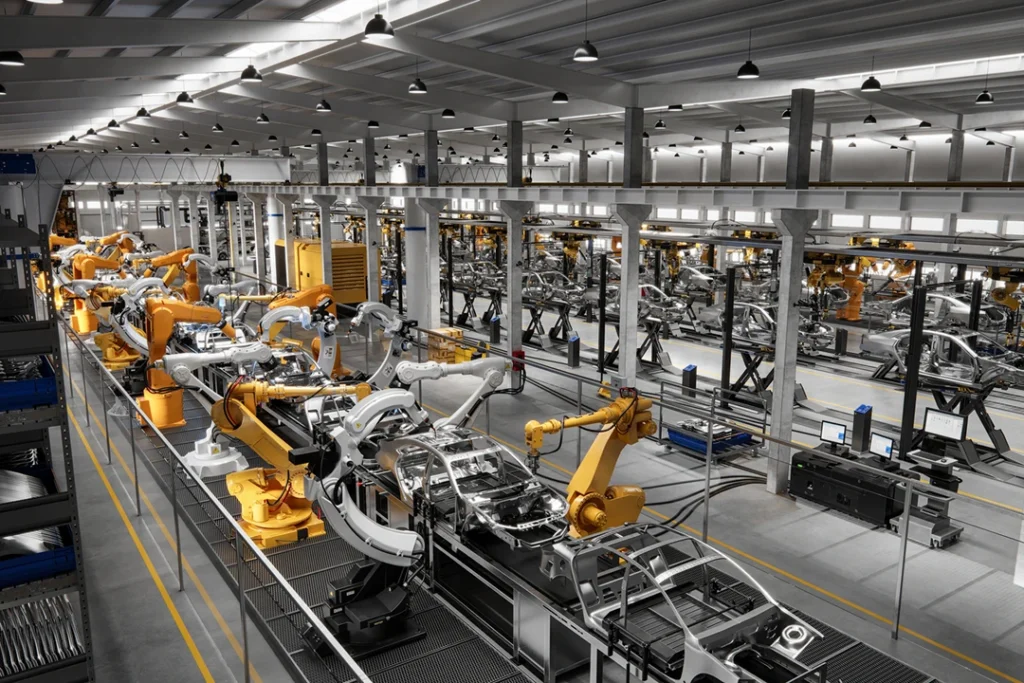
AI is transforming the Manufacturing, Industrials, and Engineering industries by enhancing production efficiency, improving quality control, automating processes, and optimising supply chains. From predictive maintenance to smart manufacturing systems, AI is driving operational excellence and cost savings across these sectors. Here’s how AI is impacting each of these industries:
8.1. AI in Manufacturing
AI is optimising operations and enabling smarter production lines through:
Predictive Maintenance
- AI analyses sensor data from equipment to predict failures before they occur, reducing downtime and maintenance costs.
- AI-based algorithms identify patterns that indicate potential malfunctions, enabling timely interventions.
Example: General Electric (GE) and Siemens use AI for predictive maintenance to improve the uptime of manufacturing machinery.
Smart Manufacturing & Automation
- Robotics and AI-driven systems automate tasks like assembly, packaging, and quality checks.
- AI optimises production schedules by predicting demand fluctuations, enabling agile manufacturing.
Quality Control & Defect Detection
- AI-powered vision systems inspect products at high speed, detecting defects with greater precision than human inspectors.
- Machine learning algorithms learn from historical quality data to predict and prevent defects.
Example: BMW uses AI-based visual recognition systems for quality control in car production, ensuring precision in the assembly line.
Supply Chain Optimisation
- AI forecasts demand and optimises the supply chain, reducing waste and ensuring just-in-time inventory.
- AI-powered systems optimise shipping routes and warehouse management.
Example: Toyota and Volkswagen use AI to optimise their supply chains and improve manufacturing flexibility.
8.2. AI in Industrials
AI is driving efficiency, safety, and innovation in industrials by:
Industrial Automation & Robotics
- AI-powered robots handle dangerous or repetitive tasks, improving worker safety and productivity.
- Collaborative robots (cobots) work alongside humans to increase operational efficiency.
Industrial Internet of Things (IIoT)
- AI connects industrial machines, collects data from sensors, and analyses performance in real time.
- AI-powered IIoT solutions identify inefficiencies and areas for improvement in industrial processes.
Example: Honeywell and ABB use AI in IIoT applications to improve performance monitoring and optimise industrial operations.
Energy Efficiency & Sustainability
- AI optimises energy usage in industrial operations, helping companies reduce costs and carbon footprints.
- AI helps track emissions and ensures compliance with environmental regulations.
Example: Schneider Electric uses AI to optimise energy consumption in industrial facilities and reduce waste.
8.3. AI in Engineering & Design
AI is transforming engineering and design processes by:
Generative Design
- AI-driven generative design algorithms explore design options based on constraints (e.g., material, weight, strength) and produce optimised solutions.
- AI automates design iterations, speeding up the prototyping phase.
Example: Autodesk’s generative design software allows engineers to create innovative designs by using AI to generate thousands of possibilities based on set parameters.
Simulation & Modelling
- AI enhances simulation models used in engineering to predict how structures will behave under various conditions.
- Machine learning improves the accuracy of simulations, enabling engineers to test products before physical trials.
AI in Structural Health Monitoring
- AI analyses sensor data from bridges, buildings, and roads to monitor their structural health and predict maintenance needs.
- AI helps extend the lifespan of critical infrastructure by identifying wear and tear early.
Example: Bosch and Siemens use AI to monitor the health of industrial infrastructure and optimise asset management.
8.4. AI in Product Lifecycle Management (PLM)
AI enhances product lifecycle management by:
Design Optimisation & Customisation
- AI-powered tools offer real-time insights into the design and production processes, improving product quality.
- AI facilitates mass customisation, allowing manufacturers to produce personalised products at scale.
AI in Supply Chain & Procurement
- AI algorithms analyse market trends, optimise supplier selection, and forecast procurement needs, leading to reduced costs and supply chain efficiency.
Example: Caterpillar uses AI in supply chain management to optimise part sourcing, inventory management, and logistics.
8.5. AI in Safety & Risk Management
AI is improving workplace safety and risk management by:
AI-Powered Safety Systems
- AI-driven cameras and sensors monitor factory floors for safety violations, such as workers entering dangerous areas.
- AI provides real-time alerts to prevent accidents and improve worker safety.
Risk Prediction & Management
- AI models predict potential risks in manufacturing environments, from equipment malfunctions to supply chain disruptions.
- AI-driven risk management tools help businesses mitigate threats to productivity, safety, and regulatory compliance.
Example: ABB’s AI-powered safety systems ensure workplace safety by detecting hazards and sending alerts to workers and managers.
Challenges of AI in Manufacturing & Industrials
- High initial costs – Implementing AI and automation requires significant investment in technology and training.
- Integration with legacy systems – Many industrial companies still use outdated systems, making AI integration challenging.
- Workforce displacement – Automation can lead to job losses or the need for reskilling workers for more complex tasks.
- Data privacy & security – AI systems handling critical infrastructure or sensitive production data are vulnerable to cyber threats.
AI is transforming the Manufacturing, Industrials, and Engineering industries by improving efficiency, reducing costs, enhancing product quality, and enabling smarter, more sustainable operations. The adoption of AI technologies is crucial for companies aiming to stay competitive in a fast-evolving global market.
9. Transport & Logistics

AI is transforming the Transport and Logistics sectors by enhancing efficiency, reducing costs, improving safety, and providing personalised customer experiences. The integration of AI technologies in transportation, from autonomous vehicles to AI-powered logistics management systems, is revolutionising the way goods and people move globally. Here’s how AI is impacting these industries:
9.1. AI in Transportation & Autonomous Vehicles
AI is reshaping the way transportation systems function, from autonomous vehicles to traffic management:
Autonomous Vehicles (AVs)
- AI is at the heart of self-driving cars, trucks, and delivery vehicles, using advanced sensors, computer vision, and machine learning to navigate safely.
- AI enables real-time decision-making in complex environments, such as urban streets or highways.
Example: Waymo (owned by Alphabet) has developed autonomous cars and trucks that are improving passenger and freight transport with AI-powered driving systems.
Traffic Management & Route Optimisation
- AI analyses traffic patterns in real-time to optimise traffic flow, reduce congestion, and minimise travel time.
- AI-powered route planning tools use historical data and real-time information to adjust delivery routes dynamically, optimising for traffic, weather, and other variables.
Example: Uber and Lyft use AI to optimise ride-sharing routes, offering faster, more efficient trips.
AI for Fleet Management
- AI tools help manage fleets of vehicles by predicting vehicle maintenance needs, monitoring fuel efficiency, and tracking driver performance.
- AI ensures optimal vehicle deployment, reducing downtime and costs.
Example: Tesla’s fleet of electric trucks and vehicles uses AI for route optimisation, predictive maintenance, and autonomous driving capabilities.
9.2. AI in Logistics & Supply Chain Management
AI is driving efficiency, accuracy, and agility in logistics and supply chain operations:
Demand Forecasting & Inventory Management
- AI analyses vast amounts of data to predict demand fluctuations, helping businesses optimise inventory levels and reduce stockouts or overstocking.
- AI-powered systems forecast the best times to reorder products and determine the most efficient stocking strategies.
Example: Amazon uses AI-driven algorithms to forecast demand, optimise warehouse management, and speed up fulfilment processes.
Warehouse Automation
- AI is behind automated robots that manage sorting, picking, packing, and inventory in warehouses.
- Robotic process automation (RPA) combined with AI reduces the need for manual labour and improves accuracy.
Example: Ocado and Walmart use AI-powered robots and automation to optimise warehouse operations and increase picking accuracy.
AI-Powered Last-Mile Delivery
- AI optimises last-mile delivery by using real-time data to adjust routes based on factors like traffic, weather, and delivery schedules.
- AI helps companies deploy autonomous delivery vehicles, drones, and robots to speed up last-mile fulfilment.
Example: UPS uses AI for package tracking and route optimisation in their delivery network, improving efficiency and reducing fuel consumption.
9.3. AI in Predictive Analytics & Supply Chain Visibility
AI enhances supply chain operations by providing real-time insights and predictions:
Predictive Analytics for Supply Chain Optimisation
- AI analyses historical data and real-time events to predict disruptions in the supply chain, such as delays, shortages, or disruptions in global trade.
- AI-powered systems help businesses mitigate risks by proactively addressing potential bottlenecks or delays in production and delivery.
Example: DHL and Maersk use AI to predict supply chain disruptions and optimise shipping routes to mitigate risks.
Real-Time Supply Chain Visibility
- AI systems provide end-to-end visibility across supply chains, helping businesses track goods in transit and monitor performance.
- AI-driven tracking and IoT devices ensure transparency and improve accountability in logistics operations.
Example: IBM and Maersk’s TradeLens use blockchain and AI to offer real-time tracking and improved transparency in global supply chains.
9.4. AI in Customer Service & Experience
AI is improving customer interactions in the transport and logistics industries:
AI Chatbots & Virtual Assistants
- AI-powered chatbots handle customer queries, offer delivery status updates, and manage booking requests for transport services.
- AI-based virtual assistants provide personalised travel or shipping experiences, helping customers choose optimal transport options or track packages.
Example: FedEx and DHL use AI chatbots for customer support, allowing users to track packages and manage shipping queries seamlessly.
Personalised Travel & Shipping Recommendations
- AI algorithms analyse customer behaviour to recommend personalised travel routes, shipping methods, or vacation plans.
- AI enhances pricing strategies, providing personalised discounts or promotions based on individual preferences.
9.5. AI in Environmental Impact & Sustainability
AI is helping the transportation and logistics industries reduce their environmental footprint:
Sustainable Freight and Energy Optimisation
- AI optimises fuel efficiency, helping reduce CO₂ emissions and costs in transportation.
- AI-powered electric vehicles (EVs) and autonomous fleets are contributing to reducing emissions and improving sustainability in the transport sector.
Green Logistics and Supply Chain
- AI predicts the environmental impact of supply chain decisions, allowing companies to choose eco-friendly delivery options and packaging materials.
- AI also helps in reducing carbon footprints by optimising delivery routes and improving fuel consumption in fleets.
Example: FedEx, DHL, and UPS are using AI to implement green logistics practices and reduce emissions through optimised routes and more sustainable vehicles.
Challenges of AI in Transport & Logistics
- High Initial Costs – Implementing AI, especially in autonomous vehicles and large-scale logistics systems, requires a significant investment.
- Data Security & Privacy – AI relies on large datasets for optimisation, which can expose companies to risks if data is compromised.
- Regulation & Safety Concerns – Autonomous vehicles and AI-driven systems must comply with government regulations and safety standards, which are still evolving.
- Integration with Existing Infrastructure – Integrating AI into legacy systems can be challenging and may require overhauling infrastructure.
AI is transforming the Transport and Logistics industries by improving operational efficiency, reducing costs, enhancing customer experience, and contributing to sustainability goals. The adoption of AI technologies is essential for businesses aiming to stay competitive in a rapidly evolving landscape.
10. Media & Telco

AI is transforming the Media and Telecommunications industries by enhancing content creation, optimising network performance, improving customer experiences, and enabling personalised marketing. Through advanced analytics, automation, and AI-driven content solutions, these industries are adapting to changing consumer demands and the increasing volume of data. Here’s a detailed look at how AI is impacting these sectors:
10.1. AI in the Media Industry
AI is revolutionising content creation, distribution, and consumption in the media industry:
Content Creation & Automation
- AI-powered tools help create and edit content, including automated video editing, scriptwriting, and even news generation.
- AI analyses audience preferences and helps producers create content that aligns with what viewers want to watch.
- Deep learning algorithms generate visual effects, improve post-production processes, and even automate animation and graphic design.
Example: The Associated Press (AP) uses AI to write automated news reports, especially for routine topics like earnings reports and sports updates.
Personalisation & Recommendation Systems
- AI powers recommendation engines in streaming services like Netflix, Spotify, and YouTube, suggesting content based on user behaviour, preferences, and viewing history.
- AI algorithms optimise content curation to ensure consumers are presented with the most relevant content, improving engagement.
Example: Netflix’s AI-powered recommendation engine analyses user behaviour, tailoring movie and show suggestions for each user, contributing to higher retention rates.
Audience Analytics & Sentiment Analysis
- AI processes social media interactions, comments, and reviews to provide insights into audience sentiment, helping media companies understand public perception.
- Natural Language Processing (NLP) and sentiment analysis tools identify trends, allowing businesses to adapt their content strategies accordingly.
Example: Disney uses AI to analyse audience sentiment and make adjustments to their film marketing or content strategies.
AI in Journalism & Newsrooms
- AI can automatically gather and organise information, track events in real time, and produce data-driven stories (e.g., weather reports, election results).
- AI tools assist journalists by analysing large datasets, producing reports faster, and ensuring more accuracy.
Example: Reuters and Bloomberg use AI for financial reporting, creating automated articles from real-time data feeds.
10.2. AI in Telecommunications
AI is reshaping the telecommunications industry by optimising network management, improving customer service, and enabling the development of new services:
Network Optimization & Management
- AI helps telecom companies monitor and optimise their networks, predicting maintenance needs and improving 5G infrastructure management.
- AI-powered self-healing networks can automatically detect and resolve network issues, ensuring higher uptime and better service quality.
- AI-driven automation reduces the time needed to detect and fix network failures, improving efficiency and reducing costs.
Example: Telefonica and Vodafone use AI for predictive maintenance and network optimisation to ensure smooth operations and minimise service disruptions.
AI in Customer Service & Support
- AI-powered chatbots and virtual assistants handle customer inquiries, troubleshoot problems, and assist with billing, 24/7.
- Natural Language Processing (NLP) enables telecom companies to understand and resolve customer issues more efficiently by analysing customer queries and providing automated solutions.
- AI-powered systems also enable proactive customer support, predicting service issues before they occur.
Example: T-Mobile uses AI-based chatbots to assist customers with account management, troubleshooting, and service inquiries.
Personalised Marketing & Customer Experience
- AI analyses customer data to create personalised offerings based on customer preferences, usage behaviour, and location.
- AI can target ads more effectively, tailoring marketing campaigns to the right audience segment, improving ROI.
- AI helps telecom companies develop customised service packages, offering personalised mobile plans or internet options to users.
Example: AT&T and Verizon use AI to optimise customer experience by offering tailored recommendations, service bundles, and personalised marketing campaigns.
Predictive Analytics & Customer Retention
- AI uses customer data to predict churn rates, identifying users who are likely to cancel services and enabling companies to intervene with personalised offers or support.
- AI helps telecom operators improve customer lifetime value (CLV) by enhancing service personalisation and resolving issues proactively.
Example: BT Group uses AI-powered predictive analytics to enhance customer retention by identifying at-risk customers and offering targeted incentives.
10.3. AI in Content Delivery & Distribution
AI is also enhancing how content is delivered across the internet and mobile devices:
Content Delivery Networks (CDNs)
- AI-powered CDNs optimise video streaming quality by predicting network congestion and ensuring smooth delivery of content, even in areas with limited bandwidth.
- AI algorithms ensure adaptive bitrate streaming, adjusting video quality based on network conditions to minimise buffering.
Example: Akamai’s AI-driven CDN system optimises delivery speeds, ensuring that users experience smooth streaming across devices.
AI in Augmented & Virtual Reality (AR/VR)
- Telecom companies are integrating AR and VR technologies into their offerings, creating immersive experiences for users (e.g., virtual sports events, AR-powered shopping).
- AI enhances the interactivity and realism of AR/VR content by analysing user movements, preferences, and environmental factors.
Example: T-Mobile’s 5G network supports AR/VR experiences, enabling users to engage with live events, virtual meetings, and gaming in a more immersive way.
10.4. AI in Data Analytics & Insights
AI-driven analytics are helping media and telecom companies make smarter decisions:
Content Analytics & Audience Insights
- AI uses big data analytics to track user behaviour, predict content preferences, and assess audience engagement across various channels.
- Telecom providers use AI to understand how customers use data, helping them refine service offerings and deliver more value.
Real-Time Insights & Business Intelligence
- AI provides real-time insights into business operations, enabling media companies and telecom providers to make data-driven decisions.
- Telecom companies use AI to analyse call data records, improve network planning, and optimise infrastructure deployment.
Example: Sky Group and Comcast use AI for data analytics to predict viewer behaviour and customise content offerings based on user preferences.
Challenges of AI in Media & Telecommunications
- Data privacy concerns – Telecom and media companies must ensure that AI-driven personalisation respects user privacy and adheres to GDPR and other regulations.
- Complexity of implementation – Integrating AI across large-scale networks and systems can be costly and technically challenging.
- Ethical implications – AI in media can raise concerns regarding content manipulation, deepfakes, and the spread of misinformation.
- Bias in AI algorithms – AI models trained on biased data can lead to unintended consequences, such as reinforcing stereotypes or excluding certain groups.
AI is revolutionising the Media and Telecommunications industries by enhancing content creation, improving customer experiences, automating operations, and optimising service delivery. As these industries embrace AI technologies, they can meet the growing demands for personalised content, smarter network management, and more efficient customer service.
11. Technology

AI is transforming the Software, Technology, and IT Services industries by automating processes, enhancing development cycles, improving customer support, and enabling innovation at a rapid pace. These industries are leveraging AI for everything from automated coding and testing to AI-powered software solutions and enhanced cybersecurity. Here’s how AI is impacting each of these sectors:
11.1. AI in Software Development
AI is revolutionising how software is created, tested, and maintained:
Code Generation & Automated Development
- AI is used to automate coding and suggest improvements to software development processes. AI-powered code assistants like GitHub Copilot use natural language to generate code snippets or complete functions, making development faster.
- Machine learning (ML) algorithms are employed to assist in writing better code, debugging, and identifying patterns in code that may lead to potential errors.
Example: GitHub Copilot (powered by OpenAI) helps developers by suggesting code as they type, significantly speeding up the development process.
AI-Powered Testing & Quality Assurance
- Automated testing tools powered by AI can run tests, detect bugs, and suggest fixes without requiring manual intervention. These tools are able to identify complex, hidden issues more effectively than traditional testing methods.
- AI can also predict where bugs are likely to occur in the software by analysing historical data from previous versions.
Example: Testim.io uses AI to automate UI testing and detect issues in real-time by analysing application behaviour.
Continuous Integration & Delivery (CI/CD)
- AI streamlines the CI/CD pipeline by enabling smarter, automated decisions for deployment. It can optimise the timing of code deployments, detect issues in real-time, and assist in the continuous improvement of the software.
11.2. AI in IT Services
AI is reshaping the way IT services are delivered, managed, and supported:
AI in IT Support & Service Desk Automation
- AI-driven chatbots and virtual assistants are used to resolve common IT issues, help with password resets, and provide immediate troubleshooting.
- AI tools such as RPA (Robotic Process Automation) automate repetitive tasks like user provisioning, system monitoring, and data backup management, allowing IT staff to focus on more complex issues.
Example: ServiceNow and IBM’s Watson offer AI-driven service desk platforms that handle customer queries, automate ticket management, and resolve issues efficiently.
Predictive Maintenance & Proactive Issue Resolution
- AI tools monitor system performance, predict failures, and trigger automated responses to prevent downtime.
- IT services companies use AI to manage cloud infrastructure, monitor server health, and ensure smooth performance by proactively addressing potential issues.
Example: Splunk uses AI for predictive monitoring of IT systems, enabling companies to prevent outages and performance issues by detecting anomalies early.
Automation of IT Operations (AIOps)
- AIOps (AI for IT operations) uses AI to manage and automate IT operations, such as incident detection, root cause analysis, and performance monitoring in real time.
- It helps IT service providers detect patterns in large datasets and automatically remediate issues without human intervention.
Example: Moogsoft provides an AIOps platform that uses AI to automatically detect, diagnose, and resolve IT issues, reducing the time spent on manual incident management.
11.3. AI in Cloud Computing & Data Management
AI is crucial in enhancing the capabilities of cloud infrastructure and data management:
AI for Cloud Optimisation
- AI-powered systems optimise the allocation of cloud resources based on demand, improving cost efficiency and resource management.
- AI can predict future workloads and ensure dynamic scaling of cloud resources, ensuring applications run smoothly and efficiently at all times.
Example: Amazon Web Services (AWS) uses AI for predictive scaling to automatically adjust cloud resources based on usage patterns, ensuring optimal performance and cost savings.
AI-Driven Data Analytics & Insights
- AI and ML algorithms process vast amounts of data in real time to generate actionable insights. This enables business intelligence tools to offer predictive analytics, spot trends, and improve decision-making.
- AI helps in the automation of data processing, ensuring that large volumes of data can be analysed quickly and at scale.
Example: Google Cloud offers AI and ML tools that help companies derive insights from large datasets, enhancing data-driven decision-making.
11.4. AI in Cybersecurity
AI is enhancing the security posture of software and IT services:
Threat Detection & Prevention
- AI systems can analyse network traffic and system behaviour to detect unusual patterns and potential security threats such as malware, phishing, and ransomware.
- Machine learning algorithms constantly learn from new data and improve their ability to detect and respond to emerging security threats.
Example: Darktrace uses AI to detect anomalies in network traffic, identifying cybersecurity threats in real time.
AI for Identity & Access Management
- AI-powered systems are used to monitor user behaviour and predict potentially fraudulent access attempts.
- Biometric authentication systems powered by AI improve user security by recognising unique patterns like fingerprints, facial recognition, or voice recognition.
Example: Okta’s AI-driven identity management systems use behaviour analytics to ensure secure authentication and prevent unauthorised access.
11.5. AI in Software as a Service (SaaS)
AI is being integrated into SaaS platforms to improve functionality and deliver more value:
Personalised SaaS Solutions
- AI helps SaaS providers offer customised solutions by analysing customer data and understanding specific business needs.
- AI can personalise dashboards, content, and workflows based on user behaviour and business goals, ensuring a better user experience.
Example: Salesforce’s Einstein AI analyses customer data and provides personalised recommendations for sales teams, improving productivity and customer engagement.
AI-Powered Automation & Optimisation
- SaaS applications integrated with AI automate business processes such as customer support, data analysis, and inventory management, making operations more efficient.
- ML algorithms in SaaS platforms can analyse business performance and suggest improvements to marketing, sales, and financial strategies.
Example: HubSpot uses AI to automate tasks like lead scoring, email marketing, and sales workflows, enabling businesses to optimise their marketing efforts.
Challenges of AI in Software, Technology, and IT Services
- Data Privacy & Security – AI systems rely on vast amounts of data, which raises concerns about data privacy, protection, and compliance with regulations (e.g., GDPR).
- Skill Shortage – AI development requires a high level of expertise, and there is a shortage of skilled professionals in AI, making it difficult for some companies to fully leverage the technology.
- Integration Complexity – Integrating AI into legacy IT systems or complex infrastructures can be challenging and require significant investment.
- Ethical Considerations – AI algorithms need to be transparent, fair, and unbiased, ensuring that decisions made by AI are ethical and justifiable.
AI is driving innovation and efficiency in the Software, Technology, and IT Services industries by automating complex tasks, improving decision-making, optimising performance, and enhancing security. As AI continues to evolve, it will unlock new possibilities for these industries, enabling businesses to better serve customers, stay competitive, and create innovative products and services.
12. Public Sector

AI is increasingly playing a pivotal role in the public sector, enabling governments and public institutions to improve services, streamline operations, enhance decision-making, and solve societal challenges. By leveraging advanced technologies like machine learning (ML), natural language processing (NLP), and computer vision, public organisations can address complex problems more efficiently and with greater accuracy. Here’s a detailed breakdown of the impact of AI on the public sector:
12.1. AI in Government Services & Public Administration
AI is transforming how governments deliver services, interact with citizens, and manage operations:
Automation of Administrative Tasks
- AI-driven automation helps governments automate repetitive administrative tasks like processing permits, licenses, and social service applications, reducing manual workloads and increasing efficiency.
- Robotic Process Automation (RPA) is used to handle routine tasks such as data entry, document verification, and budget processing, allowing public sector employees to focus on more complex tasks.
Example: RPA tools are being used in tax departments and social welfare offices to automate claims processing and reduce wait times for citizens.
Chatbots & Virtual Assistants
- AI-powered chatbots and virtual assistants are deployed by government websites and public service departments to assist citizens with inquiries, provide information, and guide them through bureaucratic processes.
- These systems provide 24/7 support and reduce the need for large customer service teams, improving response times and citizen satisfaction.
Example: The UK’s HMRC (Her Majesty’s Revenue and Customs) uses AI-powered chatbots to help citizens with tax-related inquiries.
12.2. AI in Public Safety & Law Enforcement
AI is improving public safety by enhancing crime prevention, detection, and response times:
Predictive Policing & Crime Prevention
- AI algorithms analyse crime patterns and predict where crimes are likely to occur, helping law enforcement agencies allocate resources more effectively.
- Predictive analytics can help identify high-risk areas and guide patrol officers to prevent crime or respond more proactively.
Example: PredPol, an AI-driven tool used by several police departments, predicts crime hotspots by analysing past crime data and trends.
AI in Surveillance & Monitoring
- AI-powered facial recognition and video surveillance systems help law enforcement agencies identify suspects, track criminals, and improve public safety in real-time.
- AI can also be used in social media monitoring to detect potential threats, such as terrorist activity or criminal behaviour, by analysing online content.
Example: China’s Public Security Bureau uses AI-based facial recognition technology in public spaces to monitor and identify individuals.
Investigative Assistance
- AI tools help law enforcement agencies analyse large datasets, such as criminal records, social media, and transaction data, to assist with investigations and uncover hidden connections.
- Natural language processing (NLP) allows AI to scan and analyse text data from legal documents or crime reports, extracting relevant insights quickly.
Example: AI-powered software such as Palantir aids law enforcement in conducting investigations by analysing large volumes of data and drawing connections between events, individuals, and locations.
12.3. AI in Healthcare & Public Health
AI is significantly improving the efficiency and accessibility of healthcare services provided by the public sector:
AI for Disease Diagnosis & Treatment
- AI tools analyse medical data (such as X-rays, MRIs, and patient records) to assist doctors in diagnosing diseases, detecting abnormalities, and suggesting treatment plans.
- AI-driven systems can spot patterns in large datasets, helping healthcare providers identify emerging health trends and anticipate disease outbreaks.
Example: AI systems like IBM Watson Health analyse medical data to assist with diagnosing cancers and other diseases, recommending personalised treatment plans for patients.
Public Health & Epidemic Prediction
- AI helps public health agencies predict the spread of diseases, such as epidemics or pandemics, by analysing factors like travel patterns, weather data, and historical health data.
- It can provide insights into optimal response strategies, including resource allocation and targeted interventions.
Example: During the COVID-19 pandemic, AI was used to model the virus’s spread, predict healthcare needs, and recommend containment strategies for governments.
12.4. AI in Education & Workforce Development
AI is helping to enhance education systems and support workforce development:
Personalised Learning
- AI-powered learning platforms adapt to individual student needs, offering personalised lessons, practice exercises, and feedback. This approach improves learning outcomes and makes education more accessible.
- AI can assist teachers in monitoring students’ progress, identifying areas where they struggle, and providing tailored educational content.
Example: AI-powered education tools like Knewton personalise learning experiences by adapting content to each student’s pace and knowledge level.
Skills Training & Upskilling
- AI helps public sector training programs by identifying skill gaps in the workforce and recommending targeted upskilling or reskilling programs.
- AI-driven platforms assess job market trends and suggest the skills that are in high demand, guiding individuals toward relevant training opportunities.
Example: AI systems used by government workforce agencies can match job seekers with available positions based on their skills, previous experience, and career aspirations.
12.5. AI in Public Sector Decision-Making & Policy
AI is enhancing the way governments make data-driven decisions:
Data Analysis & Policy Formulation
- AI helps policymakers by analysing large datasets from citizens, economic indicators, and government programs to assess the impact of potential policies.
- AI algorithms can simulate the potential outcomes of policy decisions, allowing governments to make more informed, data-backed choices.
Example: AI tools are used to analyse social and economic data to help shape public policies related to healthcare, education, and economic growth.
Smart City Management
- AI powers the smart city infrastructure, from traffic management to waste collection. AI algorithms optimise traffic flows, reduce congestion, and improve the efficiency of city services.
- IoT sensors in smart cities collect real-time data, and AI systems use that data to enhance the urban environment, such as predicting traffic patterns or optimising energy consumption.
Example: Barcelona uses AI to manage street lighting, traffic control, and waste management in a way that reduces costs and improves the quality of life for residents.
12.6. AI in Environmental Monitoring & Climate Change
AI helps governments address environmental challenges and promote sustainability:
Environmental Monitoring & Protection
- AI analyses data from sensors, satellites, and environmental monitoring systems to track pollution levels, deforestation, and wildlife patterns.
- AI models help predict natural disasters such as floods, hurricanes, or wildfires, allowing governments to prepare and mitigate damage.
Example: AI tools help track air quality and predict areas that need intervention, improving public health outcomes.
Climate Change Modelling
- AI helps predict the impacts of climate change by modelling different scenarios and recommending policy interventions to mitigate adverse effects.
- Governments use AI to analyse energy consumption, carbon emissions, and sustainability efforts to promote green policies and track progress toward climate goals.
Example: AI is used in initiatives like the European Space Agency’s Climate Change Initiative, which monitors and predicts the effects of climate change using AI-powered satellite data.
Challenges of AI in the Public Sector
- Data Privacy and Ethics – AI systems must respect citizen privacy and adhere to ethical guidelines, especially when using sensitive data such as personal health information or criminal records.
- Bias and Fairness – AI algorithms need to be transparent and fair, avoiding biases that could lead to discrimination in areas like law enforcement, hiring, or social welfare.
- Public Trust – Governments need to ensure that AI is used responsibly and that citizens trust AI-driven decisions, especially in critical areas like healthcare and public safety.
- Implementation Costs – While AI can bring efficiency, the initial investment in AI infrastructure, training, and system integration can be significant for public sector organisations.
AI is transforming the public sector by improving government services, public safety, healthcare, and decision-making processes. It enables more efficient and effective management of resources, enhances the quality of life for citizens, and helps address complex global challenges like climate change and pandemics. While there are challenges, the potential for AI to improve the public sector is vast, and its continued adoption promises significant benefits for society.