Executive Summary
Operational due diligence (ODD) is the dealmaker’s reality check. While financial, legal, and commercial due diligence may look backwards at performance and compliance, ODD looks forward – testing whether the target’s operations, people, technology, and culture can actually deliver on the growth story that justifies the acquisition. In today’s market, where value creation comes from execution rather than financial engineering, rigorous ODD – integrated with ESG assessment – is a competitive necessity.
This strategic guide reframes ODD from a compliance tick-box to a value-creation engine. It positions ODD as the first real opportunity to “look under the hood” of an acquisition target, providing a 360° view of structural resilience, scalability, and readiness for integration. When done well, it identifies hidden risks, validates synergy potential, and lays the groundwork for post-deal performance.
Seven Core Domains for Effective ODD
- Operational Assessment – Evaluates supply chain resilience, production agility, product flows, process efficiency, scalability constraints, and systems integration readiness.
- Technology & IP Review – Confirms ownership, scalability, and defensibility of technology and IP, while flagging technical debt, cybersecurity gaps, and compliance issues.
- Human Capital Review – Assesses leadership strength, key-person risk, cultural health, workforce composition, reward and retention levers.
- Synergy Realisation – Quantifies cost, revenue, and talent synergies, maps capture timelines, and flags execution risks.
- Cultural Compatibility – Analyses decision-making norms, risk appetite, speed of execution, and potential friction points with the acquirer’s culture.
- Market & Growth Alignment – Tests whether operations can support targeted growth, new channels, and evolving customer demands.
- ESG Assessment – Integrates environmental, social, and governance analysis into due diligence, addressing both financial materiality (impact on enterprise value) and impact materiality (impact of the business on stakeholders). ESG insights strengthen valuation accuracy, reduce reputational and regulatory risk, and uncover strategic upside.
Why ESG Integration Matters
With regulatory frameworks such as ISSB and ESRS reshaping disclosure expectations, ESG is now central to acquisition success. ESG due diligence not only mitigates risk (carbon exposure, social compliance failures, governance lapses) but also enhances valuation, operational efficiency, talent attraction, and market positioning.
From Insight to Integration
The guide stresses that ODD should not end with a static risk register – it should produce an Integration Blueprint aligned with Day 1, 100-Day, and Year 1 priorities. Success requires early initiation, specialist expertise, and active involvement from future operators.
Strategic Takeaway
In the current M&A climate – marked by tighter margins, regulatory scrutiny, and slower growth – operational and ESG due diligence define the winners. A rigorous, insight-driven approach ensures acquirers aren’t just buying potential, but a platform ready to deliver it.
Operational Due Diligence in Acquisitions: A Strategic Guide for Effective Evaluation
Operational due diligence (ODD) is a critical, yet often under-emphasised, pillar of the M&A process. While financial, legal, and commercial due diligence assess historical performance and risks, operational due diligence evaluates whether the business is structurally sound and scalable – and whether it can deliver on the growth thesis that justifies the acquisition in the first place.
Operational due diligence is your first true opportunity to get under the hood of the business you’re acquiring. When done rigorously, it provides a 360° view of how the company functions, how resilient it is, and how it can scale under new ownership. Adding ESG into your diligence framework enables acquirers to anticipate reputational, regulatory, and operational risks while identifying strategic opportunities that competitors may overlook.
In the current market, where regulatory scrutiny is rising, growth is harder to unlock, and value creation depends on execution – not leverage – operational and ESG due diligence will define the winners.
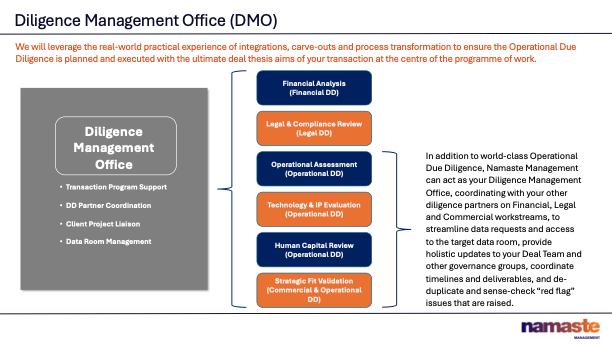
For strategic buyers, scale-ups, and private equity investors alike, an effective ODD process identifies hidden risks, validates synergy potential, and prepares for post-deal integration. This guide provides a structured approach to operational due diligence across seven core domains:
1. Operational Assessment
A target’s ability to operate efficiently and scale successfully underpins its long-term value. This assessment covers:
A. Supply Chain Analysis
- Supplier concentration risk: Evaluate dependency on single-source or offshore suppliers.
- Procurement practices: Assess purchasing power, contracts, and supplier performance management.
- Logistics and fulfilment: Examine inventory turnover, distribution channels, and delivery reliability.
- Supply chain resilience: Test for exposure to geopolitical risk, tariffs, transport disruption, and material shortages.
B. Production Capabilities
- Capacity utilisation: Measure current output vs. maximum capability and forecast demand alignment, including capex analysis.
- Equipment and asset condition: Assess plant age, depreciation, and maintenance protocols.
- Production agility: Determine responsiveness to demand variability and customisation.
C. Products and Processes
- Product descriptions: Review the portfolio, including key features, specifications, lifecycle stages, and intellectual property protections.
- Product flows: Map end-to-end workflows from raw material sourcing through manufacturing, assembly, quality control, packaging, and distribution to end-users.
- Process robustness: Evaluate reliability through quality metrics like defect rates, downtime, and failure modes, alongside contingency plans for disruptions.
- Special requirements: Identify unique needs such as specialised handling, storage conditions, certifications (e.g., ISO standards), or environmental controls.
- Regulatory situation: Assess compliance with relevant laws, industry regulations, potential risks from changes in policy, and audit history.
D. Operational Efficiency
- Process mapping: Identify bottlenecks, redundancies, and automation opportunities.
- Cost structure: Break down fixed vs. variable costs and benchmark against industry peers.
- Lean maturity: Evaluate adoption of methodologies like Six Sigma or Kaizen.
E. Scalability Analysis
- Operating leverage: Can revenue growth translate into higher margins?
- Operational dependencies: Assess constraints in supply, production, people, or infrastructure that could limit scale.
- Platform potential: Evaluate whether the business can serve as a platform for bolt-ons or international expansion.
F. Systems and Integration Readiness
- Process documentation: Determine whether SOPs are codified and transferable.
- Cross-functional alignment: Review how operations collaborate with sales, finance, and R&D.
- Integration feasibility: Assess IT compatibility, data architecture, and modularity of systems.
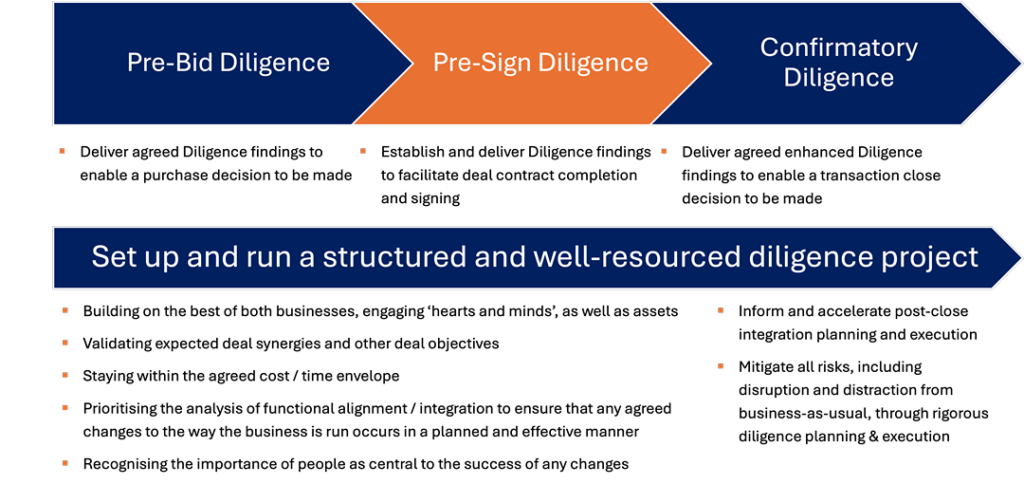
Figure 2 Key Objectives for Your Due Diligence Team
2. Technology and Intellectual Property Evaluation
Modern businesses rely on technology infrastructure and IP assets that must be thoroughly assessed for integrity, scalability, and defensibility.
A. IP Ownership and Protection
- Ownership audit: Validate patents, trademarks, software, and content ownership—especially for founder-led companies.
- Licensing risks: Identify any open-source, third-party or restricted-use code that could affect future use or sale.
- Legal protections: Review IP registration status, expiration, and litigation history.
B. Technology Stack and Infrastructure
- Architecture review: Evaluate modularity, cloud adoption, scalability, and legacy system risks.
- Technical debt: Identify shortcuts taken in code, architecture, or infrastructure that may hinder future development.
- Tech roadmap alignment: Review the product roadmap and assess strategic fit with the acquirer’s systems.
C. Cybersecurity and Data Privacy Compliance
- Security controls: Assess data encryption, access controls, backup and recovery systems.
- Incident history: Review breaches, audits, and remediation actions.
- Compliance status: Evaluate GDPR, HIPAA, PCI-DSS, or other relevant compliance frameworks.
- Vulnerability exposure: Perform external penetration testing or engage a cybersecurity audit firm.
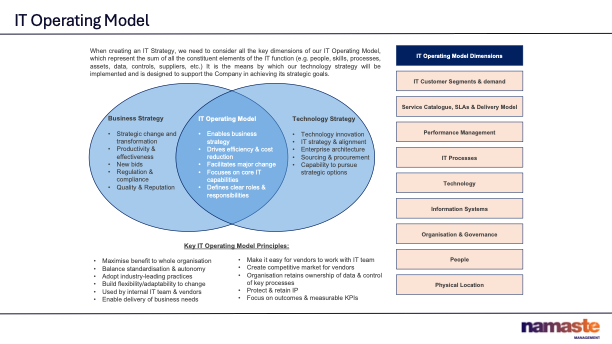
3. Human Capital Review
People determine performance – particularly in service, tech, and IP-driven businesses. An in-depth human capital assessment is essential.
A. Key Talent and Leadership Assessment
- Organisational structure: Map leadership layers, span of control, and decision-making flow.
- Key person dependency: Identify who holds critical institutional knowledge or customer relationships.
- Retention risk: Evaluate tenure, career paths, and engagement levels for key employees.
B. Compensation, Benefits & Employment Agreements
- Compensation benchmarking: Compare base, bonus, and equity compensation to market norms.
- Incentive alignment: Determine whether incentives support long-term value creation.
- Employment terms: Review non-competes, change-of-control clauses, golden parachutes, and union agreements (if applicable).
C. Culture and Organisational Health
- Cultural norms: Assess leadership style, risk appetite, and decision-making speed.
- Cultural clash risks: Identify differences with the acquirer’s values, rituals, or ways of working.
- Engagement data: Use surveys, Glassdoor reviews, or pulse checks if accessible.
D. Workforce Composition and Compliance
- Demographic analysis: Review headcount by function, geography, skill, and cost.
- Workforce flexibility: Assess reliance on contractors vs. full-time employees.
- Labour law compliance: Examine employment practices, working conditions, and statutory compliance.
4. Synergy Realisation Potential
Assessing the operational synergy potential is key to validating deal value and informing integration planning.
Types of Synergies:
- Cost synergies: Shared procurement, combined logistics, IT systems rationalisation.
- Revenue synergies: Cross-selling opportunities, broader market access, bundled offerings.
- Talent synergies: Shared centres of excellence, leadership augmentation.
Tactical Evaluation:
- Quantify synergies with assumptions, timelines, and confidence levels.
- Assess feasibility: Determine how easily and quickly synergies can be captured.
- Identify execution risks: Delays, cultural resistance, systems incompatibility.

5. Cultural and Organisational Compatibility
Cultural compatibility is often the hidden killer of post-merger success. It’s crucial to assess not just formal structure, but informal values and behaviours.
What to Evaluate:
- Decision-making style: Centralised vs. decentralised, top-down vs. collaborative.
- Risk tolerance: Conservative, iterative, or experimental approaches.
- Speed of execution: Are they fast-moving or process-heavy?
- Employee engagement norms: Communication style, reward systems, accountability.
Methodology:
- Conduct executive interviews and culture workshops.
- Use cultural diagnostics tools (e.g., Denison or Hofstede models).
- Compare with your own culture and flag areas of high friction.

6. Market and Growth Alignment: Operational Implications
Even if a business looks sound internally, its operations must support – and not constrain – growth potential in its target market.
Areas to Review:
- Customer fulfilment readiness: Can operations handle expected growth in volume or geography?
- Product-market fit: Do operational capabilities match the demands of evolving customer segments?
- Channel alignment: Can the business scale through new channels (digital, B2B2C, DTC)?
- Barrier to entry or scale: Does the business have operational IP (e.g., proprietary processes) that confer an edge?
Red Flags:
- Over-reliance on manual processes in high-growth environments
- Systems that cannot integrate with customer platforms or e-commerce APIs
- Operational infrastructure built for a legacy business model (e.g., B2B only when omnichannel is required)
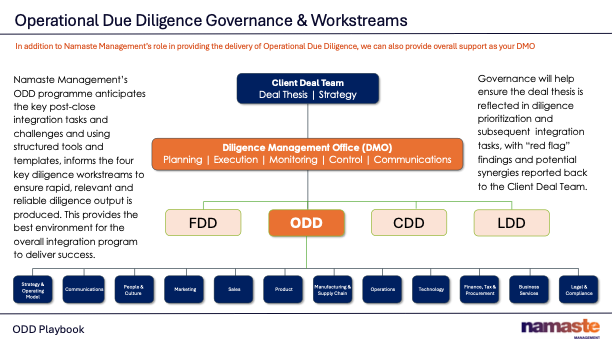
7. ESG (Environmental, Social, and Governance) Assessment
Why ESG Matters in Due Diligence
Environmental, Social, and Governance (ESG) factors are now integral to enterprise value creation, investment decisions, and risk management. Due diligence processes must go beyond traditional financial and operational assessments to encompass ESG risks and opportunities, in line with current regulatory and market expectations.
Recent developments – such as the ISSB’s IFRS S1 and S2 standards, and EFRAG’s European Sustainability Reporting Standards (ESRS) – require companies and investors to adopt a double materiality lens, assessing both:
- Financial materiality (how ESG factors impact enterprise value, cash flows, access to capital), and
- Impact materiality (how the target impacts the environment, society and stakeholder perceptions).
Robust ESG due diligence supports more accurate valuation, risk pricing, integration planning, and alignment with regulatory reporting obligations (e.g., CSRD, SFDR, ISSB, TCFD-aligned disclosures).
A. Environmental Assessment
Assess the environmental performance and transition readiness of the target company, as well as potential risks related to non-compliance, stranded assets, and climate adaptation.
Key Areas of Focus:
- Greenhouse Gas Emissions:
- Evaluate Scope 1, 2, and material Scope 3 emissions.
- Review emissions reduction targets, transition plans, and alignment with climate scenarios (e.g., 1.5°C pathways).
- Regulatory Compliance:
- Assess compliance with local and international environmental regulations (e.g., EU Taxonomy, carbon pricing regimes).
- Identify outstanding environmental liabilities, permits, or investigations.
- Resource Efficiency & Pollution:
- Analyse energy and water intensity, waste management, hazardous material controls, and pollution prevention.
- Physical and Transitional Climate Risk:
- Examine location-specific risks (e.g., flooding, drought, heat stress), and policy-related transition risks (e.g., new carbon regulations).
- Sustainable Operations & Certifications:
- Evaluate adoption of environmental management systems (e.g., ISO 14001), circular economy practices, and green procurement policies.
Red Flags:
- Exposure to unpriced carbon risk in high-emissions jurisdictions
- Pending environmental litigation or major non-compliance history
- Lack of credible emissions reduction strategy or scenario analysis
B. Social Assessment
Evaluate how the target manages its workforce, supply chain, communities, and customers. Social performance must now be reviewed not only as a reputational issue but also in relation to human capital value creation, regulatory compliance, and licence to operate.
Key Areas of Focus:
- Labour Standards and Human Rights:
- Review working conditions, freedom of association, and modern slavery risks in the supply chain.
- Examine alignment with international frameworks (e.g., UN Guiding Principles on Business and Human Rights, ILO conventions).
- Workforce Wellbeing and Inclusion:
- Analyse employee engagement, health and safety records, DEI metrics, and talent retention strategies.
- Community Impact and Engagement:
- Assess community relations, indigenous rights, stakeholder engagement processes, and environmental justice issues.
- Customer Responsibility & Data Protection:
- Evaluate data privacy, product responsibility, and consumer complaints procedures.
- Social Risk Exposure in Operations or Markets:
- Identify activities in fragile or conflict-affected areas, or those subject to social scrutiny.
Red Flags:
- Persistent health and safety violations
- Lack of grievance mechanisms or whistleblower protection
- Significant supply chain risks without monitoring or audits
C. Governance Assessment
Robust governance is central to long-term value creation and ESG performance. A governance assessment in ESG due diligence evaluates how effectively the target manages decision-making, compliance, transparency, and risk — including how it integrates ESG and climate-related oversight into corporate strategy and enterprise risk management.
Key Areas to Assess:
- Board structure and oversight:
- Assess the independence and diversity of the board, the existence and scope of ESG or sustainability committees, and the frequency of ESG discussions. Examine how ESG risks and opportunities are integrated into enterprise risk management (ERM) frameworks.
- Compliance and ethical culture:
- Evaluate the company’s tone at the top, compliance history, anti-bribery and corruption (ABC) frameworks, whistleblower policies, and how effectively these are implemented and communicated across the organisation.
- Executive Remuneration and Incentives:
- Assess whether ESG-related key performance indicators (KPIs) are embedded in executive compensation frameworks, and whether these targets are publicly disclosed and monitored.
- Ownership and decision-making transparency:
- Evaluate the clarity of beneficial ownership, the transparency of decision-making processes, and the existence of safeguards against conflicts of interest.
- Data and digital governance:
- Review policies for data protection, cybersecurity, and digital ethics (including AI use, where relevant). Examine any history of data breaches, GDPR violations, or IT governance weaknesses.
- Regulatory readiness:
- Evaluate track record in complying with ESG regulations (e.g. EU CSRD, SFDR, UK SDR)
Red Flags:
- Lack of board independence or ESG accountability
- Frequent compliance violations or fines
- Inadequate internal audit or risk management frameworks
Tactical ESG Due Diligence Approaches
- ESG materiality mapping: Identify the most relevant ESG issues using both financial materiality (impact on the business) and impact materiality (impact of the business). Engage stakeholders where possible to confirm assumptions.
- Third-party assessments: Commission independent ESG audits, governance assessments, or regulatory compliance reviews.
- Integration into deal pricing: Factor governance risks and opportunities into deal pricing – either cost liabilities or future upside.
- Post-acquisition planning: If gaps are identified, define a sustainability roadmap as part of the integration or 100-day plan, including committee restructuring, reporting upgrades, or board training.
Strategic Value of ESG Due Diligence
A robust ESG due diligence process is not only defensive – it can also reveal new value creation levers:
- Premium valuation: ESG-mature companies can attract higher multiples and more investor interest. Governance maturity reduces capital costs, attracts sustainability-linked financing, and ensures better access to green and transition finance.
- Operational resilience and cost efficiency: Energy efficiency, waste reduction, and improved resource use reduce operating costs. Strong governance reduces fraud, ethical lapses, and decision-making failures that could disrupt operations or reputation. Improved resource use can reduce operating cost.
- Culture, talent attraction and retention: Younger workforces value purpose, sustainability, and social impact. A culture of transparency, fairness, and ethics is a key driver of employee engagement, particularly among Gen Z and millennial workforces. Younger workforces value purpose, sustainability and social impact
- Regulatory and exit readiness: Companies aligned with evolving ESG disclosure regimes are more attractive for IPOs, acquisitions, or international expansion. Buyers and IPO markets increasingly demand ESG disclosures and maturity.
Final Thoughts: From Insight to Integration
Operational due diligence is more than a checkbox exercise – it’s the bridge between the investment thesis and post-deal execution. It should conclude not only with a risk and opportunity register, but also with a clear set of operational integration priorities, resource needs, and value creation workstreams.
Best Practices for Effective ODD:
- Start early – parallel with financial and commercial diligence.
- Use cross-functional experts, not just generic advisors or auditors.
- Document findings into an Integration Blueprint aligned with Day 1, 100-Day, and Year 1 goals.
- Involve future operators early – don’t leave it all to deal teams or advisors.
In today’s deal environment – where margin for error is thinner than ever – operational due diligence is a strategic necessity, not a back-office task. It provides the lens to answer the most important post-acquisition question: Can this business not only survive – but thrive – under new ownership?
A rigorous, insight-driven ODD process helps avoid unpleasant surprises, unlocks hidden upside, and ensures you’re not just buying potential – but a platform ready to deliver it.
Integrated Operational & ESG Due Diligence Checklist
| Domain | Focus Area | Key Checks |
|---|---|---|
| Operations | Supply chain, production, systems | Resilience, efficiency, scalability |
| Tech/IP | IP ownership, infrastructure, security | Risk, debt, compatibility |
| Human Capital | Talent, leadership, workforce | Retention risk, alignment |
| Culture | Values, management style | Compatibility and friction points |
| Growth Alignment | Market readiness, product fit | Customer experience, GTM alignment |
| ESG – Environment | Emissions, waste, climate risk | Compliance and sustainability |
| ESG – Social | Labour practices, DEI, safety | Community and employee impact |
| ESG – Governance | Oversight, compliance, transparency | Data, board, regulatory maturity |