
Introduction
The mid-market remains a powerhouse of deal activity, representing both agility and resilience in a volatile macroeconomic landscape. Yet for most high-growth enterprises, achieving consistent M&A performance across cycles remains elusive. The discipline required to turn one-off success into a repeatable, scalable capability – one that reliably captures synergies, safeguards integration outcomes, and compounds long-term enterprise value – distinguishes outperformers from opportunistic acquirers.
Drawing from Namaste Management’s recent M&A publications – including Global M&A Outlook 2026: Navigating a Transformative Market, The Private Equity Growth Formula: Navigating Complexity to Build Scalable Value, and Acquisition Integration – A Health Check Review – this article explores how mid-market firms can design, institutionalize, and evolve a buy-and-build engine that endures beyond individual transactions.
The Shift: From Opportunistic Deals to Systematic M&A Engines
Namaste Management’s 2026 outlook underscores a decisive shift among acquirers: dealmaking is becoming less about single “event” transactions and more about programmatic capability. The firm’s research notes that 45% of global deal volume now belongs to the mid-market segment (US$50m–500m), a cohort benefiting from agility and lower regulatory burdens. Yet within this growing field, only a small subset succeeds in extracting repeatable value across multiple acquisitions.
A sustainable M&A engine builds institutional muscle across every stage of the deal lifecycle. Successive Namaste reports have pointed out that even the most disciplined acquirers often underestimate two factors: the cumulative complexity of serial integration and the erosion of returns through inconsistent post-deal execution. In mid-market settings, where resources are finite and operating models tend to be lean, codifying governance and learnings into a reusable operating playbook is often the decisive differentiator.
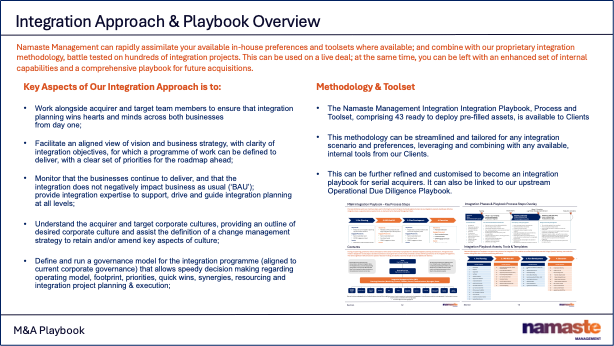
Figure 1 Overall Approach to Repeatable & Sustainable M&A Project Delivery
The goal is therefore clear: to transform M&A from a transactional event into a strategic capability – one underpinned by durable processes, empowered leadership, and continuous learning loops.
Establishing the Strategic Rationale and Deal Blueprint
The first attribute of a repeatable M&A engine is strategic clarity. According to The Key Strategies to Drive Business Growth (Namaste Management, 2024), acquirers that outperform peers by over 30% in total shareholder return over a five-year horizon demonstrate a consistent correlation between strategic intent and deal type. Every acquisition fits a clearly defined growth thesis -whether it be market expansion, vertical integration, or technology enablement.
For mid-market businesses, conventional “opportunistic” deal sourcing – triggered by advisor introductions or seller outreach – tends to yield suboptimal fits. Instead, high-performing acquirers employ target corridor mapping: a forward-looking heatmap of priority adjacencies, regions, and technologies aligned to a rolling three-year strategic plan. This allows management teams to prequalify targets against integration feasibility and synergy timelines, significantly enhancing speed-to-synergy post-close.
Namaste Management’s Strategic Acquirers Leading with Bold Vision emphasizes that leading corporates and scale-up acquirers have embraced this approach to compete with private equity, using AI-driven analytics to maintain proprietary deal funnels while maintaining discipline around valuation and cultural compatibility.
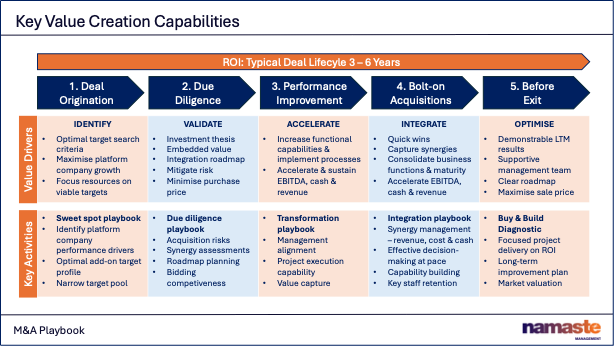
Figure 2 Key Capabilities Required to Deliver Long-Term Investor Returns
Designing a Repeatable Operating Model
Once the strategic M&A thesis is established, the architecture of a “buy-and-build” operating model must support consistency as the organization scales. This model rests on five foundational pillars:
- Centralized M&A Governance
A cross-functional steering committee (typically chaired by the CFO or Chief Strategy Officer) ensures alignment between strategy, capital allocation, and risk tolerance. The committee serves as the institutional anchor across multiple deal waves.
- Codified Pre-Deal Standards
Templates for commercial, financial, and operational due diligence – aligned to sector-specific risk frameworks – minimize variability. Namaste’s Strategic Imperative of Due Diligence in M&A highlights that acquirers using standardized diligence protocols see 25% faster integration planning and fewer post-close cost overruns.
- Integration Management Office (IMO)
The IMO orchestrates functional integration across technology, culture, and process domains. Its ability to operate as both a command centre and knowledge repository allows lessons learned to compound across acquisitions.
- Deal Playbooks and Repeatable Toolkits
Every phase – from due diligence to Day 100 to synergy realization – should have consistent templates, KPIs, and decision logs. Firms that treat integration as an iterative discipline, not a one-off event, build internal confidence and coherence.
- Continuous Capability-Building
Training programs, after-action reviews, and M&A apprenticeships help institutionalize learning. As per Post-Merger Integration – A Health Check Review, firms that formalize M&A as a learning process, rather than a sporadic event, outperform peers by 18% in deal success rates.
These pillars collectively transition M&A from an episodic initiative to an embedded organizational capability – an “operating system for inorganic growth.”
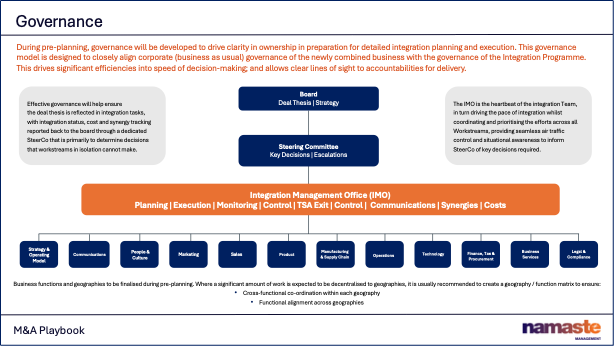
Figure 3 M&A Integration Governance Model
The Mid-Market Advantage: Agility and Focus
High-growth mid-market businesses enjoy structural advantages that are often overlooked: they move faster, integrate with less bureaucracy, and can deploy cultural alignment as a differentiator.
Namaste Management identifies mid-market acquirers in technology, healthcare, and business services as “the fastest builders of platform value” through bolt-on transactions averaging US$25m–75m. These firms leverage focused governance, direct founder involvement, and operational specificity to outcompete slower corporates and larger PE-backed rivals.
The challenge, however, lies in maintaining this agility while scaling. As acquisition count and geographic footprint grow, integration fatigue, resource dilution, and inconsistent synergy tracking emerge as systemic risks. The antidote is designing a modular operating framework – replicable across new markets and acquisitions, yet flexible enough to adapt to deal-specific contexts.
Institutionalizing the M&A Flywheel
In Namaste’s Private Equity Precision in a Capital-Rich Environment, leading PE firms provide a useful mirror for high-growth corporates. The paper highlights the significance of buy-and-build momentum as a core lever of value creation, driven by disciplined platform building, add-on sequencing, and KPI visibility. Translating this to mid-market corporates involves institutionalizing the “M&A flywheel” – a feedback-driven engine where each transaction strengthens readiness for the next.
The flywheel typically comprises four accelerating loops:
- Acquisition Thesis Validation
Early-stage pattern recognition ensures future target criteria evolve based on realized synergies and lessons learned.
- Integration Efficiency Gains
As teams complete successive integrations, institutional memory reduces duplication and accelerates timeline compression.
- Cultural Reinforcement
A unified post-deal culture builds trust and predictability across incoming teams, making future integrations smoother.
- Capital Recycling and Confidence
Faster synergy capture improves cash flow, thereby funding subsequent acquisitions organically – compounding growth momentum.
As momentum builds, the organization transitions from “buying growth” to engineering enterprise scale.

Figure 4 Top Considerations for Effective Due Diligence
Embedding ESG and Purpose in Dealmaking
An emerging feature of sustainable M&A programs, noted in Namaste’s Mastering Effective Operational ESG Due Diligence in M&A, is the integration of environmental, social, and governance considerations into both target selection and post-acquisition transformation. ESG diligence is now recognized as a value protection mechanism – not simply a compliance measure.
Mid-market acquirers are particularly well positioned to embed ESG into product innovation, supply chain resilience, and cultural integration. By defining ESG accountability early in the deal rationale (rather than post-close remediation), acquirers can reduce long-term risk exposure and access more favourable financing conditions.
A sustainable M&A engine treats ESG as an input into enduring competitiveness, not as a bolt-on metric.
Leveraging Data Intelligence and AI for Deal Advantage
Across Namaste Management’s 2025 Global M&A Outlook, AI and data-driven dealmaking emerge as dominant enablers of superior ROI. For mid-market acquirers, advanced analytics democratize access to diligence quality once reserved for mega-deals. Machine learning tools now accelerate target scanning, simulate post-deal integration scenarios, and forecast synergy trajectories with granularity.
Practical applications include:
- Predictive analytics for cultural compatibility and integration risk scoring.
- Real-time tracking of synergy achievement and performance post-close.
- AI-enabled due diligence automation to reduce time-to-close by up to 30%.
By embedding these tools into the M&A operating model, mid-market firms can sustain strategic velocity without sacrificing analytical rigor.
Leadership and Cultural Discipline
Even the most systematized M&A playbook fails without aligned leadership. The Role of Leadership and Change Management in M&A stresses that cultural alignment contributes more to value realization than any single financial synergy. High-growth acquirers must therefore treat leadership transitions as meticulously as balance sheet integration.
In practice, sustainable M&A engines cultivate specific leadership behaviors:
- Decisive governance that sets clear ownership for synergy capture.
- Transparent communication to reinforce confidence across acquired teams.
- Empathy and adaptability from leadership to address cultural fragmentation.
- Continuous visibility on integration milestones to anchor accountability.
Leadership continuity is particularly critical in buy-and-build environments, where constant organizational adaptation can otherwise undermine collective identity.
Capturing Synergies and Measuring Repeatable Value
Reliable value capture is the ultimate test of repeatability. Namaste’s Driving Value Creation through Operational Transformation identifies three layers of synergy measurement – cost, capability, and cultural – which must be tracked concurrently:
- Operational Synergies: measurable efficiencies in procurement, overheads, and process automation.
- Strategic Synergies: platform leverage enabling cross-sell opportunities and product portfolio expansion.
- Cultural Synergies: stabilization of employee engagement and innovation metrics post-integration.
By capturing and codifying performance data at each stage, acquirers create empirically validated integration playbooks – adapting assumptions dynamically for future transactions. This data feedback loop forms the architecture of sustainable M&A excellence.
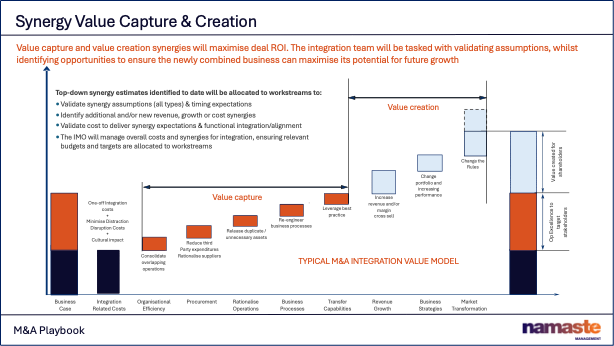
Figure 5 Capturing Key Synergies in M&A
Governance and Investor Confidence
Reliable performance across deal cycles not only enhances enterprise value but also strengthens investor trust. As identified in How to Maximise Value from Your M&A Advisors, mid-market firms that institutionalize structured governance—clear approval thresholds, standardized valuation protocols, and transparent reporting—attract superior financing conditions and strategic PE partnerships.
Moreover, the trend toward co-investment and partnership-led growth highlighted in the Outlook for 2025–2026: Strategies for Winning strengthens the case for clear governance. When corporates collaborate with PE co-investors, disciplined M&A governance ensures both speed and accountability.
Ultimately, institutional investors are rewarding predictability and discipline over volume and opportunism.
The Scaling Challenge: Avoiding Integration Drift
As the acquisition count increases, complexity compounds. Namaste’s Acquisition Integration Challenges – Navigating the Complexities warns of “integration drift” – the gradual loss of focus and institutional capability as teams face recurrent transaction waves. Warning signs include delayed synergy realization, integration fatigue, and declining cultural cohesion.
Successful high-growth acquirers employ three specific defenses:
- Integration segmentation, grouping acquisitions by complexity and allocating resources proportionately.
- Internal integration academies, where acquired executives become mentors in future integrations.
- Digital integration dashboards, providing leadership with real-time status visibility across workstreams.
Such mechanisms ensure that integration performance improves, rather than deteriorates, across the M&A timeline.
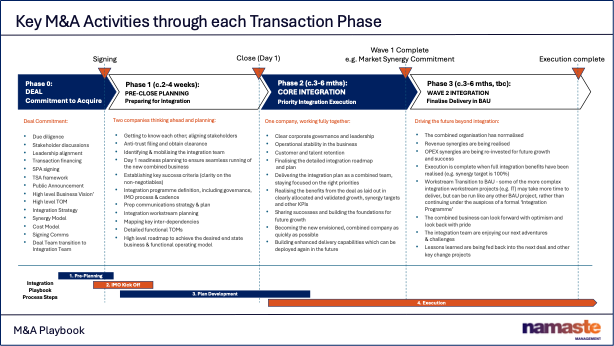
Figure 6 Integration Planning: Key Activities through Transaction Phases
Toward a Sustainable Model of Inorganic Growth
The ultimate discipline of M&A-driven expansion lies in sustainability – the ability to compound returns while preserving financial, operational, and cultural equilibrium. According to Namaste’s Strategies for Winning 2026, mid-market acquirers will increasingly differentiate themselves through modular scalability: smaller, faster, repeatable bolt-ons aggregated into cohesive platforms.
The essence of sustainable buy-and-build is not the pursuit of size but the creation of a repeatable growth machine capable of assimilating innovation, people, and process at pace. By embedding standardization, learning, and leadership into their DNA, mid-market firms can unlock reliable value with every turn of the acquisition cycle.
Conclusion: Turning M&A into an Enduring Strategic Asset
High-growth mid-market businesses are entering an era where inorganic growth defines competitiveness. Yet consistent value realization requires more than opportunism – it demands architecture, leadership, and discipline.
Namaste Management’s body of research collectively affirms that the most resilient acquirers – whether corporate or private equity-backed – share three enduring traits:
- A unified strategic purpose guiding all deals.
- A disciplined operating model enabling repeatability.
- A culture that learns and compounds excellence across cycles.
In an increasingly interconnected market, where capital, talent, and technology converge dynamically, the sustainable M&A capability will not merely create enterprise value – it will define the next generation of enduring mid-market champions.
Namaste Management M&A Article Series References
- Global M&A Outlook for 2026
- The Private Equity Growth Formula: Navigating Complexity to Build Scalable Value
- The Strategic Imperative of Due Diligence in M&A (Part 1)
- Integration Readiness Planning & TOM Design in Due Diligence Phase (Part 2)
- Mastering Effective Operational & ESG Due Diligence in M&A
- Acquisition Integration Challenges: Navigating the Complexities
- Sell-Side Divestment & Carve-Out Challenges
- How to Maximise the Value from your M&A Advisors
- Post-Merger Integration: A Health Check Review
- The Role of Leadership & Change Management in M&A
- Overcoming the Challenge of Staff Retention in M&A
Key Namaste Management Services
- Buy & Build Strategy Planning & Execution (Playbooks, Operational & ESG Due Diligence, Integration Planning & Execution)
- Scale Up, AI & Performance Improvement Diagnostics (Identify, Plan & Execute Value Creation Initiatives)
- Expert Resources to Deliver Complex Business & Operational Transformation Projects
- Interim Functional Leaders to fulfil BAU as well as Project Roles in LTs
Namaste Management M&A Playbook, Tools & Assets
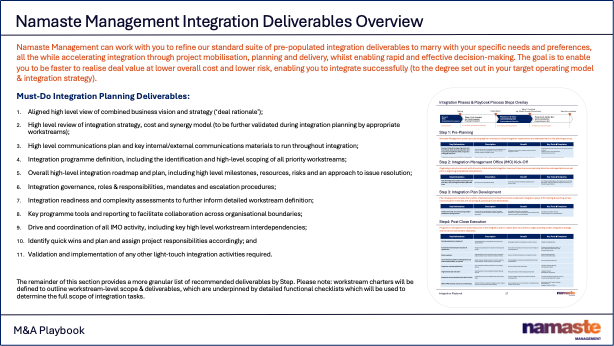
Figure 7 Namaste Management Integration Playbook Deliverables
Follow these links to find key Namaste Management Assets:
- M&A Integration Playbook
- M&A Carve Out Playbook
- M&A Functional Integration Checklist
- M&A Integration Programme Complexity Tool
- M&A Integration Synergy Model
- M&A Integration Cost Model
- M&A IMO Governance Tool
- Business Case Template
- Business Change Strategy & Plan
- Business Culture Guidance
- Business Function / Process Taxonomy
- Workstream or Project Charter Template
- Programme Health Check Tool