The Strategic Imperative of Target Selection
In an era where global M&A volumes surpassed $3.4 trillion in 2024 (a 15% increase from 2023), the bar for disciplined target selection has never been higher. Successful acquisitions are rarely the result of opportunistic deal-making; they are the product of structured, data-driven, and strategically anchored processes.
The most value-creating deals emerge when acquirers articulate a clear strategic intent—whether to accelerate market expansion, acquire enabling technologies, diversify revenue streams, or realize operational synergies. In 2025, leading acquirers are refocusing on resilient, innovation-led sectors such as AI, advanced manufacturing, healthcare, and sustainable energy, where geopolitical risks and regulatory clarity align to create asymmetric growth opportunities.
A Disciplined Approach to Sourcing Acquisition Targets
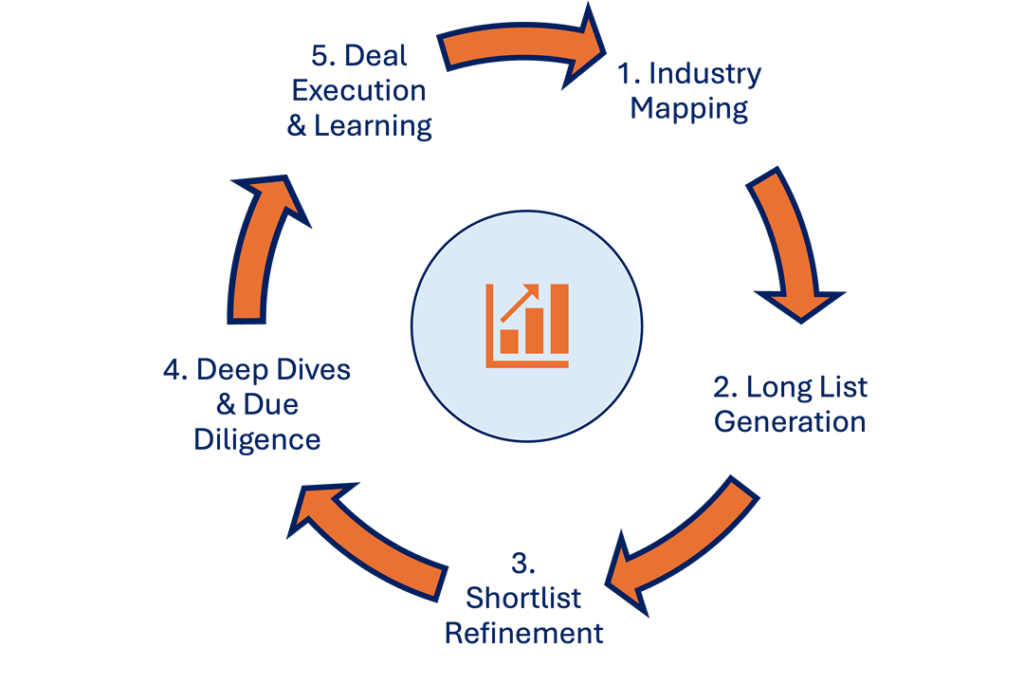
Figure 1 The Target Sourcing & Selection Flywheel
1. Map Out Attractive Industry Segments
The process begins with an industry heatmap that identifies segments offering superior growth, defensibility, and alignment with strategic goals. This step requires blending top-down (macro) and bottom-up (micro) intelligence:
- Top-down: Assess megatrends, regulatory shifts, technological disruptions, and demographic forces shaping future demand.
- Bottom-up: Pinpoint niches, product categories, and customer clusters where your firm’s existing capabilities create leverage or close strategic gaps.
Insight: Incorporating ESG and sustainability signals is now standard. Investors increasingly use predictive analytics to model the financial and reputational impact of climate regulation. Sectors with strong carbon-transition positioning or digital infrastructure resilience consistently outperform.
2. Generate and Prioritize a Long List of Candidates
Once attractive sectors are defined, the next step is to generate a comprehensive long list of acquisition candidates. This involves both proprietary sourcing and data-driven discovery:
- Industry databases: Leverage CB Insights, PitchBook, and S&P Market Intelligence for foundational data on company size, ownership, and performance.
- AI-powered market intelligence: Tools now scan filings, digital footprints, and hiring trends to surface high-potential private firms before they hit radar screens.
- Network intelligence: Platforms like DealCloud and Grata track relationship networks and M&A “signals” such as leadership shifts or new product launches.
Insight: Leading M&A teams enrich their target universe with real-time indicators—social sentiment, patent activity, and customer review velocity—to quantify a company’s innovation and brand trajectory. AI-enabled scoring models can shrink the long list by up to 50% faster than traditional methods while improving hit rates.
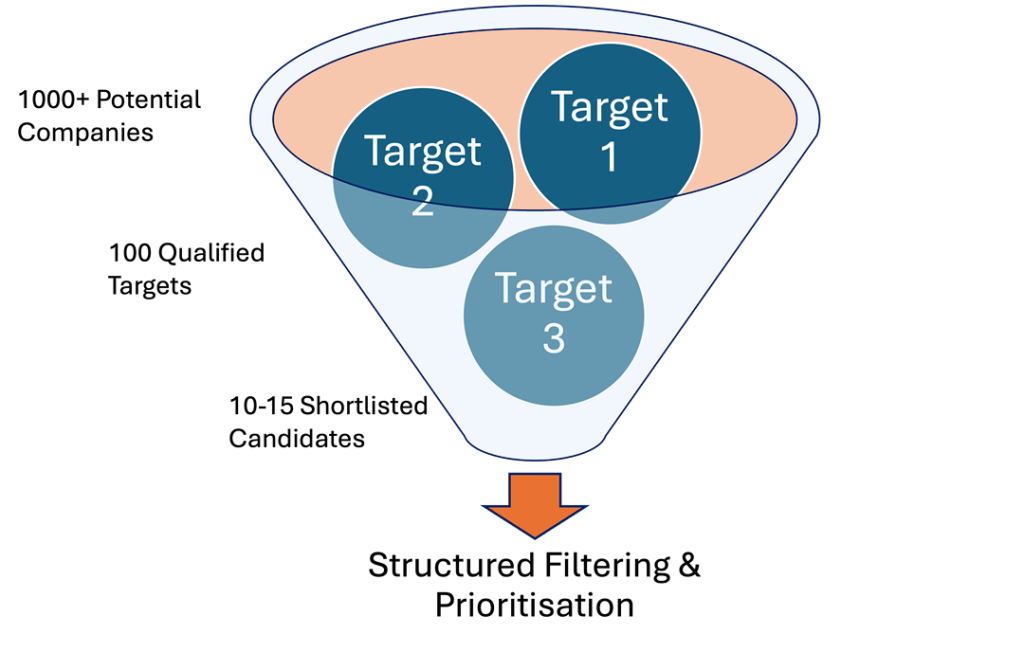
Figure 2 Target Universe Funnel
3. Refine and Categorize the Shortlist
A disciplined filtering process translates a long list into a prioritized shortlist. This step applies hard exclusion filters and multi-dimensional selection criteria to identify the highest-value opportunities.
Core Exclusion Criteria
- Size and scale: Minimum revenue, EBITDA, or asset base.
- Geography: Strategic relevance and regulatory accessibility.
- Ownership and structure: Deal feasibility (private vs. public).
- Regulatory or reputational risk: Avoidance of potential deal blockers.
Strategic Selection Criteria Matrix
| Dimension | Example Metrics | Strategic Relevance |
| Financial Strength | Revenue growth, EBITDA margin, leverage ratio | Ensures sustainable profitability and financing feasibility |
| Strategic Fit | Market overlap, customer synergies, IP complementarity | Aligns with acquirer’s strategic priorities |
| Operational Excellence | Cost structure, productivity, tech stack maturity | Enables synergy realization |
| Cultural & Leadership Alignment | Decision-making style, talent retention risk | Predicts integration success |
| Innovation & IP Assets | R&D intensity, patent portfolio quality | Drives long-term differentiation |
| ESG & Reputation | Emissions footprint, diversity metrics, governance quality | Mitigates reputational and regulatory risks |
Insight: Cultural due diligence is now quantified. AI-driven sentiment analysis from platforms like Glassdoor or Comparably helps score integration compatibility. Firms that model “Cultural Alignment Indices” report up to 30–40% lower post-deal attrition.
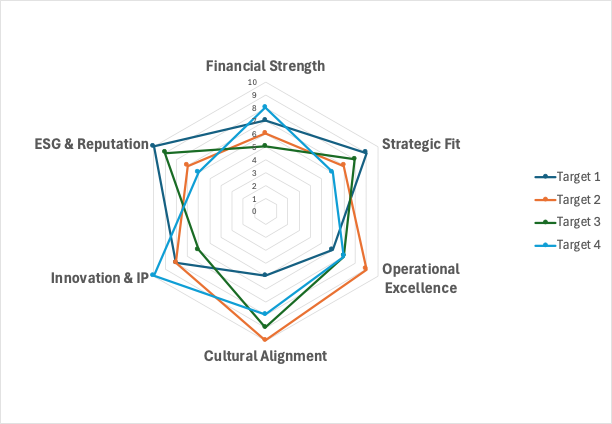
Figure 3 Target Scoring Radar Chart (Visualizing comparative fit across six criteria dimensions; ideal targets occupy balanced, high-surface profiles.)
4. Conduct Deep Dives and Due Diligence
Deep dives transform potential targets into actionable deals. Beyond standard financial and operational reviews, data-driven due diligence now integrates forward-looking risk analytics.
- Financial: Forecast accuracy, unit economics, cash conversion, capital efficiency.
- Operational: Supply chain resilience, automation readiness, and scalability.
- Strategic: Market differentiation and customer concentration risk.
- Regulatory: Preemptive simulation of antitrust outcomes using AI-driven scenario modeling.
Insight: With increasing global scrutiny—illustrated by Capital One–Discover and Adobe–Figma investigations—firms now employ regulatory foresight modeling to predict approval timelines and adjust valuation scenarios accordingly.
| Acquirer | Target | Rationale |
| ExxonMobil → Pioneer Natural Resources (2024) | Contiguous acreage & low-cost drilling | 50% synergy outperformance, $3B annualized gains |
| Home Depot → SRS Distribution (2024) | Complementary contractor network | +17% share price uplift, $1T addressable market |
| Novo Holdings → Catalent (2024) | Manufacturing capacity for biologics | Accelerated Wegovy rollout, doubled capacity |
| PE Firm → Cloud SaaS Provider | Portfolio synergy & scalable tech | 3x exit multiple within 3 years |
| VC Firm → Healthcare Device Startup | Innovation alignment & regulatory readiness | Rapid FDA approval and commercialization |
Insight: The common denominator is strategic congruence—each acquirer selected targets that amplified core capabilities rather than stretched organizational DNA.
Leveraging AI and Digital Tools in Target Selection
AI is now an indispensable co-pilot in modern deal sourcing. According to Deloitte (2025), 86% of M&A teams have embedded GenAI into their workflows, particularly for market assessment (40%) and target screening (35%).
| Tool | Function | Benefit in Target Selection |
| LEGALFLY | Contract and compliance AI | Accelerates legal risk screening (IP, HR, litigation) |
| Datasite Diligence | Virtual data room automation | 50% faster document analysis and redaction |
| AlphaSense | AI market intelligence and document search | Detects competitive and regulatory signals early |
| Grata | Private company discovery | Surfaces emerging M&A targets via NLP |
| DealCloud by Intapp | Relationship and pipeline management | Enables proprietary sourcing and warm introductions |
Future Outlook: Over the next 24 months, expect human–machine collaboration to dominate sourcing, with humans focusing on strategic framing and negotiation, and AI handling predictive analytics and workflow optimization.
Common Pitfalls and How to Avoid Them
- Overweighting financial metrics — ignoring cultural and strategic fit.
- Algorithmic bias — skewed AI data may overlook under-the-radar targets.
- Underestimating geopolitical risk — especially in cross-border tech or industrial deals.
- Siloed sourcing — failing to involve operations, HR, and technology functions early enough.
Mitigation: Pair AI insights with human validation, expand data diversity, and form cross-functional sourcing squads from day one.
Best Practices for Senior Executives and M&A Leaders
- Anchor on strategy: Define “why” before “what.” Each target must link directly to strategic objectives.
- Codify selection criteria: Use a weighted scoring model across financial, strategic, cultural, and ESG factors.
- Build a dynamic deal pipeline: Continuously monitor targets across “A–C” priority tiers.
- Leverage AI responsibly: Blend predictive analytics with judgment and scenario testing.
- Institutionalize learning: Conduct post-deal reviews to refine sourcing models and criteria.
Conclusion
In 2025, sourcing and selecting the right acquisition targets is both an art and a science. The firms leading M&A success are those deploying data-rich intelligence, AI-enabled analytics, and strategic discipline to uncover opportunities others overlook.
The next generation of dealmakers will not merely find good companies—they will engineer strategic fit, anticipate integration outcomes, and build acquisition platforms that continuously adapt to shifting markets. Those who master this synthesis of strategy, data, and foresight will define the next wave of superior value creation.
Namaste Management M&A Article Series References
- Global M&A Outlook for 2026
- The Private Equity Growth Formula: Navigating Complexity to Build Scalable Value
- The Strategic Imperative of Due Diligence in M&A (Part 1)
- Integration Readiness Planning & TOM Design in Due Diligence Phase (Part 2)
- Mastering Effective Operational & ESG Due Diligence in M&A
- Acquisition Integration Challenges: Navigating the Complexities
- Sell-Side Divestment & Carve-Out Challenges
- How to Maximise the Value from your M&A Advisors
- Post-Merger Integration: A Health Check Review
- The Role of Leadership & Change Management in M&A
- Overcoming the Challenge of Staff Retention in M&A
Key Namaste Management Services
- Buy & Build Strategy Planning & Execution (Playbooks, Operational & ESG Due Diligence, Integration Planning & Execution)
- Scale Up, AI & Performance Improvement Diagnostics (Identify, Plan & Execute Value Creation Initiatives)
- Expert Resources to Deliver Complex Business & Operational Transformation Projects
- Interim Functional Leaders to fulfil BAU as well as Project Roles in LTs
Namaste Management M&A Playbook, Tools & Assets

Figure 4 Namaste Management Integration Playbook Deliverables
Follow these links to find key Namaste Management Assets:
- M&A Integration Playbook
- M&A Carve Out Playbook
- M&A Functional Integration Checklist
- M&A Integration Programme Complexity Tool
- M&A Integration Synergy Model
- M&A Integration Cost Model
- M&A IMO Governance Tool
- Business Case Template
- Business Change Strategy & Plan
- Business Culture Guidance
- Business Function / Process Taxonomy
- Workstream or Project Charter Template
- Programme Health Check Tool