
Introduction
Transforming Uncertainty into Strategic Confidence
Due diligence is the linchpin of any successful acquisition. It is far more than a legal formality – it’s a strategic audit that uncovers both risk and opportunity, empowering acquirers to make informed decisions. In the context of mergers and acquisitions (M&A), due diligence acts as a safeguard, validating assumptions, uncovering liabilities, and ensuring strategic alignment with corporate goals such as market expansion, product diversification, or technological advancement.
Furthermore, contemporary due diligence now extends to critical new frontiers such as cyber resilience, environmental, social, and governance (ESG) factors, and even geopolitical risk. This broader scrutiny ensures a holistic understanding of value drivers and potential liabilities for the transaction in an increasingly complex global landscape.
As a specialist consultant, we have to leverage a rigorous, evidence-based framework to conduct effective due diligence, anchored in industry best practices, legal standards, and real-world deal experience.
“True due diligence isn’t merely about ticking boxes; it’s the strategic foresight that transforms uncertainty into actionable intelligence, driving sustainable value creation from the outset, right through to the close.” – Matthew Podowitz, Founder and Principal Consultant of Pathfinder Advisors LLC, a Strategic Namaste Management Partner
1. Preparation Phase: Laying the Groundwork
Effective due diligence begins well before the first document is reviewed. A successful process is shaped by thoughtful preparation that aligns with deal strategy and risk appetite.
Key Activities:
- Define the Scope and Objectives: Tailor the diligence process to the nature of the deal – whether it’s a merger of equals, strategic acquisition, or distressed asset purchase. Align the scope with overarching goals such as geographic expansion, customer base acquisition, or vertical integration.
- Assemble a Cross-Functional Team: Include legal, financial, tax, human resources, IT, and operational experts. Augment with third-party specialists in these core areas, as well as environmental, antitrust, or cybersecurity due diligence as needed. Though note, having many different competencies/disciplines and potentially different providers involved in the Buyer’s due diligence process can create the potential for efficiency and effectiveness challenges – duplicative data and meeting requests, timing and resource conflicts, and even contradictory findings in reports. This can be addressed readily by treating the Buyer’s due diligence as a programme rather than a project with someone (agreed to by all parties involved) who provides the coordination and management of the due diligence program (the DD PMO, for short).
- Develop a Customised Due Diligence Request List: Create a tailored request list based on the target’s sector, size, and jurisdiction. Include:
- Corporate records
- Financial statements and tax filings
- IP and technology inventories
- Regulatory and compliance documentation
- Key commercial contracts
- Establish Procedures and Protocols: Define secure communication channels, establish workflows for document review, and set clear timelines. Use project management tools to track progress and flag bottlenecks early. A set of comprehensive but realistic due diligence procedures defines and guides all those involved in the due diligence effort.
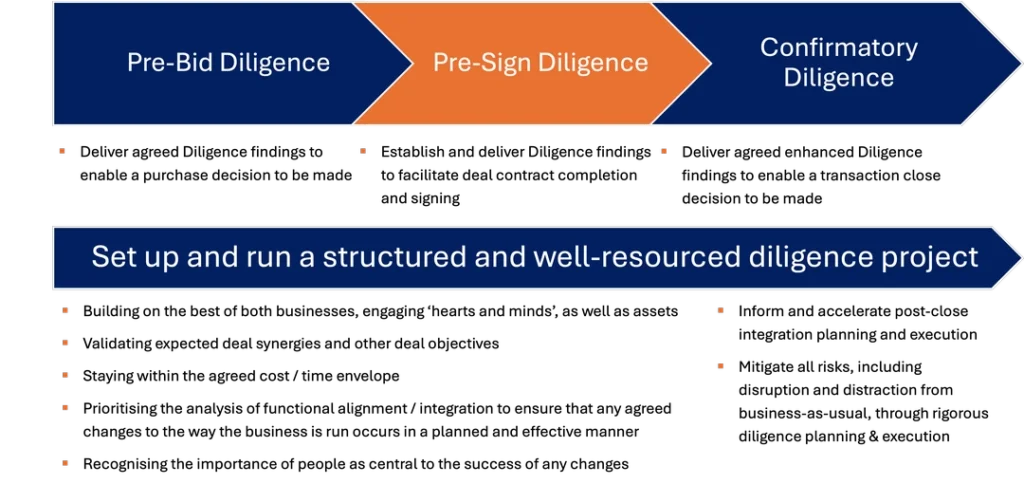
Figure 1 Key Objectives for Your Due Diligence Team
2. Information Gathering: Systematic Data Collection
This phase transforms the abstract idea of due diligence into a concrete data-driven process. The goal is to capture a 360-degree view of the target organisation.
Priority Areas:
- Corporate Governance: Articles of incorporation, board minutes, shareholder agreements, and ownership structure.
- Financial Documentation: Three to five years of audited financials, working capital schedules, tax returns, off-balance-sheet obligations, and quality-of-earnings reports.
- Legal Exposure: Pending or historical litigation, customer/vendor disputes, IP infringement, or regulatory investigations.
- Operational Insights: Supply chain dependencies, customer concentration, vendor agreements, lease obligations, and environmental compliance.
- Human Capital: Organisation charts, employment contracts, stock options, labour disputes, retention rates, and succession planning.
- IT and Cybersecurity: Software licenses, systems architecture, cybersecurity policies, and history of breaches or outages.
- Site Visits and Interviews: Conduct structured interviews with leadership and operational managers. Observe workflows and company culture firsthand.
Pro Tip: As a Buyer, it is recommended to insist that the Seller (or their representatives) use a secure virtual data room (VDR) for document management. Your information request list needs to be tracked regularly against the materials in the VDR and the outcomes of site visit and management meetings. Further, stage sensitive materials (e.g., trade secrets, pricing models) in later phases under NDA protection to minimise exposure.
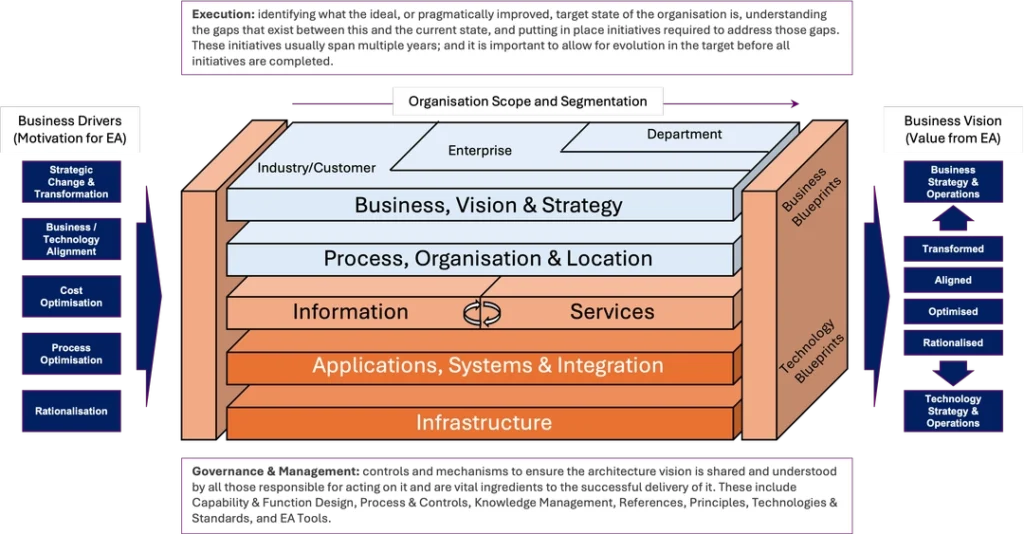
Figure 2 Key Building Blocks for your Enterprise Architecture Due Diligence
3. Analysis and Evaluation: From Data to Insight
This stage converts raw data into strategic insight. The objective is to uncover red flags, assess integration complexity, and quantify both risks and synergies, in the context of the Buyer’s investment thesis.
Key Evaluative Dimensions:
- Financial Forensics: Validate revenue recognition practices, evaluate EBITDA adjustments, stress-test future projections, and assess working capital sufficiency.
- Legal and Regulatory Risk: Look for compliance gaps, review material contracts for change-of-control clauses and evaluate exposure to antitrust scrutiny or international sanctions.
- Operational Integration Potential: Identify overlaps or redundancies in supply chains, IT infrastructure, and business processes. Evaluate ERP compatibility and business continuity plans.
- Strategic Fit: Assess how the target complements or enhances the buyer’s strategic goals – through new products, markets, or intellectual property.
Red Flag Indicators:
- Volatile revenue or margin trends
- Excessive customer concentration
- Unresolved tax disputes
- Outdated or non-compliant IT systems
- Cultural incompatibility with the acquiring organisation
One of the most important types of insight due diligence provides is the foundation for addressing any red flags within the critical considerations of:
- whether or not to move forward with the transaction,
- whether adjustments to the purchase price or other financial elements of the offer are necessary to address red flags, and
- whether changes to the Sale & Purchase Agreement or other legal documents governing the transaction may be required to address them.
4. Key Focus Areas: The Due Diligence Checklist
A robust diligence process addresses a range of interconnected domains. Here’s a summarised framework:
| Area | Critical Elements |
| Financial | Audits, debt maturity schedules, tax compliance, EBITDA normalisation, forecasting |
| Legal/Compliance | Material contracts, litigation history, IP disputes, permits, regulatory compliance |
| Technology/IP | Patents, trademarks, cybersecurity maturity, system scalability |
| Human Resources | Compensation schemes, union agreements, retention risks, employment litigation |
| Operations | Inventory turnover, vendor reliance, logistics risks, service level agreements |
| Strategic Fit | Brand & cultural alignment, product synergy, geographic reach, integration roadmap |
Note: these are common to all acquisitions, so be aware that there may be additional areas specific to the industry, geography, and even the proposed structure for the transaction.
5. Best Practices and Common Pitfalls
Best Practices:
- Customise Your Approach: Use standard templates as a starting point but tailor them to each deal’s unique context.
- Prioritise by Risk: Focus efforts on areas with the greatest potential downside (e.g., litigation, regulatory exposure).
- Maintain Version Control: Use collaborative tools to manage document revisions and ensure team-wide visibility.
- Facilitate Cross-Functional Debriefs: Regularly synthesise findings across legal, finance, operations, and HR to avoid siloed analysis.
Common Pitfalls to Avoid:
- Overlooking cultural and people-related risks, which often derail post-merger integration.
- Relying too heavily on seller-provided projections without independent validation.
- Failing to assess post-closing obligations such as earn-outs, escrow arrangements, or contingent liabilities.
- Inadequate cybersecurity due diligence, leading to exposure post-acquisition.
Enhanced Due Diligence Framework for Carve-Out Acquisitions
Acquiring a carve-out – a business unit separated from a larger parent – demands specialised due diligence beyond standard M&A. This process must address operational entanglement, financial ambiguity, and transitional risks. Below is an enhanced framework incorporating industry insights and emerging trends.
1. Operational Independence and Standalone Viability
Critical Enhancements:
- Sustainability of Revenue: Validate customer retention risks and revenue stability post-separation. Parent companies often underreport customer concentration risks in shared accounts.
- TSA Optimisation: Negotiate Transitional Service Agreements (TSAs) before signing to retain leverage. Ensure coverage for IT, HR, and finance, with clear pricing and duration. Avoid “omitted services” clauses that create post-close disputes and mandate the signed TSAs be a condition of closing.
- Shared Services Audit: Quantify true standalone costs by:
- Mapping all services historically subsidised by the parent (e.g., payroll, procurement).
- Benchmarking against industry peers to identify cost gaps.
2. Financial Carve-Out Integrity
Critical Enhancements:
- Forensic Validation: Employ third-party quality-of-earnings (QoE) analysts to audit pro forma financials. Focus on:
- Tax liability exposures from seller group obligations.
- Working capital adequacy for Day 1 operations.
- Stranded Cost Modelling: Project costs that remain with the seller but impact profitability (e.g., shared facilities). Use tax insurance to mitigate uncovered liabilities.
3. Legal Structure and Contract Assignability
Critical Enhancements:
- IP and Data Rights: Confirm unambiguous ownership of intellectual property and historic data access. Carve-outs often lack standalone IP portfolios.
- Anti-Assignment Clauses: Prioritise contracts requiring third-party consents. Use virtual data rooms to track assignments and gaps, whilst obtaining these consents as a formal condition of closing. Additional considerations include:
- Typically, only the Seller can request those consents.
- If costs must be incurred to obtain those consents (for example, payment of outstanding invoices or costs to upgrade software to a current version), they should be the Seller’s responsibility, and
- Many vendor and supplier licensing/service agreements (especially software and other technology agreements) will prohibit third-party benefit or ‘service bureau’ use of services – these will require a different kind of waiver in order for the Seller to use them in providing Transition Services.
4. Human Capital and Cultural Considerations
Critical Enhancements:
- Talent Mapping: Identify dedicated vs. matrixed employees. 40% of carve-outs face talent gaps in key functions like IT and compliance.
- Retention Mechanics: Implement equity incentives pre-close to secure critical personnel. Crosstrain employees to reduce reliance on parent-embedded staff.
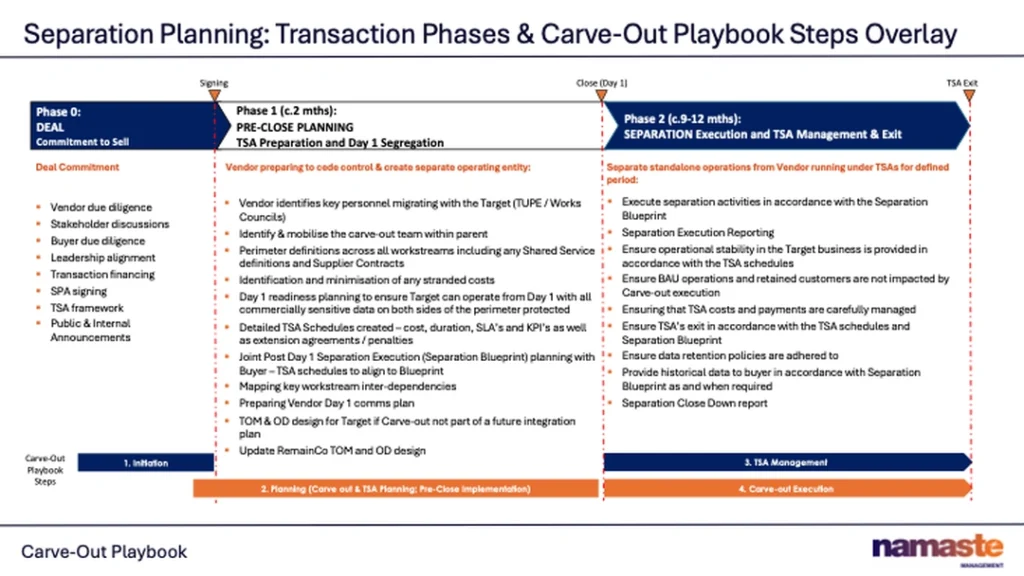
Figure 4 Key considerations for Carve-Out Planning Due Diligence
5. IT Systems and Data Migration
Critical Enhancements:
- Tech Stack Inventory: Catalogue all applications, databases, and infrastructure dependencies. 70% of carve-outs lack standalone ERP systems.
- Migration Realism: Budget 6-12 months for system separation. Include cybersecurity reviews in due diligence to prevent breaches post-close.
6. Regulatory and Compliance Transferability
Critical Enhancements:
- License Transfer Analysis: Distinguish transferable licenses (e.g., environmental permits) from those requiring reapplication.
- Compliance Infrastructure: For example, audit GDPR, SOX, or HIPAA readiness. Carve-outs often inherit parent company violations.
7. Strategic Fit and Post-Acquisition Integration
Critical Enhancements:
- Synergy Quantification: Model operational improvements (e.g., supply chain optimisation) that can yield 40%+ value uplift.
- Integration Flexibility: Prepare for both full integration and standalone scenarios. Some playbooks emphasis rebuilding leadership and culture for autonomy.
8. Emerging 2025 Due Diligence Imperatives
Key Trends:
- Extended Timelines: Allocate 60-90 days (vs. 45 pre-2023) for thorough diligence.
- Third-Party Specialists: Engage providers for:
- Operational and technology assessments
- Cybersecurity reviews
- Cultural assessments
- Tax risk assessments
- Supply chain resilience.
- Seller-Prepared Diligence: Demand access to seller-led third-party audits of financial, commercial, HR, IT, and compliance to accelerate processes.
Key Risks and Mitigation Strategies
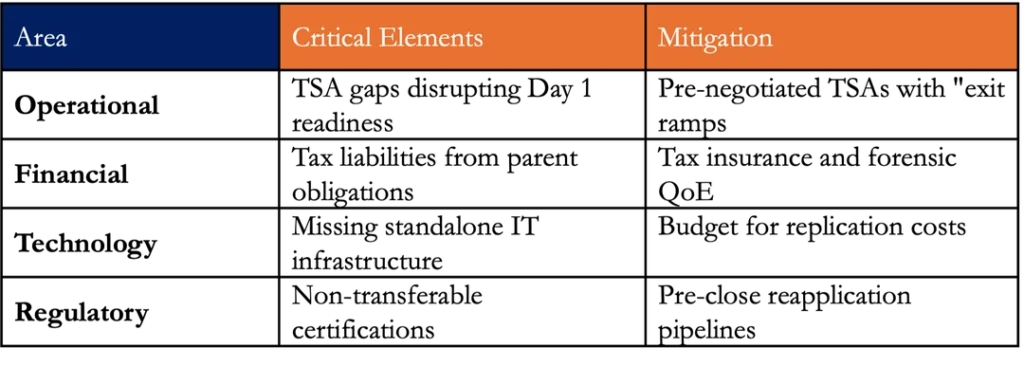
Best Practices
- TSA Negotiation: Finalise scope and pricing during deal talks, not post-signing, and ensure a condition of closing.
- Day 1 Readiness: Simulate operations without parent support (e.g., dry-run payroll processing).
- Talent Continuity: Deploy change management programs for transferring employees.
- Third-Party Leverage: Use specialists for tax, cybersecurity, and supply chain due diligence.
Carve-out due diligence requires deeper scrutiny of financial carve-outs, technology dependencies, and regulatory portability. By integrating seller-led audits, extended timelines, and specialised third-party assessments, buyers can transform entangled assets into agile standalone entities. Proactive TSA design and talent retention remain critical to unlocking value in an era of heightened complexity.
Conclusion: Transforming Uncertainty into Strategic Confidence
Due diligence is not merely a procedural checkpoint – it is the fulcrum of value creation in M&A. A well-executed due diligence process enables acquirers to:
- Identify deal-breaking risks early
- Strengthen negotiating leverage
- Develop informed integration plans
- Capture value beyond the balance sheet
By applying a structured, cross-functional, and evidence-based approach, acquirers can reduce uncertainty and maximise post-deal success. In today’s competitive M&A landscape, thorough due diligence isn’t just best practice – it’s a strategic imperative.
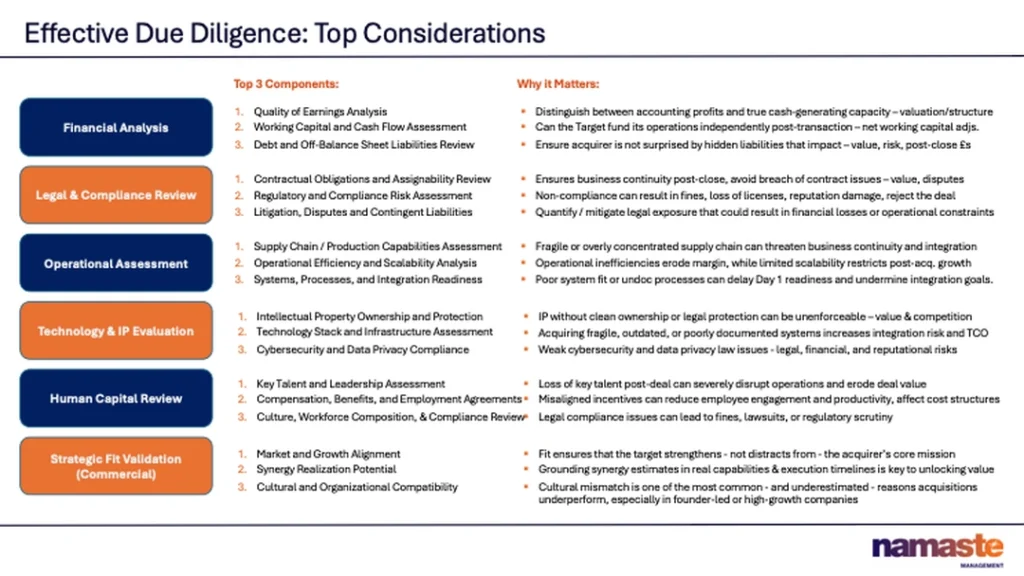
Figure 6 Top Considerations for Effective Due Diligence Look out for our next article which will cover the broader topic of Integration Value Capture and Creation, and early-stage planning, all very essential in the Due Diligence phase.